
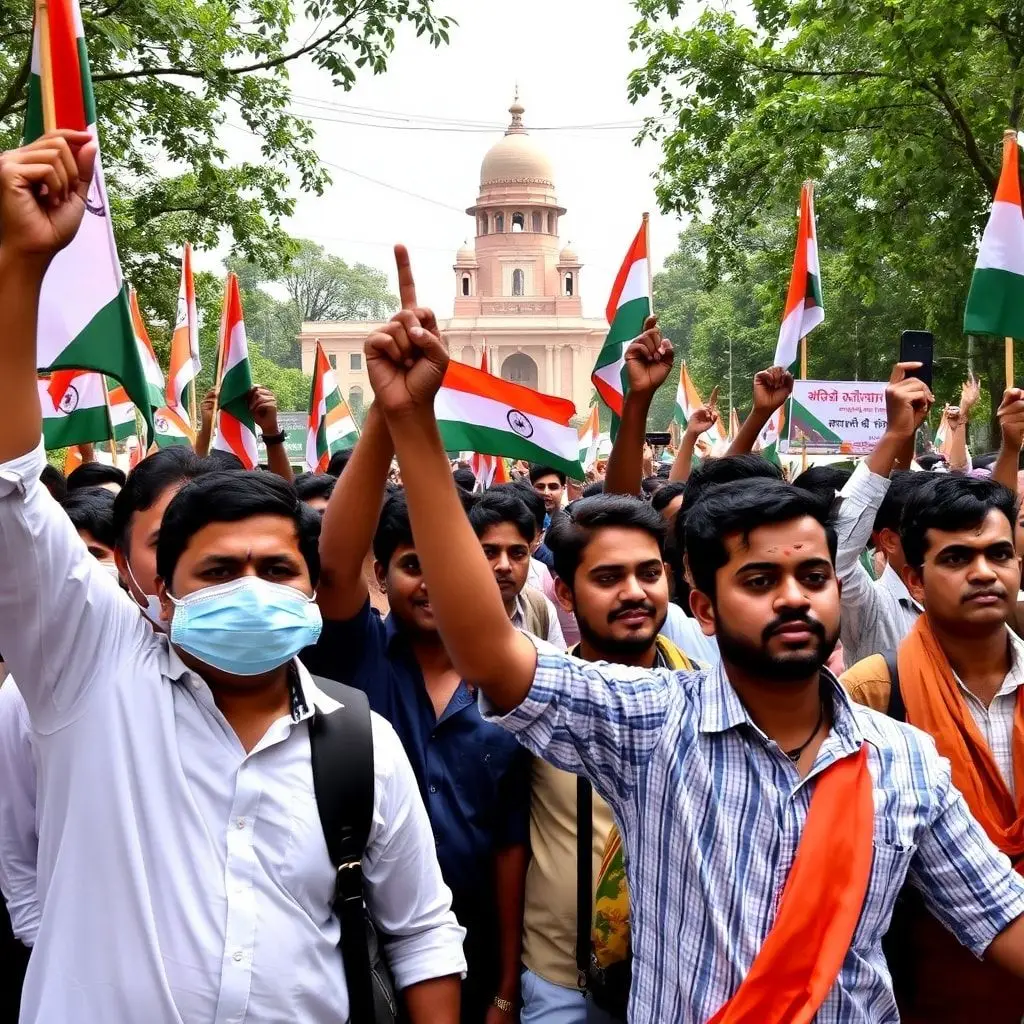
India’s Shifting Democratic Landscape: Congress Youth Wing Arrests Spark Debate on Dissent and Political Freedom
Eight members of the youth wing of India’s principal opposition, the Congress party, have been arrested in connection with recent widespread protests across various states. This development ignites fresh debate over democratic freedoms and the right to protest in the world’s largest democracy, highlighting a growing tension between governmental authority and public expression of dissent. The crackdown on these young political activists marks a critical juncture in India’s political narrative, compelling an in-depth examination of the protests’ underlying causes, the implications for opposition parties, and broader ramifications for civil liberties and the rule of law.
This incident, while seemingly localized, resonates with a deeper pattern of governmental responses to public demonstrations. It raises questions about the proportionality of force and the space accorded to critical voices. As an investigative report, this analysis will explore the immediate circumstances, political motivations, legal frameworks, and societal reactions shaping India’s evolving democratic landscape. The arrests serve as a stark reminder of the delicate balance between maintaining public order and safeguarding the fundamental right to peaceful assembly and protest, a cornerstone of any vibrant democracy.
The Crucible of Discontent: Unpacking the Protests
The protests leading to these arrests were a culmination of simmering public frustration over socio-economic and political issues. At their core, demonstrations were fueled by deep-seated concerns over rampant inflation, which has seen essential commodity prices skyrocket, severely impacting common citizens. Coupled with this economic strain is persistent unemployment, particularly among youth, many of whom feel disenfranchised by a lack of viable job opportunities. These economic grievances formed a powerful undercurrent, uniting diverse segments of society in collective outcry.
Beyond economic distress, protests also voiced strong opposition to certain controversial governmental policies perceived as undermining democratic institutions and centralizing power. Hypothetically, these might include proposed changes to labor laws favoring corporations or environmental regulations prioritizing industrial development over ecology. The Congress youth wing took a leading role, mobilizing citizens against what they termed “anti-people” policies through rallies, sit-ins, and public awareness campaigns. These demonstrations, though largely peaceful in intent, often led to clashes with law enforcement, citing public order concerns. The intensity and scale of these protests indicated significant erosion of public trust, setting the stage for the arrests.
The Arrests: A Calculated Clampdown?
The arrests of the eight Congress youth wing members occurred amidst heightened tensions following a charged protest march in the national capital. Police authorities justified their actions by citing sections of the Indian Penal Code related to unlawful assembly, obstruction of public servants, and disturbing public peace. Eyewitness accounts suggest activists were apprehended during a demonstration that escalated into minor skirmishes with riot police; however, the extent of violence and direct involvement of arrested individuals remain contentious. Critics swiftly condemned the arrests as politically motivated, a deliberate attempt to suppress opposition voices and deter future protests.
Identified by their prominent roles in organizing demonstrations, the youth wing members were reportedly taken into custody from various locations. The swiftness of the arrests and immediate invocation of stringent legal provisions have drawn accusations of overreach and an attempt to stifle legitimate political dissent. For the Congress party, these arrests pose not just an operational challenge but an ideological battle, as they seek to portray their activists as defenders of democracy targeted by an authoritarian regime. The charges, if proven, could lead to significant legal battles, potentially setting precedents for how political protests are managed and tolerated in India.
Congress Party’s Strategic Crossroads
For the Indian National Congress, these arrests represent a pivotal moment, forcing the party to recalibrate its strategy against an increasingly assertive ruling establishment. Youth wings are historically the vanguard of political activism. Targeting these young leaders presents a dual challenge: it can demoralize the cadre or galvanize them, uniting the party around a narrative of victimhood and struggle. Early indications suggest the latter, with party leadership issuing strong condemnations and promising full legal support.
These arrests push Congress into a strategic crossroads. They reinforce the party’s narrative of shrinking democratic space, potentially rallying public sympathy. However, repeated arrests and legal battles can drain resources and divert attention from core policy debates. The party’s response will be crucial in shaping public perception – will it be seen as effectively championing democratic rights or as struggling to protect its own? These events also highlight internal dynamics, testing leadership’s resolve. How the party leverages these arrests to build a broader anti-government front, both electorally and through continued agitation, will define its effectiveness as an opposition force.
Democratic Freedoms Under Scrutiny
The incident casts a harsh spotlight on the health of democratic freedoms in India, particularly the fundamental right to peaceful protest enshrined in Article 19 of the Constitution. While the Constitution permits reasonable restrictions for maintaining public order, morality, and national security, their application often becomes contentious. Civil liberties advocates frequently voice concerns about broad interpretation of “public order” clauses to curb legitimate dissent, especially when directed against government policies.
These arrests contribute to a growing narrative, domestically and internationally, of shrinking space for free expression and political opposition. Critics argue such actions create a chilling effect, deterring citizens and young activists from participating in democratic processes for fear of reprisal. Democratic dissent is vital for accountability; when opposition voices are stifled, it raises serious questions about governmental responsiveness and the robustness of the democratic framework. The challenge for India’s democracy lies in upholding the sanctity of dissent while ensuring protests remain within legal bounds, a line often blurred under political pressure.
Legal and Judicial Implications
The legal battle surrounding the arrested Congress youth wing members is expected to be protracted. The immediate challenge for the party’s legal team will be to secure bail, arguing against charges deemed arbitrary or politically motivated. Bail hearing outcomes often indicate the judicial stance. Beyond bail, activists face potential charges of unlawful assembly, rioting, and obstruction, carrying significant penalties. The judicial process will scrutinize evidence, police reports, and testimonies, often leading to prolonged trials.
These cases frequently test judicial independence, as courts weigh the state’s prerogative to maintain order against citizens’ fundamental rights. Precedents in similar cases will be crucial, with defense lawyers likely invoking past rulings upholding peaceful protest. Legal aid from the Congress party is vital for a fair hearing. However, the sheer number of such cases raises concerns among legal experts about overburdening the judicial system and implications for speedy justice, adding to the complexity.
Public Perception and Media Narrative
The arrests inevitably ignited a fierce battle for public perception. Mainstream media, often divided ideologically, has presented varied coverage. Some outlets highlighted “disruptive” protests and police necessity, echoing the government. Others focused on alleged suppression of dissent and democratic rights, amplifying the opposition. Social media platforms became hotbeds of debate, with related hashtags trending nationally. This digital battlefield allows immediate, unfiltered reactions, though prone to misinformation. Public opinion is likely polarized, reflecting existing political loyalties. For government critics, arrests confirm fears of authoritarianism; for supporters, it’s a necessary step to curb unruly behavior. Journalists must navigate this complex landscape, distinguishing fact from rhetoric, for a nuanced understanding.
Conclusion: A Tense Equilibrium
The arrests of the eight Congress youth wing members are more than routine law enforcement; they symptomize a deeper, evolving struggle over democracy and political space in India. This incident encapsulates the tense equilibrium between the state’s responsibility to maintain order and citizens’ constitutional right to express dissent. The protests underscore persistent socio-economic anxieties and demands for accountability, while the government’s response highlights its firm stance against perceived unlawful agitation.
As India journeys as the world’s largest democracy, how such conflicts are resolved will profoundly shape its future. Legal battles, strategic responses of political parties, and sustained civil society engagement will define the boundaries of free speech and protest. The true test of India’s democratic resilience lies in its ability to reconcile conflicting interests, uphold constitutional principles, and ensure citizen voices, especially its youth, are heard and respected, even when challenging the status quo. These arrests serve as a critical barometer of this ongoing democratic negotiation.