
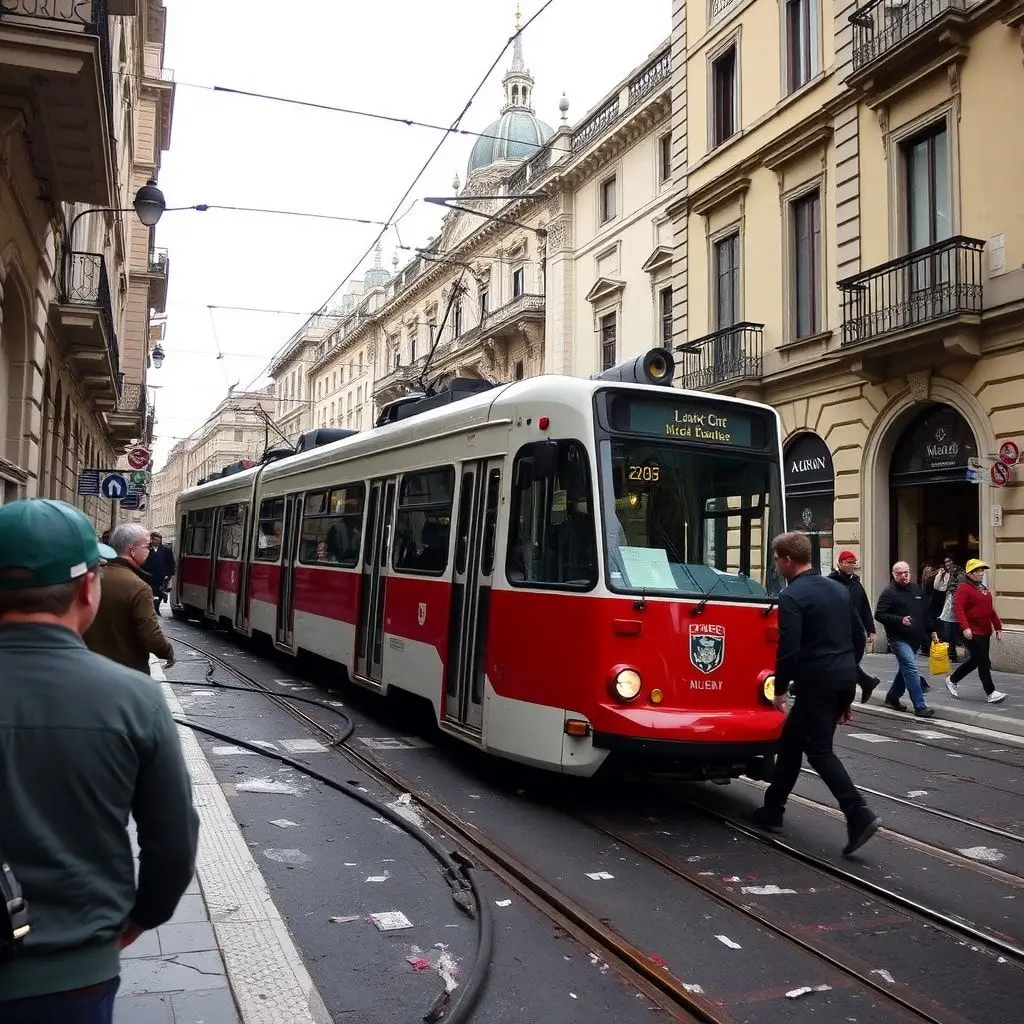
A City Holds Its Breath: The Milan Tram Crash and Its Echoes
The rhythmic clatter of trams is as much a part of Milan’s sonic landscape as the chiming of its cathedral bells or the bustling conversations in its piazzas. They are the arteries of urban life, carrying millions through the city’s historic core and modern suburbs. However, on a recent rush hour afternoon, this familiar rhythm was shattered by an incident that sent shockwaves far beyond the immediate scene: a tram, packed with commuters, veered from its designated path and collided with the side of a building in the heart of the city. What initially appeared as a shocking visual anomaly quickly escalated into a full-scale emergency, prompting an intricate investigation into the causes, consequences, and broader implications for urban transport safety in one of Europe’s busiest metropolises.
The Unfolding Drama: A Scene of Confusion and Alarm
The incident occurred during the peak of Milan’s evening commute, a time when the city’s ancient streets thrum with the energy of thousands heading home or to their next engagement. Eyewitness accounts painted a vivid picture of sudden chaos. One moment, the tram, reportedly full, was proceeding along its usual route, an iconic symbol of Milanese urban mobility. The next, without apparent warning, it reportedly veered sharply, its momentum carrying it directly into the facade of a nearby structure. The precise location, identified as being in the city centre, only amplified the drama, given the dense concentration of historic buildings, pedestrian traffic, and intertwined utility lines that characterise this vibrant urban core. The impact was not a glancing blow but a forceful collision, instantly transforming a mundane journey into a scene of distress and disarray. The jarring halt, the screech of metal, and the ensuing silence, punctuated by gasps and cries, marked the immediate transition from routine to crisis. The sight of a large, modern tram embedded in a building’s wall was incongruous and deeply unsettling, raising immediate questions about the integrity of the vehicle, the safety of the infrastructure, and the well-being of those on board and in the vicinity.
Immediate Aftermath and the Coordinated Emergency Response
In the moments following the collision, a critical window opened for action. Initial reports suggested a rapid and effective response from Milan’s emergency services. Ambulances, fire brigade units, and local police descended upon the scene, navigating the already congested rush hour traffic. Their immediate priorities were clear: extricate any trapped passengers, provide first aid to the injured, secure the perimeter, and assess the structural damage to the affected building. Paramedics worked swiftly to tend to those suffering from shock, minor abrasions, and more severe injuries, while firefighters meticulously checked the tram for any further hazards and began the delicate process of assessing the stability of the damaged structure. The psychological impact on passengers, many of whom were simply going about their daily routine, cannot be understated. Beyond physical injuries, the trauma of such an unexpected and violent event leaves lasting psychological scars, requiring ongoing support and care. Simultaneously, police began to manage the burgeoning crowds, divert traffic, and initiate the preliminary stages of an investigation, collecting initial witness statements and securing the scene for forensic analysis. The logistical challenge of orchestrating such a response in a dense urban environment, with limited access and significant public interest, underscored the professionalism and preparedness of Milan’s emergency forces.
Investigating the Root Causes: A Multifaceted Inquiry for Public Safety
As the immediate crisis subsided, the focus shifted sharply to determining the root cause of this alarming incident. Investigative journalists and safety experts alike know that tram accidents, while relatively rare, seldom have a single, simplistic explanation. Instead, they often result from a confluence of factors, each contributing to a critical failure. The investigation will undoubtedly delve into several key areas:
-
Human Factors:
The role of the tram driver will be paramount. Was there any indication of driver fatigue, distraction, or a sudden medical emergency? Training protocols, shift patterns, and health checks will be scrutinised. Could a momentary lapse in judgment, exacerbated by the complexities of rush hour traffic in a narrow street, have played a role?
-
Mechanical Failure:
Trams are complex machines, and even the most rigorous maintenance schedules cannot entirely eliminate the risk of mechanical malfunction. Investigators will examine the tram’s braking system for any signs of failure or reduced efficacy. Was there an issue with the steering mechanism, critical for navigating turns and maintaining course? Electrical faults, power surges, or even issues with the pantograph system that connects to the overhead power lines could also contribute to a loss of control.
-
Infrastructure Deficiencies:
Milan’s tram network, while efficient, traverses an ancient city. The state of the tracks, switches, and points along the route will be a critical area of inquiry. Could a faulty switch have directed the tram onto an unintended path? Were there any weaknesses or defects in the track itself that could have led to a derailment, even a minor one, preceding the impact? The interaction between the tram’s wheels and the rails is a finely tuned relationship, and any deviation can have severe consequences.
-
External Factors:
While less common, external influences cannot be entirely ruled out. Could another vehicle have encroached on the tram’s right-of-way, forcing an evasive manoeuvre? Was there an unexpected obstacle on the tracks? CCTV footage from surrounding buildings and other vehicles will be crucial in reconstructing the moments leading up to the collision, offering an objective view of any external catalysts.
Each of these avenues requires meticulous examination, drawing on forensic evidence, black box data from the tram (if available), witness testimonies, and expert analysis to piece together a comprehensive understanding of how and why this unexpected event occurred.
The Structural Toll: Heritage and Modernity in Conflict
The collision’s impact extended beyond the tram itself, causing significant damage to the building’s facade and potentially compromising its structural integrity. Many buildings in Milan’s city centre boast centuries of history, constructed with materials and techniques that predate modern engineering standards. A direct impact from a heavy tram can cause not only cosmetic damage but also introduce cracks, instability, and long-term structural vulnerabilities. Architects and structural engineers will need to conduct thorough assessments to determine the extent of the damage, the safety of the building for its occupants, and the scope of necessary repairs. Such repairs can be costly and time-consuming, potentially displacing residents or businesses and impacting the aesthetic and functional character of a historic urban block. The incident serves as a stark reminder of the delicate balance between preserving historical architecture and integrating modern, heavy infrastructure within a dense urban fabric.
Milan’s Tram Network: A Legacy Under Scrutiny
Milan boasts one of the most extensive and oldest tram networks in the world, an enduring symbol of its commitment to public transport. Operating since the late 19th century, the network has adapted and expanded, serving as a vital component of the city’s mobility strategy. Generally, Milan’s tram system maintains a commendable safety record, a testament to regular maintenance and stringent operational protocols. However, an incident of this magnitude inevitably places the entire network under intense scrutiny. Public confidence, while resilient, can be easily shaken. Transport authorities will face pressure to not only conduct a transparent investigation but also to reassure the public about the safety of their daily commute. This may involve reviewing existing safety measures, evaluating the age and condition of both rolling stock and track infrastructure, and potentially implementing new technologies or revised operational procedures to prevent future occurrences. The incident serves as a critical stress test for the resilience and adaptability of Milan’s cherished public transport system.
Broader Implications: Safety, Trust, and the Future of Urban Planning
Beyond the immediate aftermath and investigation, the Milan tram crash carries broader implications for urban planning and public transport policy, particularly in cities that blend ancient infrastructure with modern demands. It highlights the inherent challenges of operating heavy rail transit in narrow, historic streets shared with pedestrians and other vehicles. This incident will prompt discussions not only in Milan but also in other European cities with similar tram networks – cities like Rome, Lisbon, and Prague – about the continuous need for investment in maintenance, technological upgrades, and driver training. It underscores the importance of intelligent urban design that safely integrates various modes of transport. Moreover, it is a stark reminder of the delicate social contract between transport operators and the public: the promise of safe, reliable passage. Rebuilding trust, where it may have been eroded, will require not just technical fixes but also clear communication, accountability, and a demonstrated commitment to passenger welfare and safety protocols. The crash becomes a case study, offering invaluable, albeit painful, lessons for enhancing vigilance and resilience in the face of the complexities of modern urban mobility.
Conclusion: Towards Enhanced Vigilance and Resilience
The rush hour tram crash in central Milan was a jarring disruption to the city’s pulse, a stark reminder of the inherent vulnerabilities within even the most robust urban systems. While the immediate focus remains on caring for the injured and meticulously investigating the precise causes, the incident also serves as a potent catalyst for reflection. It underscores the perpetual need for vigilance, continuous investment in infrastructure, rigorous safety protocols, and robust training for all personnel involved in public transport operations. As Milan, a city renowned for its resilience and innovation, moves forward, this incident will undoubtedly inform future strategies for urban mobility, ensuring that the safety and trust of its citizens remain paramount. The lessons learned from this distressing event will be critical in reinforcing the city’s commitment to delivering secure and efficient transport, reaffirming the principle that public safety is the unwavering cornerstone of urban development.