
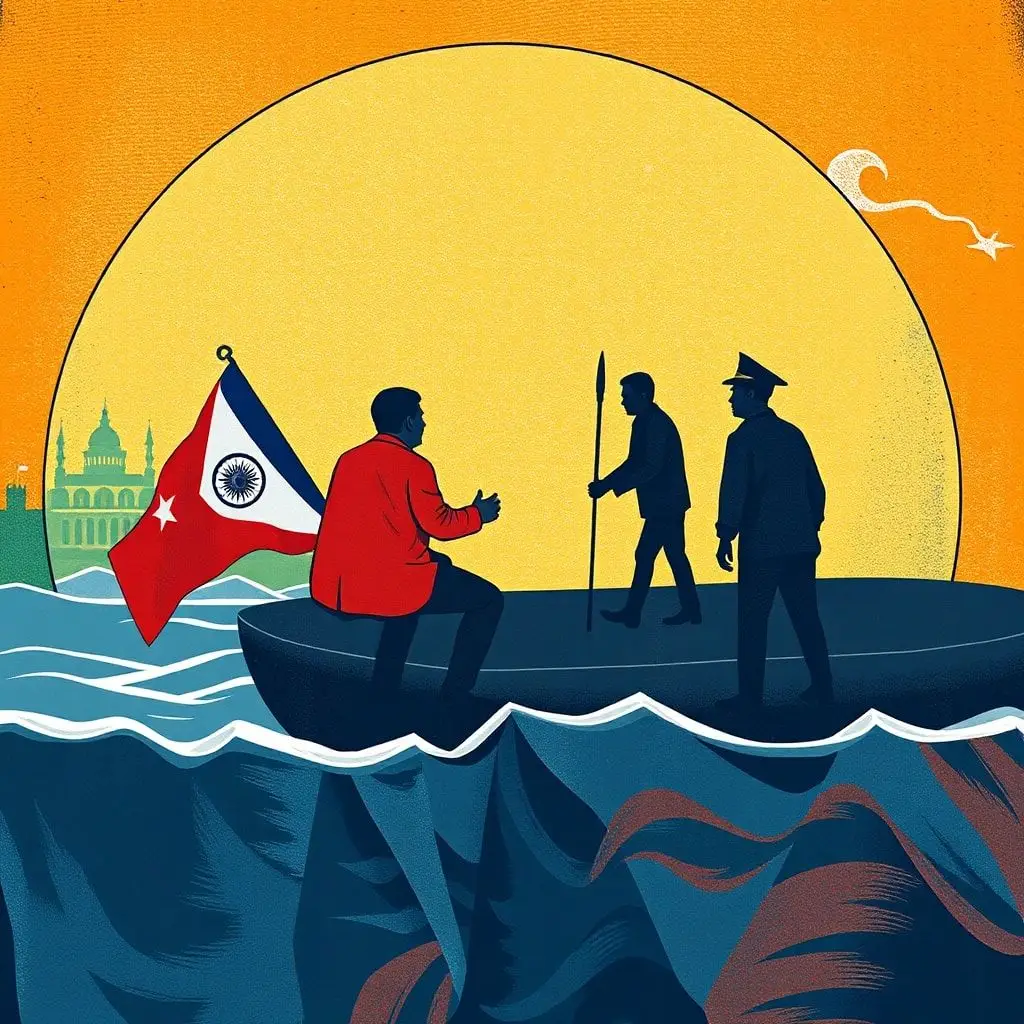
Navigating the Brink: A Government’s Urgent Call for Regional De-escalation Amidst Heightened Geopolitical Tensions
In the intricate and often perilous dance of international relations, a single statement from a government spokesperson can reverberate globally. Recently, such a statement emerged, brief yet profoundly impactful: a government spokesperson declared, “It does not want further escalation” in a specified region. This assertion, delivered amidst escalating geopolitical tensions, warrants deep investigative scrutiny. Far from a mere diplomatic platitude, this declaration is a critical indicator of the current state of affairs, revealing immense pressures faced by governments striving to maintain stability while navigating a complex web of rivalries, historical grievances, and emerging threats. As senior investigative journalists, we dissect the multifaceted implications of this statement, analyzing the nuanced diplomatic calculus at play and exploring potential pathways to, or away from, a more peaceful resolution. The brevity of the statement belies the profound gravity of the situation it addresses, hinting at a region teetering on the precipice, where every word carries the weight of potential conflict or a fragile opportunity for peace.
The Geopolitical Chessboard: Understanding the Regional Dynamics
A Region on Edge: Identifying the Flashpoints
To grasp the significance of the government’s call for de-escalation, one must understand the volatile landscape of the region. While specific names are often withheld, the characteristics are universal: a convergence of strategic interests, historical animosities, and often, significant resource wealth fueling external ambitions. Imagine a region marked by long-standing ethnic divisions, contested borders, and proxy conflicts where global powers indirectly clash. For instance, in a hypothetical Eastern European region, historical fault lines might be exacerbated by differing geopolitical alignments and competing narratives. In another scenario, perhaps the Middle East, the struggle for regional hegemony between state and non-state actors, coupled with extra-regional interests, creates an explosive mix. The introduction of advanced weaponry, persistent rhetoric of territorial claims, and frequent low-level skirmishes all contribute to an atmosphere ripe for rapid escalation. This dynamic ecosystem means actions of one entity invariably provoke reactions from others, creating a dangerous feedback loop. Flashpoints are numerous: maritime disputes, control over vital energy corridors, humanitarian crises, or even accidental military collisions. Each represents a potential catalyst for conflict, making the government’s statement an urgent plea to avert catastrophe.
The Stakes of Escalation: What’s at Risk?
The imperative to avoid “further escalation” stems from a profound understanding of conflict’s catastrophic consequences. The human toll is immediate and devastating: civilian casualties, mass displacement, and infrastructure destruction. Beyond immediate suffering, prolonged regional instability has far-reaching economic ramifications. Trade routes can be disrupted, energy supplies jeopardized, and global markets thrown into turmoil, affecting economies worldwide. Furthermore, escalating conflict could empower extremist groups, foster terrorism, and lead to weapon proliferation, destabilizing the world order. The risk of major global powers being drawn into direct confrontation, by design or miscalculation, looms large. From a humanitarian perspective, millions becoming refugees overwhelms aid organizations and creates new political challenges. The destruction of cultural heritage, erosion of international law, and entrenchment of grievances for generations are all part of the grim calculus. Thus, the government’s statement is not merely about a localized issue; it recognizes the interconnectedness of global security and the imperative to prevent a localized spark from igniting a worldwide inferno.
The Diplomatic Calculus: Unpacking the Spokesperson’s Statement
The Language of Diplomacy: More Than Just Words
The pronouncement, “It does not want further escalation,” while seemingly simple, is imbued with layers of diplomatic meaning and strategic intent. In international relations, such a phrase is rarely off-the-cuff; it’s a carefully calibrated message designed to achieve multiple objectives. Firstly, it implicitly acknowledges that some escalation has already occurred or is imminent, validating concerns for restraint. Secondly, it signals a clear preference for peaceful resolution, positioning the issuing government as a responsible actor committed to de-escalation. This can be aimed at a domestic audience, reassuring citizens, or at an international audience, garnering support from allies and pressuring adversaries. Thirdly, and crucially, it can serve as a subtle warning. By explicitly stating what it does not want, the government indirectly implies what it might be willing to do if its desires for de-escalation are ignored. This ‘red line’ signaling attempts to influence the calculations of other actors, encouraging them to temper actions. The choice of words, timing, and spokesperson’s authority all contribute to the statement’s weight. It’s a delicate tightrope walk, aiming to project both strength and a commitment to peace, without appearing aggressive or weak.
Behind the Podium: Reasons for Public Utterance
Why issue such a statement publicly rather than through private channels? The reasons are manifold and strategic. A public declaration amplifies the message, reaching not only direct adversaries and allies but also a broader global audience, including international organizations and media. This public pressure can be a powerful tool, mobilizing international opinion and potentially isolating actors pushing for conflict. Domestically, it can rally support, demonstrating the government’s commitment to national interests while avoiding costly wars. Furthermore, it can be a pre-emptive measure, shaping the narrative and establishing a moral high ground before further events unfold. By publicly stating its position, the government also sets clear parameters for future actions, potentially limiting its own options for escalation if its call for restraint is heeded. Conversely, if escalation occurs despite the public plea, the government can then point to its earlier efforts as justification for defensive or retaliatory measures, framing them as responses to others’ intransigence. This strategic transparency, while risky, aims to manage perceptions, influence behavior, and steer the geopolitical trajectory away from conflict, securing a critical public diplomacy victory.
Historical Parallels and Precedents: Lessons from the Past
Echoes of Crisis: When Statements Shaped Destinies
History is replete with instances where similar calls for de-escalation, or the lack thereof, fundamentally altered the course of events. During the Cuban Missile Crisis in 1962, both the U.S. and Soviet Union made public and private statements emphasizing their desire to avoid nuclear war amidst brinkmanship. Their careful articulation, combined with backchannel diplomacy, ultimately led to a resolution that averted global catastrophe. Conversely, the run-up to various conflicts, such as World War I, saw a failure of diplomatic language to convey genuine intentions for peace, or a misinterpretation, leading to a tragic domino effect. The Suez Crisis of 1956 also presented a moment where international pressure and strong diplomatic statements forced withdrawals, preventing wider conflict. These historical precedents underscore a critical lesson: statements of intent, particularly focused on de-escalation, are not merely symbolic. They are vital components of broader diplomatic strategy, capable of opening doors to negotiation or, if ignored, paving the way for confrontation. Success hinges not just on words, but on speaker credibility, audience receptiveness, and tangible actions that follow.
The Perils of Misinterpretation: Diplomacy’s Double Edge
Despite best intentions, diplomatic statements are susceptible to misinterpretation, a peril that can turn a plea for peace into an inadvertent provocation. An adversary might perceive a call for de-escalation as weakness, emboldening them. Conversely, allies might interpret it as hesitation, leading to a loss of confidence. Cultural context also plays a significant role; what is clear in one tradition might be ambiguous in another. The digital age further complicates this, with statements instantly translated, re-shared, and re-interpreted, often stripped of context. The government spokesperson’s declaration, therefore, carries the inherent risk of being perceived not as a genuine desire for peace, but as a tactical pause, a feint, or a desperate attempt to avoid inevitable confrontation. This ‘double edge’ necessitates extreme precision in messaging, supported by consistent actions and clear communication channels, both public and private, to mitigate dangerous misunderstandings that could negate the statement’s purpose and escalate regional tensions further.
The Path Forward: Challenges and Opportunities for De-escalation
Beyond Rhetoric: Concrete Steps Towards Peace
While a government’s public statement is crucial, sustained de-escalation demands concerted effort involving concrete actions beyond mere rhetoric. The initial declaration is an opening for dialogue, but must be followed by tangible measures to build trust and reduce tensions. These could include direct diplomatic talks between conflicting parties, mediated by neutral third parties or international organizations, aimed at establishing communication and identifying common ground. Confidence-building measures (CBMs), such as joint military exercises or agreements on conduct, can significantly reduce the risk of accidental clashes. Economic incentives or disincentives could also be leveraged, with aid for nations committed to peace, or sanctions for aggressive postures. Furthermore, addressing underlying causes of conflict—territorial disputes, resource allocation, humanitarian concerns—through multilateral negotiations and collaborative development is paramount. This long-term approach transforms a reactive stance into a proactive strategy for sustainable peace, requiring political will, diplomatic investment, and readiness for complex negotiations. The challenge lies in translating a desire for peace into actionable policies that resonate with all stakeholders and offer viable alternatives to conflict.
The Role of International Actors: A Collective Responsibility
No single government, however powerful, can unilaterally guarantee de-escalation in a deeply contested region. The current crisis underscores the critical role of international actors in fostering stability. Global powers, regional alliances, and international bodies like the United Nations have a collective responsibility to exert diplomatic pressure, provide mediation, and enforce international law. The Security Council, through resolutions, can play a pivotal role in monitoring ceasefires and facilitating aid. Regional organizations, with intimate local knowledge, can offer culturally sensitive mediation. Coordinated economic sanctions against aggressors, coupled with robust development assistance, can create powerful incentives for peace. International observer missions provide impartial verification, building confidence and deterring violations. The involvement of multiple stakeholders diffuses responsibility and creates a broader coalition committed to peace, making it harder for any single actor to derail efforts. This collective approach, characterized by coordinated diplomacy, shared intelligence, and a unified voice, is often the most effective means of transforming a precarious call for de-escalation into a durable framework for regional stability. The absence of such concerted international action leaves individual governments isolated and vulnerable, making their pleas less impactful.
Conclusion: A Fragile Peace on the Horizon?
The government spokesperson’s statement, “It does not want further escalation” in the region, serves as a poignant reminder of the delicate balance that underpins global security. It is a testament that even in an era of heightened geopolitical competition, the imperative for peace and stability remains a guiding principle, constantly tested by ambition, fear, and historical animosities. Our investigative analysis reveals this seemingly simple declaration is a complex diplomatic maneuver, reflecting deep concerns about current events and an urgent appeal to avert devastating conflict. From regional flashpoints to nuanced diplomacy, every element contributes to a scenario where stakes are extraordinarily high. History demonstrates that while words alone cannot guarantee peace, they are often the indispensable first step, setting the stage for concrete actions to de-escalate tensions. The path forward is fraught with challenges, demanding sustained diplomatic engagement, robust international cooperation, and genuine commitment from all parties to prioritize dialogue over confrontation. Whether this statement marks the beginning of genuine de-escalation or merely a pause before a storm remains to be seen. What is clear, however, is that the world watches, hopeful that the collective wisdom of nations will prevail, transforming a precarious plea into a blueprint for a more secure and peaceful future for the region and, by extension, for all.