
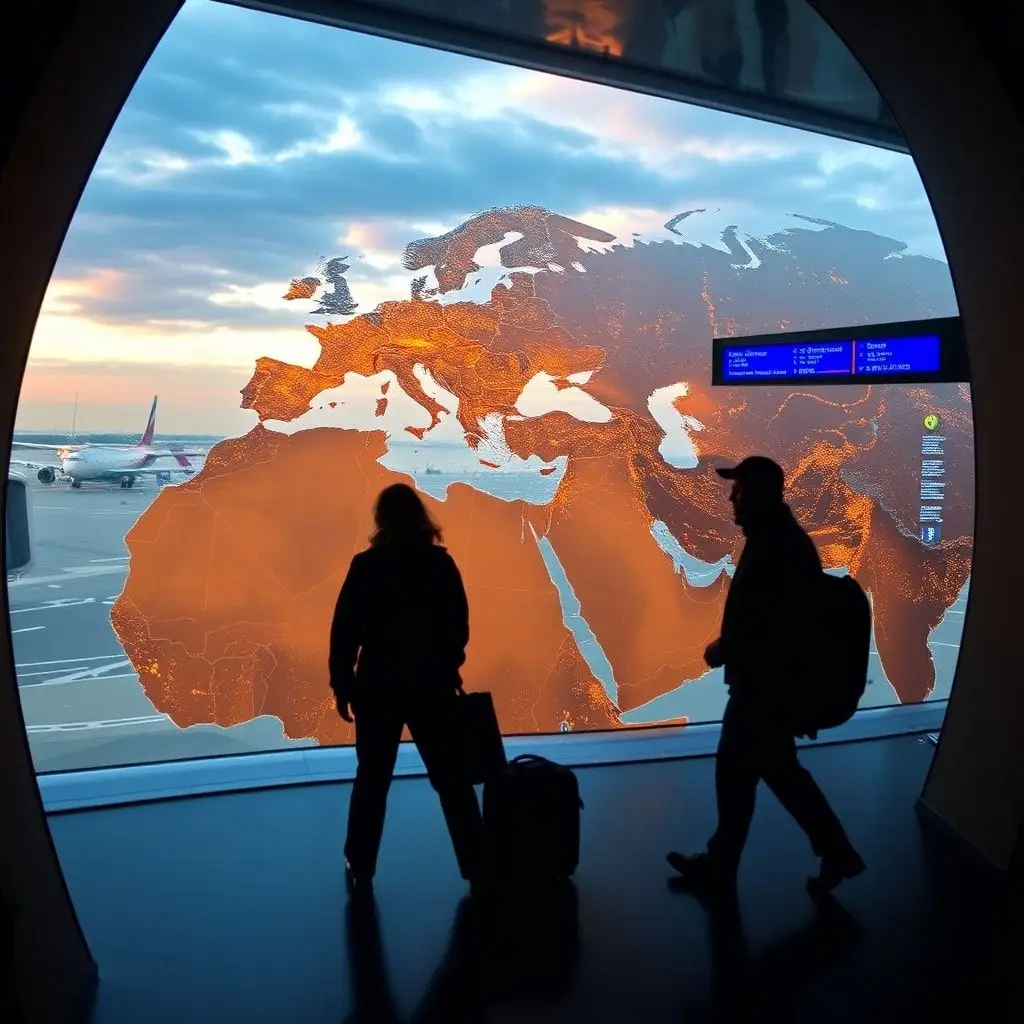
Introduction: A Barometer of Regional Instability
The recent announcement by Qatar Airways, a titan in global aviation renowned for its extensive network and premium service, to cancel flights to parts of the Middle East, serves as far more than a mere operational adjustment. This decision, echoing similar moves by other major carriers, is a stark barometer of escalating geopolitical instability across a region already fraught with complexities. As a senior investigative journalist and SEO expert, it is imperative to dissect the multifaceted layers of this development, examining the immediate triggers, the strategic calculus behind such cancellations, and the cascading effects that ripple through global aviation, regional economies, and the lives of countless individuals. This article delves into the critical juncture where commercial aviation intersects with geopolitical realities, revealing how the skies above the Middle East reflect the turbulence on the ground.
The Immediate Catalyst: Unpacking Regional Tensions and Airspace Vulnerability
While specific destinations affected by Qatar Airways’ cancellations have not always been explicitly detailed in initial announcements, the overarching context points to a deeply volatile security environment. The Middle East, a historical nexus of trade and cultural exchange, is currently a crucible of various, often interconnected, conflicts. From the ongoing conflict in Gaza and its spillover effects into Lebanon and Syria, to the persistent threats posed by Houthi attacks on shipping in the Red Sea and retaliatory strikes, and the broader, underlying tensions between major regional powers, the risk landscape for air travel has dramatically shifted. Airlines, as custodians of passenger and crew safety, are compelled to continuously assess these evolving threats. The decision to cancel flights is not taken lightly; it follows rigorous risk assessments conducted in conjunction with international aviation bodies like the International Civil Aviation Organization (ICAO) and national regulatory agencies. These assessments consider factors such as the proximity of conflict zones to established flight paths, the potential for missile or drone activity, and the reliability of air traffic control in affected areas. For Qatar Airways, operating from a hub strategically positioned within the region, such vigilance is paramount. The airline’s cancellations underscore a collective acknowledgment within the industry that certain airspaces, once routine, now present an unacceptable level of risk.
The Strategic Calculus: Qatar Airways’ Dilemma
For an airline like Qatar Airways, which has painstakingly built its reputation on connectivity and reliability, cancelling flights carries significant economic and reputational costs. Economically, these cancellations mean immediate revenue loss from ticket sales and cargo operations. Furthermore, the necessity of rerouting existing flights around restricted airspaces incurs substantial additional costs in terms of increased fuel consumption, longer flight times, and potential compensation for delayed or inconvenienced passengers. The logistical nightmare of re-scheduling aircraft, re-assigning crew, and coordinating with alternative airports adds another layer of financial strain. Beyond the immediate financial hit, there is the long-term impact on brand perception. While safety remains the paramount concern, repeated disruptions can erode passenger confidence, potentially diverting future bookings to competitors. Qatar Airways’ strategic dilemma involves balancing its unwavering commitment to safety with its commercial imperatives and its role as a key player in global air travel. The airline’s decisions reflect not just a response to immediate threats but also a proactive measure to safeguard its operational integrity and long-term viability in a perpetually complex region.
The Ripple Effect: Broader Implications for Global Aviation and Trade
Qatar Airways’ actions are not isolated; they send ripples throughout the entire global aviation ecosystem. Other airlines are forced to re-evaluate their own risk assessments and flight plans, potentially leading to further cancellations or rerouting. This collective shift can lead to increased congestion in alternative airspaces, placing additional strain on air traffic control systems and potentially increasing the risk of incidents in busier corridors. The impact extends significantly to global supply chains and cargo operations. Air freight is crucial for the timely delivery of high-value goods, perishable items, and critical medical supplies. Disruptions to established routes can lead to delays, increased costs, and even the spoiling of goods, affecting industries worldwide. The insurance industry also plays a critical role, with war risk premiums for airlines operating in or near conflict zones likely to skyrocket, further increasing operational costs. The interconnectedness of modern aviation means that instability in one region inevitably affects global connectivity and trade, demonstrating the fragile nature of our globalized economy.
Humanitarian and Passenger Impact
Beyond the economic and operational challenges, flight cancellations profoundly impact individuals. Passengers find themselves stranded, their travel plans – whether for business, family visits, or urgent medical reasons – thrown into disarray. The emotional and financial toll of rebooking, finding alternative accommodation, and dealing with uncertainty can be substantial. For the vast population of expatriate workers, students, and religious pilgrims who frequently traverse the Middle East, such disruptions can be particularly challenging, affecting their livelihoods and ability to connect with loved ones. Moreover, humanitarian aid efforts, often reliant on air transport for rapid deployment to crisis zones, can be severely hampered, exacerbating already dire situations. The decision by an airline to halt operations is a powerful reminder of how geopolitical events directly impinge on the personal lives and fundamental human needs for mobility and connection.
Economic and Geopolitical Fallout for the Middle East
The persistent instability reflected in airline cancellations carries dire economic consequences for the Middle East itself. Tourism, a vital sector for many regional economies, suffers immensely as safety concerns deter international visitors. Business travel diminishes, impacting foreign investment and intra-regional trade. Airports, once bustling hubs of activity, face reduced traffic, affecting revenues for ground services, retail, and hospitality sectors. The long-term implications are particularly concerning, potentially hindering economic diversification efforts and reinforcing a cycle of instability and underdevelopment. From a geopolitical standpoint, these flight cancellations serve as a stark reminder to international observers of the urgent need for de-escalation and diplomatic solutions. They underscore the human and economic cost of unresolved conflicts, placing renewed pressure on regional and global powers to work towards sustainable peace. Without stability, the region struggles to unlock its full economic potential and integrate more seamlessly into the global economy.
Historical Context and Precedents
The current situation is not without historical precedent. The aviation industry has long navigated geopolitical turbulence. Instances such as the Gulf Wars in the 1990s and early 2000s, various phases of the Israeli-Palestinian conflict, and more recently, the impact of the war in Ukraine on European airspace, have all forced airlines to adapt and reroute. Each of these events highlighted the vulnerability of air travel to regional conflicts and the necessity for robust contingency planning. Lessons from these past crises often revolve around the need for enhanced intelligence sharing, dynamic risk assessment methodologies, and coordinated international responses. However, the current intricate web of conflicts in the Middle East presents unique challenges, demanding a nuanced and agile approach that continuously adapts to rapidly changing circumstances. The ongoing cancellations suggest that while lessons may have been learned, the complexity of contemporary conflicts often outpaces the ability to fully mitigate their impact on global systems like aviation.
Looking Ahead: Navigating an Uncertain Sky
As the Middle East continues to grapple with profound geopolitical challenges, the future for air travel in and out of the region remains uncertain. Airlines, including Qatar Airways, will need to maintain highly adaptable operational strategies, leveraging advanced analytics and real-time intelligence to inform route planning and risk management. The role of international aviation bodies in fostering dialogue, establishing clear safety protocols, and potentially mediating safe corridors becomes even more critical. The broader challenge for the global aviation industry lies in fostering resilience in an increasingly fragmented and volatile world. This includes investing in technologies that enhance situational awareness, strengthening partnerships with governments and security agencies, and developing comprehensive crisis communication strategies to maintain passenger trust. The ongoing cancellations are a potent symbol of how deeply intertwined global commerce, travel, and security have become, demanding continuous vigilance and proactive adaptation from all stakeholders.
Conclusion: A Critical Juncture for Global Connectivity
Qatar Airways’ decision to cancel flights to the Middle East is more than a news headline; it is a critical inflection point for understanding the delicate balance between geopolitical stability and global connectivity. This comprehensive analysis reveals a complex tapestry woven from regional conflicts, economic imperatives, humanitarian concerns, and the relentless pursuit of passenger safety. As an investigative journalist and SEO expert, I emphasize that these cancellations are not isolated events but symptoms of deeper regional ailments. They underscore the urgent need for diplomatic solutions and highlight the profound impact that geopolitical instability in one vital region can have on the entire world, reminding us of the interconnectedness of our skies and our shared global future.