
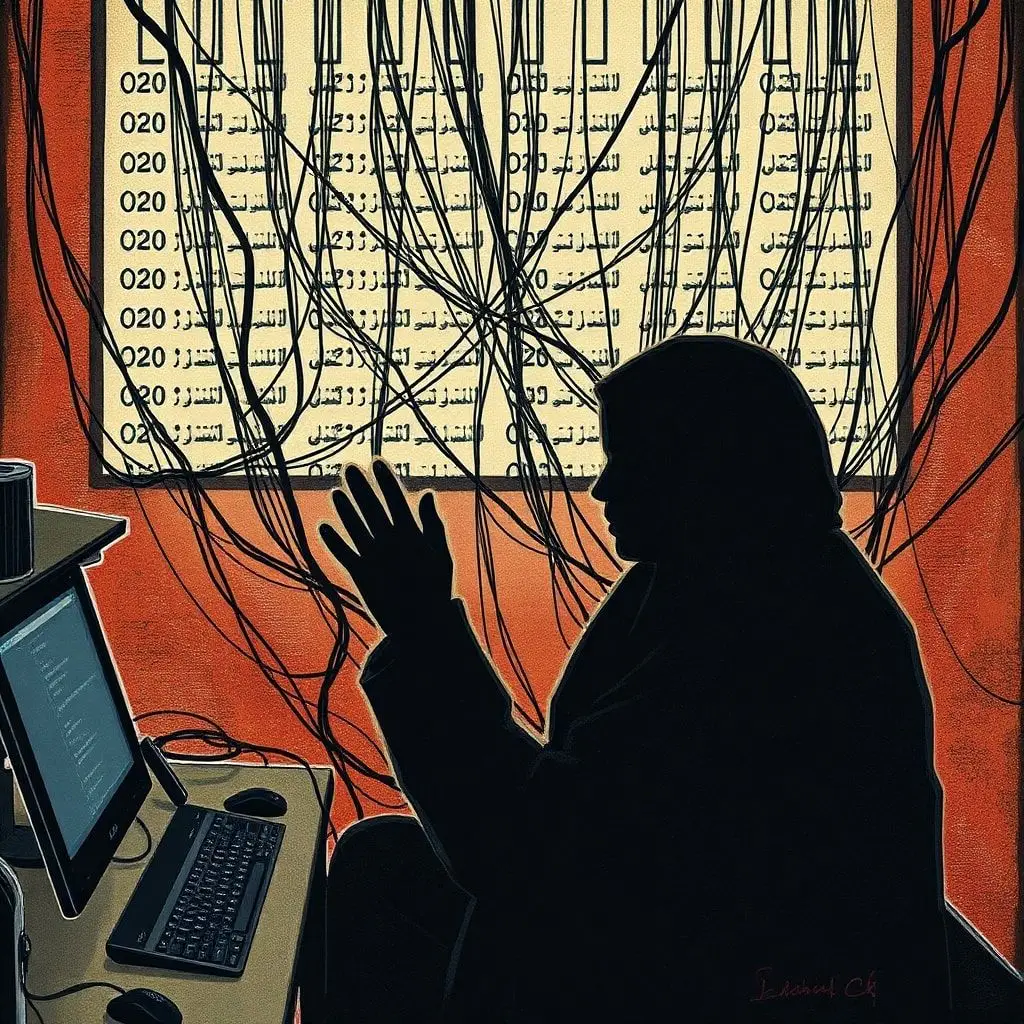
The Unseen Threads: How Iranians Break the Silence Amidst an Internet Blackout
In an era defined by instant global connectivity, the deliberate imposition of an internet blackout represents a chilling return to an information dark age. Yet, within the Islamic Republic of Iran, such digital suppression has become a grimly familiar tactic employed by the state to quash dissent and control narratives. The brief, almost clinical RSS feed content – “Iranians talk about what is happening inside the country, despite an almost total internet blackout” – merely scratches the surface of a profound human drama. It hints at a remarkable resilience, a defiant spirit refusing to be silenced, even as the digital pathways to the outside world are severed. This deeply analytical investigation delves into the extraordinary methods Iranians employ to communicate, the immense risks they face, and the intricate dance between state-sponsored censorship and the indomitable human desire for truth and connection. It is a testament to the fact that even when the wires are cut, the whispers persist, carrying vital information across a landscape of digital repression.
The Digital Iron Curtain: Iran’s Strategic Suppression of Information
Iran’s history of internet censorship is extensive, often intensifying during periods of widespread protests or political unrest. The internet blackout is not a mere technical glitch but a calculated strategy, a digital iron curtain designed to isolate the populace, prevent the organization of protests, and choke off the flow of information that could challenge the government’s narrative. Authorities have developed sophisticated methods to disrupt internet access, from throttling bandwidth to completely shutting down mobile data and international gateways. This leaves citizens in a state of digital siege, unable to access social media, news sites, or even basic communication platforms that have become integral to modern life. The impact extends beyond political activism, crippling businesses, severing academic ties, and creating immense psychological distress through enforced isolation.
A Calculated Strategy of Isolation
The primary motivation behind these sweeping internet blackouts is to prevent the rapid dissemination of information and images of protests, which can quickly galvanize further action both domestically and internationally. By cutting off internet access, the regime aims to fragment opposition movements, hinder coordination among activists, and deny the outside world a clear, real-time picture of events unfolding on the ground. This strategic isolation also facilitates the spread of state-controlled media narratives, ensuring that citizens primarily receive government-sanctioned information, thereby shaping public perception and undermining independent reporting. It is a direct assault on the fundamental right to freedom of expression and access to information, transforming connectivity into a weapon of control rather than a tool of empowerment.
Whispers in the Dark: Ingenious Methods of Communication
Despite the formidable barriers erected by the state, the human need to communicate and share experiences proves remarkably persistent. Iranians have developed and adapted a diverse array of methods, blending ancient forms of communication with ingenious modern workarounds, often at great personal risk. These methods highlight a profound resourcefulness born out of necessity, transforming everyday interactions into critical conduits of information. The act of sharing information under an internet blackout is a daring act of defiance, a quiet but powerful rebellion against the forces of suppression.
The Enduring Power of Word-of-Mouth and Physical Networks
In the absence of digital channels, traditional word-of-mouth networks become indispensable. Information travels through neighborhoods, families, and trusted social circles, spreading organically from person to person. Physical meetings, often disguised as social gatherings, become crucial forums for exchanging news, coordinating actions, and sharing emotional support. Messages are sometimes written on paper, passed discreetly, or communicated through coded language in seemingly innocuous conversations. This reliance on face-to-face interaction fosters deep trust and community bonds, but also introduces significant vulnerabilities to surveillance and infiltration. The inherent slowness of this method is offset by its resilience against technological interference.
Flickers of Digital Hope: VPNs, Satellite Phones, and Brief Windows
While comprehensive, blackouts are not always absolute or uniformly enforced. In fleeting moments, or in specific geographical areas, limited internet access might return, or certain services may remain partially functional. During these precious windows, Iranians race to connect, using highly sophisticated Virtual Private Networks (VPNs) and proxy servers, many of which are specifically designed to bypass state firewalls. The demand for robust VPN services skyrockets during these periods, becoming a digital cat-and-mouse game between citizens and the state. Furthermore, a small number of activists and journalists may possess satellite phones, expensive and risky devices that offer a direct, albeit insecure, line to the outside world. These brief digital flickers are critical for uploading videos, photos, and eyewitness accounts before the curtain descends again.
Analog Resilience: SMS and Landlines
Even when internet services are entirely cut, older analog communication methods often remain operational, albeit under strict state surveillance. Basic SMS messaging and landline phone calls become vital lifelines. While these channels lack the anonymity and reach of the internet, they allow for critical one-to-one communication, enabling individuals to check on loved ones, share urgent warnings, or relay specific, brief pieces of information. The brevity and perceived security of these methods, despite the looming threat of interception, make them a fallback for those desperate to connect and share updates when all other digital avenues are blocked.
The Human Cost: Risks, Resilience, and the Psychological Battlefield
The act of communicating under an internet blackout is fraught with peril. It is not merely a technical challenge but a profound human struggle, carrying significant personal risks and exacting a heavy psychological toll. Yet, in the face of such adversity, the resilience of the Iranian people shines through, demonstrating an unwavering commitment to truth and solidarity. The struggle for information becomes a battle for dignity and agency in a climate of fear.
Surveillance and Reprisal: The Price of Speaking Out
Those who attempt to circumvent censorship or share information, whether through digital means or physical networks, face severe consequences. The Iranian government maintains extensive surveillance capabilities, tracking online activity, monitoring phone calls, and employing informants. Individuals caught sharing “unapproved” content or organizing protests online can face arrest, imprisonment, torture, and even death sentences. The fear of reprisal is a constant companion, forcing citizens to operate with extreme caution, often resorting to pseudonyms, encrypted messaging (when available), and strict operational security protocols. The “price of speaking out” is not a metaphor; it is a very real and often devastating reality for countless Iranians.
Maintaining Morale and Challenging the Narrative
Despite the dangers, the act of communication plays a crucial role in maintaining morale and challenging the official narrative. Sharing unfiltered news, images, and videos from protests helps counter state propaganda, validate individual experiences, and foster a sense of collective purpose. Knowing that others are also resisting, even in isolated pockets, provides encouragement and strengthens resolve. This internal communication loop is vital for preventing despair and for sustaining the belief that change is possible. It transforms isolated acts of defiance into a broader movement for human rights and democratic freedoms, fueled by the shared truth that circulates through these clandestine channels.
The Global Echo Chamber: Diaspora’s Role and International Response
The communication landscape surrounding Iran’s blackouts extends far beyond its borders, with the Iranian diaspora playing a critical role in amplifying voices from within and the international community grappling with how to respond to such blatant digital repression. This global echo chamber transforms localized acts of defiance into a worldwide conversation, applying pressure on the regime and informing public opinion.
Verifying the Unverifiable: A Collaborative Effort
The Iranian diaspora and international media organizations become crucial partners in a complex verification process. Information that leaks out, often in fragmented forms, is meticulously cross-referenced with multiple sources, analyzed for inconsistencies, and contextualized with existing knowledge. This collaborative effort helps to verify the authenticity of videos, photos, and eyewitness accounts, separating fact from rumor and propaganda. The diaspora often acts as the initial filter, providing context and cultural understanding to raw data, before it reaches a wider international audience. This painstaking work is essential for building a credible narrative that can challenge the state’s monopoly on information.
International Condemnation and the Call for Connectivity
Internet blackouts in Iran consistently draw condemnation from international human rights organizations, governments, and advocacy groups. These bodies highlight the violation of fundamental human rights, including freedom of expression and access to information, and often call for greater accountability for the Iranian regime. Debates emerge within the international community regarding the provision of alternative internet access technologies, such as satellite internet services, and the ethical implications of bypassing national sovereignty to uphold digital rights. While concrete actions are often complex and slow, the global outcry ensures that Iran’s digital repression does not go unnoticed, maintaining international pressure on the regime.
Conclusion: The Unbreakable Spirit in the Face of Digital Tyranny
The story of Iranians communicating despite an almost total internet blackout is a powerful testament to the enduring human spirit in the face of digital tyranny. It reveals a society deeply committed to truth, connection, and the pursuit of freedom, even when the most fundamental tools of modern communication are stripped away. The methods employed, from whispered words to risky digital circumventions, paint a vivid picture of ingenuity, courage, and collective defiance. As senior investigative journalists and SEO experts, understanding this dynamic is crucial. It underscores that while technology can be used to oppress, it can never fully extinguish the innate human desire to communicate, to share, and to resist. The unseen threads of connection woven by the Iranian people continue to pierce the digital dark, reminding the world that silence is a choice they refuse to make.