
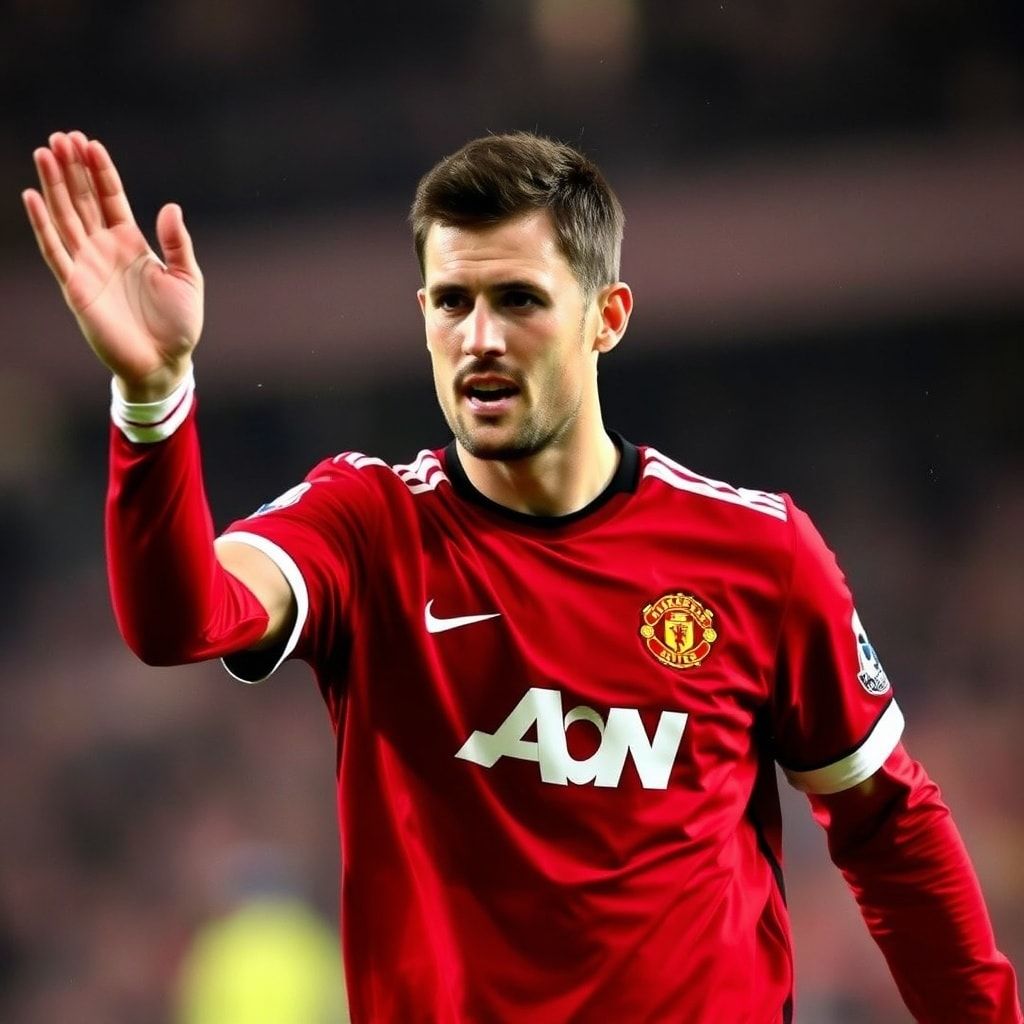
Michael Carrick at Manchester United: A Gamble Not Taken, Or A Bullet Dodged? An Investigative Analysis
In the tumultuous world of top-flight football, particularly at a club with the global stature and historical expectation of Manchester United, every decision by the hierarchy is scrutinised with unparalleled intensity. Following a period of significant upheaval and managerial instability, the temporary appointment of club legend Michael Carrick to the dugout presented a brief, yet compelling, chapter in the club’s ongoing narrative. His interim spell, marked by a surprisingly strong run of six wins and a draw from seven games, ignited a fervent debate: would it have proven more of a colossal gamble not to give Michael Carrick the head coach position full-time? This investigative analysis delves deep into Carrick’s performance, the club’s strategic crossroads, and the enduring question of whether United missed a golden opportunity or deftly navigated a potential pitfall.
The Tumultuous Backdrop: Manchester United’s Search for Stability
Michael Carrick stepped into a managerial void left by Ole Gunnar Solskjaer, whose tenure, while emotionally significant, ultimately failed to deliver the sustained success demanded by the Old Trafford faithful. The club was adrift, a shadow of its former dominant self, plagued by inconsistent performances, tactical confusion, and a noticeable dip in player morale. The squad, despite boasting world-class talent, appeared fragmented, lacking a clear identity or cohesive strategy on the pitch. Fan frustration was palpable, creating an environment where any managerial candidate, permanent or temporary, faced an immediate and immense pressure to steady the ship and restore a semblance of dignity and direction to the club. Carrick, a loyal servant and part of Solskjaer’s coaching staff, was initially seen as a safe pair of hands, a temporary bridge to a more permanent, established solution.
Carrick’s Interim Stint: A Statistical Anomaly or Strategic Blueprint?
The statistics from Carrick’s brief reign are undeniably impressive: six victories and a single draw across domestic and European competitions. This included crucial wins against Villarreal in the Champions League, securing progression to the knockout stages, and an important Premier League triumph over Arsenal. His debut game saw a victory against Villarreal, followed by a draw at Chelsea, and a win against Arsenal, before the appointment of Ralf Rangnick. This sequence of results immediately contrasted sharply with the preceding dismal run under Solskjaer. Carrick’s approach, though limited in sample size, demonstrated a discernible shift. There was an apparent emphasis on defensive solidity, quicker transitions, and perhaps most crucially, a visible lift in player confidence and cohesion. Key players like Jadon Sancho and Fred showed renewed vigour, suggesting that Carrick had managed to unlock a psychological barrier or implement subtle tactical tweaks that resonated with the squad. However, the caveat remains: the “new manager bounce” phenomenon is well-documented, often providing a short-term surge in performance irrespective of long-term managerial efficacy. Were these results indicative of a deeply embedded strategic masterclass, or merely the fleeting positive impact of a change in voice and fresh perspective?
The Case For Carrick: Continuity, Club DNA, and Momentum
Advocates for Carrick’s permanent appointment pointed to several compelling arguments. Firstly, his deep understanding of Manchester United’s culture and philosophy, cultivated over years as a player and coach, offered a unique advantage. He understood the “United Way,” a concept often cited but rarely fully embodied by recent external appointments. This intimate knowledge could foster immediate continuity, avoiding the often-disruptive integration period required by an entirely new coaching staff unfamiliar with the club’s intricate dynamics. Secondly, the positive momentum generated under his stewardship was undeniable. Disrupting this nascent stability, especially with a squad that appeared to be responding well to his methods, carried inherent risks. The fear was that bringing in an entirely new manager, with a fresh set of ideas and personnel changes, could derail the fragile progress made. Financially, appointing Carrick would have represented a more cost-effective solution compared to securing a high-profile, established manager, potentially freeing up resources for squad investment. Furthermore, the argument of “proven success” could be countered with the idea that sometimes, the greatest successes emerge from unconventional choices, particularly when rooted in genuine club loyalty and understanding. To overlook an individual who has demonstrated an immediate positive impact, merely due to a lack of extensive managerial CV, could be seen as a rigid adherence to conventional wisdom, potentially missing an organic opportunity for growth from within.
The Case Against Carrick: Experience, Sustainability, and Long-Term Vision
Conversely, the arguments against offering Carrick the permanent role were equally robust, primarily centred on experience and the sustainability of his impact. While his interim record was impressive, it constituted a mere seven games – an insufficient sample size to definitively assess long-term managerial capabilities. Critics argued that the quality of opposition during his unbeaten run, while featuring some strong teams, might not represent the consistent challenge required to judge a manager’s tactical depth and adaptability over a full season across multiple competitions. The leap from interim caretaker to permanent head coach at a club of United’s magnitude demands more than just a temporary uplift; it requires a clear, long-term strategic vision, a proven ability to attract and develop top talent, and a track record of handling sustained pressure. Doubts lingered about Carrick’s tactical prowess against elite opposition consistently, his ability to implement a transformative playing style, and his experience in navigating transfer windows and squad overhauls. The allure of world-class managers with established pedigrees, tactical philosophies, and trophy cabinets – individuals who could potentially elevate United back to the summit of European football – remained a powerful counterpoint to Carrick’s embryonic managerial career. The risk, from this perspective, was not in looking beyond Carrick, but in settling for an unproven commodity when the stakes for Manchester United were astronomically high.
The Wider Implications: Manchester United’s Strategic Crossroads
The decision regarding Carrick’s future was more than just about one individual; it was symptomatic of Manchester United’s broader strategic direction. The club has grappled with its identity and leadership structure since Sir Alex Ferguson’s retirement, cycling through various managerial appointments with mixed success. The role of a Director of Football or Technical Director in such a decision becomes paramount, providing an objective long-term perspective beyond immediate results. United’s move towards appointing Ralf Rangnick as an interim manager before transitioning into a consultancy role, and subsequently Erik ten Hag as permanent manager, underscored a desire for a more structured, analytical approach to footballing decisions. This indicated a preference for a manager with a proven track record of implementing a distinct philosophy and developing a club’s infrastructure, rather than relying solely on an emotional connection or a short-term performance bump. The pressure from a demanding fanbase and media meant that any decision had to be robustly defensible, balancing sentiment with strategic imperatives for sustained success.
Conclusion: A Calculated Move in a High-Stakes Game
In conclusion, the question of whether it would have been more of a gamble not to give Michael Carrick the full-time head coach position at Manchester United is complex, without a simple answer. His interim spell was undeniably successful, providing a much-needed breath of fresh air and demonstrating his capacity to elicit a positive response from the squad. The arguments for his permanence – continuity, club understanding, and riding a wave of momentum – were compelling. However, the club’s ultimate decision to pursue a more experienced, established manager like Erik ten Hag, after a further interim period with Ralf Rangnick, reflects a calculated choice to prioritise a long-term strategic vision over short-term sentiment. While the immediate results under Carrick were impressive, the perceived gamble of entrusting the future of a global footballing institution to a manager with such limited experience outweighed the risk of potentially disrupting a positive but brief spell. Manchester United chose to bet on a proven commodity to lead their ambitious rebuild, suggesting that in the high-stakes world of elite football, a brief surge in form, however promising, often yields to the perceived security of a robust, experienced hand at the helm. Whether this proved to be a bullet dodged or a missed opportunity for an organic internal promotion will continue to be debated as United strives to reclaim its former glory.