
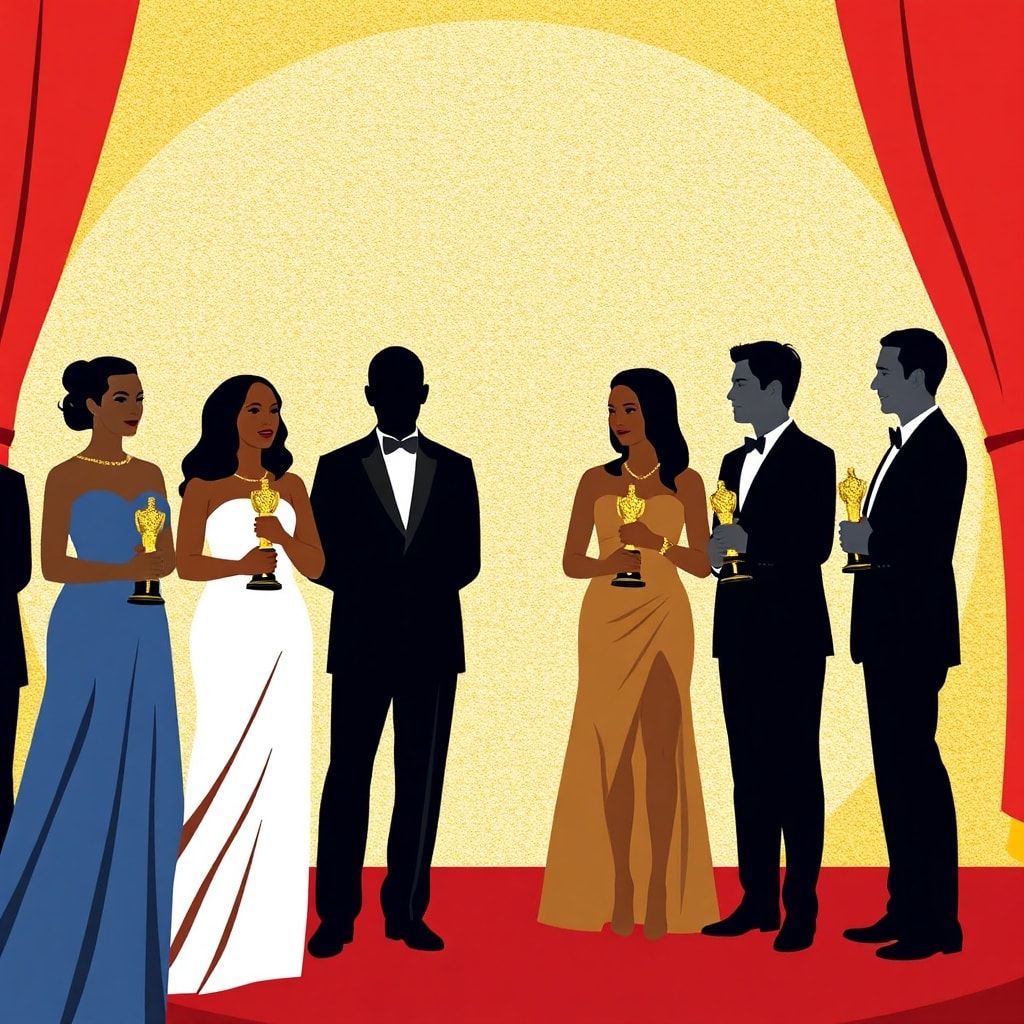
The Evolving Landscape of Recognition: Unpacking the Ceremony Formerly Known as the SAG Awards
In the glitzy, ever-shifting firmament of Hollywood, few institutions boast the gravitas and historical weight of its venerable awards ceremonies. Yet, even the most established traditions are not immune to the winds of change. This Sunday in Los Angeles, an event long synonymous with the very heart of the acting profession – the SAG Awards – will unfold under a new, as-yet-unspecified moniker. This rebranding is more than a mere cosmetic alteration; it signals a profound shift in how the entertainment industry seeks to present itself, engage its audience, and perhaps, reassert its dwindling relevance in an increasingly fragmented media landscape. For senior investigative journalists and SEO experts alike, this transition presents a fertile ground for analysis, probing both the underlying motivations and the potential long-term implications for an awards show that once stood as a crucial barometer for Oscar success.
A Legacy Reimagined: The Shift from SAG Awards
For decades, the Screen Actors Guild Awards, affectionately known as the SAG Awards, held a unique and cherished position within the awards ecosystem. It was an award bestowed by peers – actors recognizing the outstanding performances of their fellow craftspeople. This intrinsic peer-to-peer validation lent the SAG Awards an authenticity and respect that often felt distinct from the more commercially driven or critically influenced accolades. The mere mention of its name evoked a sense of camaraderie, a celebration by the industry, for the industry. The decision to move beyond this well-established brand identity, transitioning to an event “formerly known as the SAG Awards,” therefore raises significant questions about strategic intent and future direction.
One might speculate on a myriad of reasons for such a pivotal rebranding. Is it an attempt to broaden appeal beyond the guild’s membership, perhaps to attract a wider viewership or to encompass a more inclusive definition of “performance” in the digital age? Could it be tied to new sponsorship opportunities, where a fresh brand identity aligns better with commercial partners seeking a modern narrative? Or is it a more fundamental restructuring, a response to evolving industry dynamics, union negotiations, or even past criticisms leveled against traditional awards formats? The rebranding effort, irrespective of its specific catalysts, is a high-stakes gamble. It risks alienating a loyal, established audience that recognized and valued the SAG brand, while simultaneously seeking to capture new demographics. From an SEO perspective, this transition is particularly challenging, requiring meticulous management of historical search equity and the painstaking cultivation of new keywords and search phrases associated with the rebranded entity, all while battling the enduring recognition of its former name.
The move inevitably invites comparisons to other rebrands in the corporate and entertainment worlds. Some prove successful, injecting new vitality; others falter, losing their connection to a foundational legacy. The careful management of messaging, the articulation of a compelling new vision, and the seamless integration of this new identity into the cultural lexicon will be paramount to its success. Without a clear and resonant narrative, the ceremony risks being perceived as merely shedding its past rather than building upon it, potentially diminishing its prestige rather than enhancing it.
The Predictor’s Pulse: The SAG Awards’ Historical Significance
Beyond its internal validation, the SAG Awards cultivated a formidable reputation as one of the most accurate predictors of the Academy Awards, particularly in the acting categories and for Outstanding Performance by a Cast in a Motion Picture – often a strong indicator for the Best Picture Oscar. This “predictor’s pulse” was rooted in the simple fact that a significant overlap exists between SAG-AFTRA voters and the acting branch of the Academy. When actors honored actors, it often signaled a broader consensus that would later manifest on Hollywood’s biggest night.
This predictive power imbued the SAG Awards with an additional layer of importance during the intense awards season. A win here could provide crucial momentum, galvanizing campaigns and solidifying front-runner status. Conversely, a snub could throw a contender’s Oscar hopes into disarray. The ceremony served not just as a celebration but as a strategic waypoint, a crucial checkpoint on the road to the Oscars. This unique influence contributed significantly to its viewership and media coverage, making it an indispensable part of the awards circuit narrative.
As the ceremony now sheds its long-held name, questions arise about whether this predictive quality will endure. While the voting body itself may remain largely unchanged, the psychological impact of a rebranded entity might subtly alter perceptions. Will the industry and the public continue to view its selections with the same weight and foresight, or will the new identity necessitate a re-evaluation of its role in the Oscar race? Maintaining this critical perception will be key to preserving its influence, especially in a landscape where multiple precursors compete for attention and predictive accuracy.
Los Angeles: The Unchanging Epicenter of Glamour and Industry
While the name of the ceremony may be in flux, one constant remains steadfast: its location. The event continues to take place in Los Angeles, the undisputed global epicenter of the entertainment industry. This choice is far from arbitrary; it is a fundamental aspect of the awards show’s identity and logistical success. Los Angeles is not merely a venue; it is the beating heart of Hollywood, a city steeped in cinematic history, celebrity culture, and the intricate web of studios, agents, and publicists that make awards season possible.
Hosting the ceremony in LA provides unparalleled logistical advantages. It minimizes travel for the vast majority of nominees, presenters, and industry executives who reside or work in the area. It allows for seamless coordination with major studios and production companies, facilitates media access from global outlets, and provides a plethora of world-class venues capable of accommodating such a high-profile event. Beyond the practicalities, Los Angeles contributes immeasurably to the aspirational allure of awards season. The iconic skyline, the star-studded boulevards, and the palpable sense of industry glamour enhance the spectacle, turning a televised event into a cultural moment.
The economic impact on Los Angeles is also considerable, with hotels, restaurants, transportation services, and countless support industries benefiting from the influx of attendees and media. The red carpet, a phenomenon almost exclusive to LA’s major awards shows, transforms the streets into a runway, a global stage for fashion, celebrity interviews, and media frenzy. Despite the ceremony’s name change, the undeniable power and symbolism of Los Angeles as its host city will remain a critical anchor, ensuring that the event, in whatever form it takes, retains its essential connection to the dream factory that is Hollywood.
Navigating the Digital Age: The Future of Awards Ceremonies
The rebranding of the ceremony formerly known as the SAG Awards unfolds against a backdrop of broader existential challenges facing all traditional awards shows. Viewership figures have seen a consistent decline across most major awards telecasts, prompting industry introspection and desperate pleas for innovation. Modern audiences, accustomed to on-demand content, personalized experiences, and interactive digital engagement, find the often lengthy, formulaic television broadcasts increasingly less compelling.
The digital age demands more than just a live broadcast. Awards shows are now forced to contend with real-time social media commentary, viral moments, and the need to create content that resonates across multiple platforms. Behind-the-scenes access, red carpet livestreams, interactive polls, and short-form video content are no longer luxuries but necessities for capturing and maintaining audience attention. The challenge lies in striking a balance between maintaining the gravitas and tradition of honoring artistic excellence, while simultaneously embracing the ephemeral, fast-paced nature of digital consumption.
Furthermore, awards ceremonies have increasingly become platforms for social and political commentary, reflecting broader cultural shifts. While this can infuse them with renewed relevance and purpose, it also risks alienating segments of the audience seeking pure entertainment or escaping the daily news cycle. The rebranded ceremony will need to navigate this delicate balance, finding its voice in a contentious public sphere. Will it lean into activism, or seek a more neutral, celebratory tone? Its approach will inevitably shape its public perception and, consequently, its ability to attract and retain viewership.
Ultimately, the long-term success of this ceremony, now in its new iteration, hinges on its ability to reinvent itself for a new generation without sacrificing the core values that once made it indispensable. This means not just a name change, but a holistic reimagining of its format, its narrative, and its engagement strategies to resonate in a rapidly evolving media landscape.
Conclusion: A New Chapter for Industry Recognition
The ceremony, formerly known as the SAG Awards, stands at a pivotal juncture. Its rebranding signals a conscious effort to evolve, to adapt to the shifting currents of the entertainment industry and the broader media environment. While the motivations behind this name change are subject to ongoing speculation, its implications are clear: a legacy is being recontextualized, a new brand identity is being forged, and the future relevance of an esteemed institution hangs in the balance.
As the stars gather in Los Angeles this Sunday, the focus will undoubtedly be on the honorees and their remarkable performances. Yet, beneath the surface glamour, a more profound narrative will be unfolding – one about the enduring power of recognition, the challenges of tradition in a modern world, and the continuous quest to define what it means to celebrate artistic excellence in the digital age. This event is more than just an awards show; it is a mirror reflecting the dynamic, often turbulent, evolution of Hollywood itself. Its success in this new chapter will offer valuable lessons for the entire awards ecosystem, demonstrating how established institutions can, or cannot, reinvent themselves for the future.