
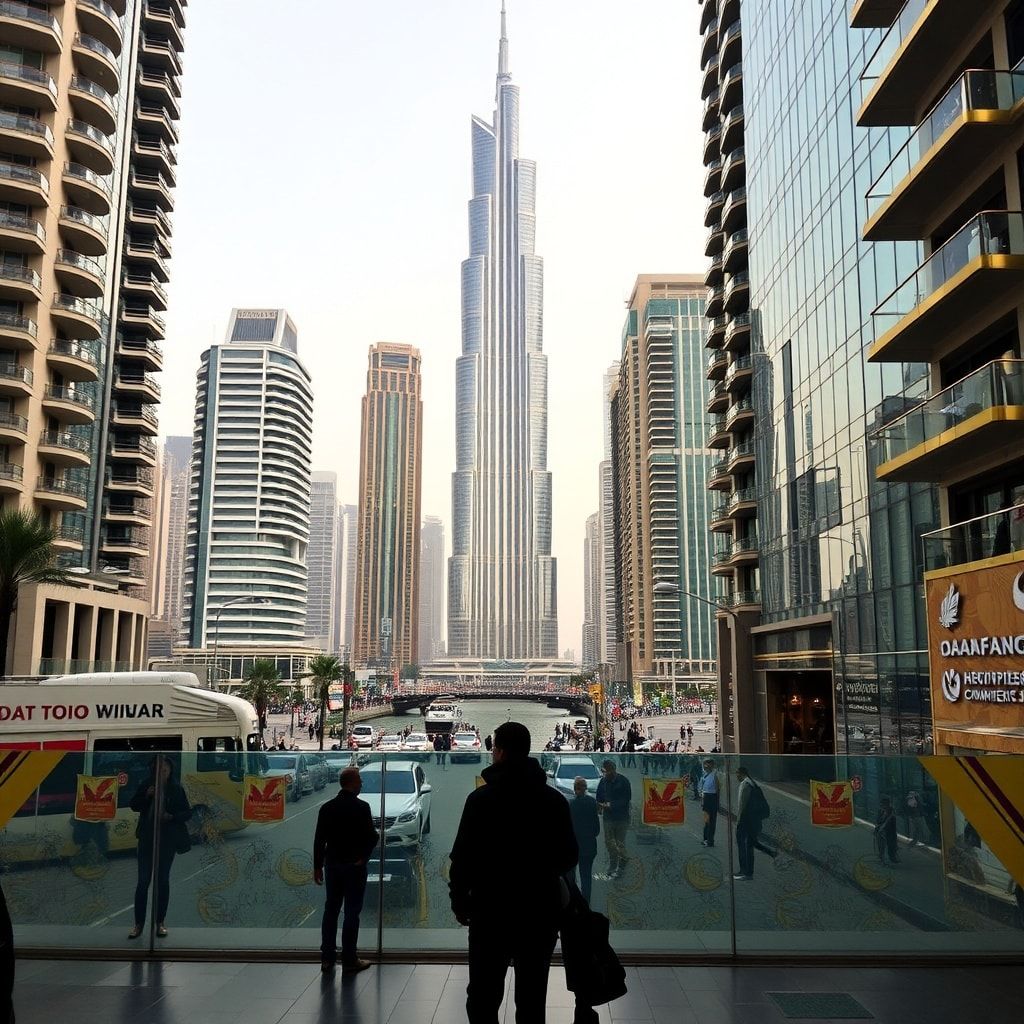
Dubai’s Gilded Facade Cracks: How Regional Tensions Are Reshaping the Expat and Influencer Dream
For years, Dubai has shone as a beacon of prosperity, a glittering oasis in the Middle East that drew the world’s ambitious, the wealthy, and the digitally savvy. Its meticulously engineered skyline, tax-free income, and seemingly unshakeable stability created a powerful narrative: a place where dreams were not just pursued but routinely achieved. This narrative was particularly potent for global expats seeking a luxurious lifestyle and for influencers leveraging the emirate’s opulent backdrop for their aspirational content. From sun-drenched beaches and high-end shopping malls to exclusive business opportunities, Dubai cultivated an image of uninterrupted growth and serene detachment from the often-turbulent geopolitics of its neighborhood. However, recent developments, specifically the Iranian strikes impacting the wider region, have begun to chip away at this carefully constructed facade, prompting a re-evaluation among those who call Dubai home or consider it their next destination. The question is no longer just about financial gain or lifestyle perks, but increasingly, about security and long-term stability. Is the dream starting to fade?
The Allure of Dubai: A Modern Oasis Built on Ambition
To understand the current shift, one must first grasp the depth of Dubai’s appeal. It wasn’t by accident that the city-state transformed itself from a desert trading post into a global metropolis. Strategic vision, massive investment in infrastructure, and a liberal economic policy formed the bedrock. For multinational corporations, it offered a strategic bridge between East and West, coupled with business-friendly regulations. For individual expats, the draw was multifaceted: high salaries, zero income tax, world-class amenities, and a cosmopolitan culture that blended international influences with local traditions. The safety and security, often contrasted with their home countries, were frequently cited as primary motivators for relocation. For the burgeoning influencer economy, Dubai provided an ideal stage. Its endless supply of luxury hotels, designer boutiques, gourmet restaurants, and picturesque landscapes offered unparalleled backdrops for content creation. The city itself became a brand, synonymous with aspiration, success, and an exclusive lifestyle. This symbiotic relationship between Dubai and its international residents, particularly the growing cohort of digital nomads and lifestyle gurus, cemented its image as a destination of choice, an aspirational hub where life was lived on a grander scale, seemingly immune to external pressures.
The Geopolitical Quake: Iranian Strikes and Regional Instability
The perceived invulnerability of Dubai has recently been tested by escalating regional tensions, specifically the Iranian strikes that have rippled across the Middle East. While direct impacts on Dubai have been limited, the proximity of these events, and the potential for spillover, have created an unsettling undercurrent. These strikes, often retaliatory in nature and targeting assets or allies of rival powers, serve as a stark reminder of the volatile geopolitical landscape in which the UAE operates. The psychological effect of these incidents cannot be overstated. When missiles or drones are deployed in neighboring countries, or when warnings are issued, the sense of absolute safety begins to erode. News reports, often graphic and immediate via social media, penetrate the bubble that many expats and influencers felt they were inhabiting. This shift from a theoretical risk to a palpable concern forces individuals to confront the uncomfortable reality that even the most secure enclaves are not entirely immune from regional conflicts. The geopolitical fault lines, once appearing distant, suddenly seem much closer, casting a long shadow over the future prospects of stability in the Gulf.
Shifting Perceptions: Security, Stability, and the Psychology of Uncertainty
The most immediate and profound impact of these regional flare-ups is on the perception of security and stability. Dubai, often marketed as an oasis, now faces questions about the robustness of its defensive shield and its ability to remain neutral in a deepening regional rivalry. For expats who moved seeking refuge from insecurity in their home nations, or for those with families, this change in perception is deeply unsettling. The calculus of risk versus reward shifts dramatically when the psychological comfort of safety is compromised. Parents worry about their children; professionals consider the long-term viability of their careers in a potentially unstable environment. This isn’t about actual attacks on Dubai itself, but the growing awareness of its proximity to potential flashpoints. The constant media reports, the increased vigilance at borders, and the general atmosphere of heightened alert contribute to a pervasive sense of uncertainty. This psychological toll is significant, fostering anxiety and prompting a re-evaluation of long-term commitments. The once-unquestioning belief in Dubai’s impenetrable security is being replaced by a more nuanced, and often apprehensive, assessment of regional risks.
Economic Ripple Effects: Investment, Tourism, and the Real Estate Market
Beyond individual perceptions, the geopolitical climate has tangible economic ramifications. Dubai’s economy, heavily reliant on foreign investment, tourism, and its status as a regional business hub, is particularly vulnerable to shifts in confidence. Major international corporations, which might have once viewed Dubai as a low-risk gateway to the Middle East, are now likely to factor in increased political risk assessments. This could lead to a slowdown in new investments or even a partial relocation of operations to perceived safer havens further afield. The tourism sector, a cornerstone of Dubai’s revenue, could also suffer. Travelers, particularly those from Western countries, might reconsider leisure trips to a region perceived as unstable, impacting hotel occupancy, airline traffic, and retail spending. The real estate market, historically a magnet for global wealth, might also see a cooling effect. While demand from certain regions might remain robust, a broader decline in international investor confidence could lead to slower growth or even price adjustments, challenging the long-term upward trajectory that has defined Dubai’s property landscape for decades. The interconnectedness of regional security and economic vitality is now more evident than ever.
The Influencer Dilemma: Brand Image and Personal Safety
The influencer community, so central to Dubai’s modern branding, faces a unique dilemma. Their livelihoods often depend on projecting an image of aspirational luxury, carefree travel, and idyllic living. Regional instability, however, directly contradicts this carefully curated persona. Continuing to post content featuring extravagant lifestyles amidst escalating regional tensions can appear tone-deaf or even irresponsible to their global audience. More importantly, personal safety becomes a paramount concern. While many influencers are transient, moving between locations, the cumulative effect of perceived risk can deter new talent from relocating and even encourage existing residents to explore alternatives. The “Dubai dream” they sell is intrinsically linked to peace and security. If that foundation is shaken, their ability to credibly market that dream, and indeed, to feel safe while doing so, is severely compromised. Some may choose to pivot their content, acknowledge the situation, or, more likely, quietly relocate to destinations that offer a more consistent backdrop of tranquility, thus slowly diminishing Dubai’s once-unrivaled appeal as the ultimate influencer hub.
Expats Re-evaluating: A Long-Term Reckoning
The re-evaluation extends far beyond the realm of digital creators. Long-term expats, who have built lives, careers, and families in Dubai, are now confronted with difficult questions about their future. While the financial incentives remain, they are increasingly weighed against the perceived risks. Families with children entering school, professionals considering buying property, or individuals planning their retirement in the emirate, are all engaging in a more serious calculus of long-term stability. This is not about immediate panic, but a slow, deliberate assessment of the changing regional dynamic. The decision to uproot a life is significant, and many will remain, confident in Dubai’s resilience and the UAE’s commitment to security. However, for a notable portion, the ease with which they once dismissed geopolitical risks is no longer possible. The search for genuine peace of mind, for a stable environment where their investments and families are truly secure, may lead some to explore other global hubs, from Singapore to London, that offer similar economic opportunities with a lower perceived geopolitical risk profile. This long-term reckoning threatens to alter the demographic composition and expatriate influx that has fueled Dubai’s growth for decades.
Dubai’s Response and the Path Forward
In response to these evolving challenges, the UAE government is undoubtedly engaged in a sophisticated diplomatic dance to de-escalate regional tensions and reinforce its image as a bastion of stability. Public statements emphasize the robustness of its defense capabilities and its commitment to ensuring the safety of all residents. Economically, efforts will likely intensify to diversify beyond traditional revenue streams and attract investments from an even broader range of global partners, aiming to insulate the economy from regional shocks. Security measures will undoubtedly be enhanced, and communications strategies will be crucial in rebuilding and maintaining confidence among its expat and investor communities. However, the path forward is complex. While Dubai’s foundational strengths—its infrastructure, strategic location, and business-friendly environment—remain formidable, the regional geopolitical reality is undeniable. The emirate must navigate this delicate balance, demonstrating not only its resilience but also its capacity to adapt and assure its residents and investors that their future remains secure in a volatile world. The narrative of an unshakeable oasis must now be consciously and continuously reinforced through action and reassurance.
Conclusion: The End of Unquestioned Prosperity?
Dubai’s reputation as a globally attractive destination for expats and influencers has undeniably entered a new phase. The era of unquestioned prosperity and absolute stability, where geopolitical risks seemed a distant concern, is giving way to a more nuanced reality. While the emirate retains many of its advantages—its economic dynamism, luxurious lifestyle, and world-class infrastructure—the shadow of regional tensions, particularly the Iranian strikes, has introduced an element of uncertainty that cannot be ignored. For some, the dream has not shattered but has certainly become more fragile, prompting a serious reconsideration of long-term commitments. Dubai is not simply a location; it is a promise of a certain quality of life and security. As that promise faces external pressures, the city must work harder than ever to reaffirm its value proposition. The future will depend on its ability to effectively mitigate regional risks, bolster perceptions of safety, and continue to innovate, ensuring that its gilded facade reflects a genuine, enduring stability that can withstand the tests of a rapidly changing world.