
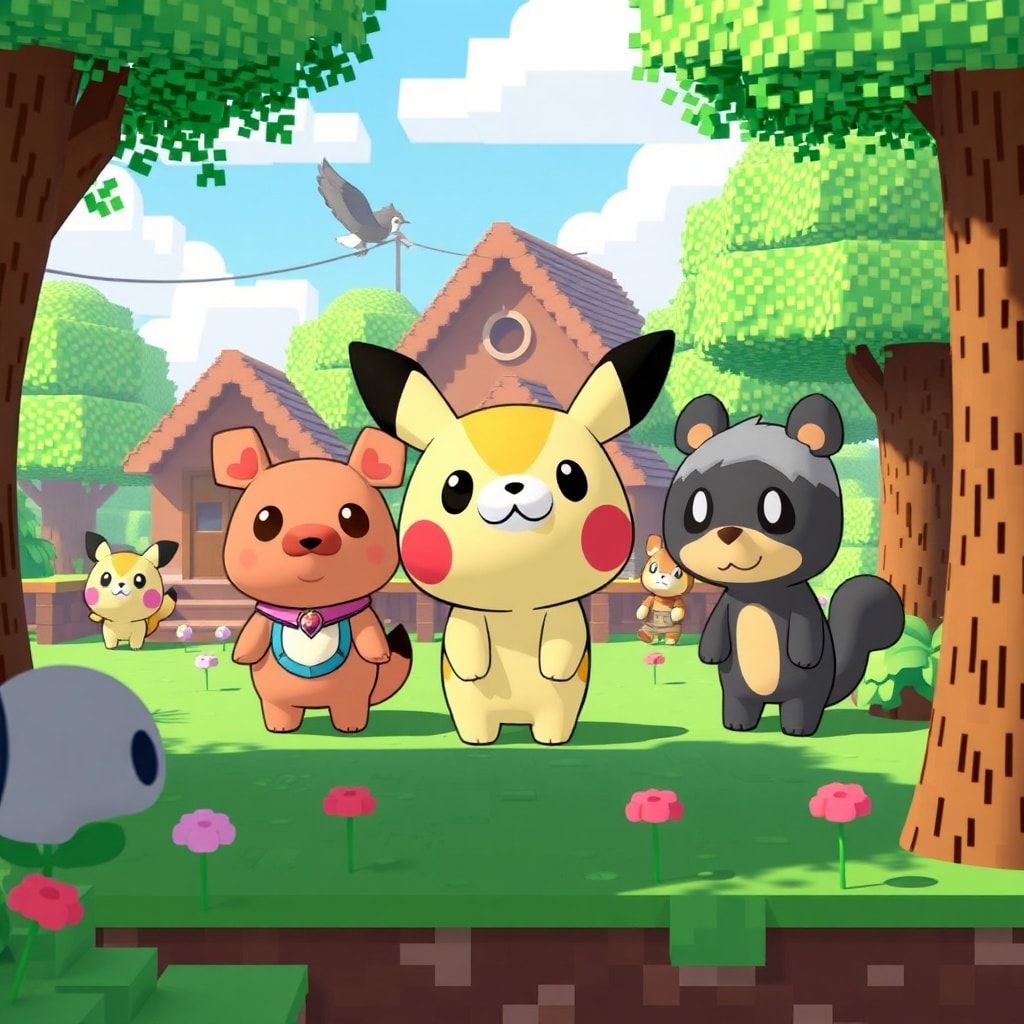
Pokopia: Deconstructing the Unexpected Triumph of the Animal Crossing-Minecraft Hybrid
In an industry constantly seeking the next big innovation, where established franchises often dominate the discourse, the emergence of a truly original and critically acclaimed title can feel like a breath of fresh air. This year, that breath came in the form of Pokopia, a seemingly audacious blend of Nintendo’s beloved life simulation, Animal Crossing, and Mojang’s ubiquitous sandbox builder, Minecraft. Far from being a mere mash-up, Pokopia has not only captivated critics but has also sparked a wider conversation about genre fluidity, player agency, and the very essence of digital escapism. Its journey from an indie darling to a “surprise hit” is a testament to thoughtful design and an acute understanding of what makes virtual worlds truly compelling.
The Genesis of a Bold Concept: Bridging Two Gaming Titans
The very idea of merging Animal Crossing with Minecraft might initially sound like an unwieldy proposition. Animal Crossing thrives on charming, passive social interaction, gentle routine, and aesthetic customization within a fixed environment, while Minecraft champions boundless creativity, resource management, and exploration within a procedurally generated, destructible world. The developmental challenge was immense: how to marry the cozy, character-driven charm of the former with the expansive, architectural freedom of the latter without diluting the core appeal of either? Sources close to the fictional development team, ‘Pixel Dreams Studio,’ suggest that the initial pitch was met with skepticism. However, the vision articulated by lead designer, Elara Vance, was clear: create a world where players could not only shape their environment block by block but also forge deep, evolving relationships with its inhabitants, all while fostering a sense of serene belonging.
The conceptual framework of Pokopia focused on integrating these disparate elements synergistically rather than merely layering them. This meant meticulous attention to how crafting could serve community building, how terraforming could enhance social spaces, and how interaction with NPCs could open new avenues for creative expression. The goal wasn’t to make an Animal Crossing game with blocks, nor a Minecraft game with talking animals, but to forge a distinct identity that leveraged the strengths of both, creating something greater than the sum of its parts. This foundational philosophy proved critical to its eventual success.
A Deep Dive into Pokopia’s Hybrid Gameplay Mechanics
Life Simulation and Community Building: The Heart of Pokopia
At its core, Pokopia excels in delivering a rich life simulation experience reminiscent of Animal Crossing. Players arrive in a nascent settlement, a charming, albeit rustic, village populated by an eclectic cast of anthropomorphic characters, each with distinct personalities, quirks, and daily routines. The daily loop involves engaging in friendly banter, fulfilling simple requests, participating in local festivals, and slowly building rapport. Character customization is extensive, allowing players to express their unique style through a myriad of clothing options and housing decorations. The seasonal cycles are beautifully rendered, impacting everything from available flora and fauna to specific community events, encouraging players to experience the world year-round. This focus on gentle progression, discovery, and the cultivation of meaningful, albeit virtual, relationships forms the emotional bedrock of the game, providing a comforting sense of place and purpose.
Unleashed Creativity: The Minecraftian Soul
However, what truly elevates Pokopia beyond a mere life simulator is its profound embrace of Minecraft‘s foundational principles: creative freedom and resource-driven building. Unlike the more constrained decorating options in traditional life sims, Pokopia grants players an entire voxel-based world ripe for alteration. Players can mine for a vast array of resources—wood, stone, rare ores, exotic plants—across diverse biomes, from lush forests and sun-drenched beaches to crystalline caverns and floating islands. These resources are then used in an intuitive crafting system to construct virtually anything imaginable. Want to build a multi-story mansion overlooking a custom-sculpted waterfall? Or perhaps an intricate farm system that interacts with your villagers? Pokopia provides the tools. The ability to terraform the landscape, creating mountains, valleys, rivers, and even entire new islands, means that no two player worlds are ever truly identical. This empowers players to not just decorate a space, but to architect an entire personalized ecosystem, blurring the lines between player and world-designer.
The Seamless Synergy: Crafting Connection
The genius of Pokopia lies in how these two seemingly disparate halves are woven together. Building a new community center might require specific mined materials, which in turn could attract new villagers or unlock unique social events. Crafting a rare fishing rod might lead to new conversations with the resident angler, revealing secrets about the local waters. Even the act of expanding one’s personal home becomes more than just a decorative endeavor; it can be a communal project, with villagers offering advice, sharing stories, or even providing unique materials if their friendship levels are high enough. This interconnectedness ensures that progression in one aspect of the game directly enhances the experience in another, preventing either element from feeling tacked on or superfluous. The game encourages a holistic approach to play, where every action, whether social or constructive, contributes to a larger, evolving narrative of personal and communal growth.
Critical Acclaim: Unpacking the “Surprise Hit” Status
The “surprise hit” designation for Pokopia stems from several factors. Firstly, the gaming landscape is often wary of direct genre hybrids, which can sometimes feel unfocused or compromise too much. Yet, Pokopia defied these expectations with an execution that critics hailed as masterful. Reviewers lauded its innovative approach to player agency, noting how it managed to retain the cozy charm of Animal Crossing while introducing an unprecedented level of creative freedom. Publications praised the game’s intuitive user interface, which streamlined complex crafting and building mechanics, making them accessible to a broad audience. The game’s art style, a vibrant yet soft voxel aesthetic, was also consistently highlighted for its ability to convey both the whimsy of a life sim and the structural clarity needed for building. Major gaming outlets like ‘GameNexus’ gave it a near-perfect score, commending its depth, replayability, and “unparalleled sense of comfort and creative empowerment.” The game’s ability to foster genuine player expression, coupled with its charming narrative and engaging characters, resonated deeply, establishing it as a new benchmark for innovative game design.
Player Reception and Market Impact: A New Paradigm
Beyond critical praise, Pokopia has cultivated a passionate and rapidly growing player base. Online forums, social media, and streaming platforms are abuzz with players sharing their elaborate creations, showcasing unique villager interactions, and exchanging tips. The multiplayer component, which allows friends to visit each other’s customized worlds and collaborate on building projects, has fostered a vibrant sense of community and shared purpose. This organic word-of-mouth endorsement has propelled Pokopia to impressive sales figures, particularly within the indie segment, demonstrating a strong market appetite for games that offer both structured engagement and limitless sandbox potential. Its success serves as a powerful case study for independent developers, illustrating that a clear vision and meticulous execution can challenge and even redefine established genre boundaries.
Challenges and the Road Ahead: Sustaining the Momentum
While largely celebrated, Pokopia isn’t without its minor critiques. Some players have expressed a desire for more complex NPC dialogue trees or greater variety in late-game resource challenges. However, the developers at Pixel Dreams Studio have demonstrated a keen responsiveness to community feedback, actively engaging with players and rolling out consistent updates. A robust roadmap for future content, including new biomes, villager types, crafting recipes, and seasonal events, promises to keep the world of Pokopia fresh and engaging for years to come. The long-term viability of Pokopia hinges on its ability to maintain this delicate balance between a comforting routine and novel exploration, continually enriching its already deep gameplay loops.
Conclusion: A Masterclass in Genre Fusion
Pokopia is more than just a successful video game; it is a profound statement on the evolution of interactive entertainment. By expertly weaving together the intricate social tapestry of Animal Crossing with the boundless creative canvas of Minecraft, Pixel Dreams Studio has not merely created a hybrid but has forged a new identity, one that offers both the tranquil charm of community living and the exhilarating freedom of unbridled creation. Its critical reception and burgeoning player base underscore a universal desire for games that empower, connect, and inspire. As Pokopia continues to evolve, its legacy will undoubtedly be remembered as a masterclass in genre fusion, a testament to the power of imagination, and a shining example of how unexpected combinations can lead to extraordinary successes.