
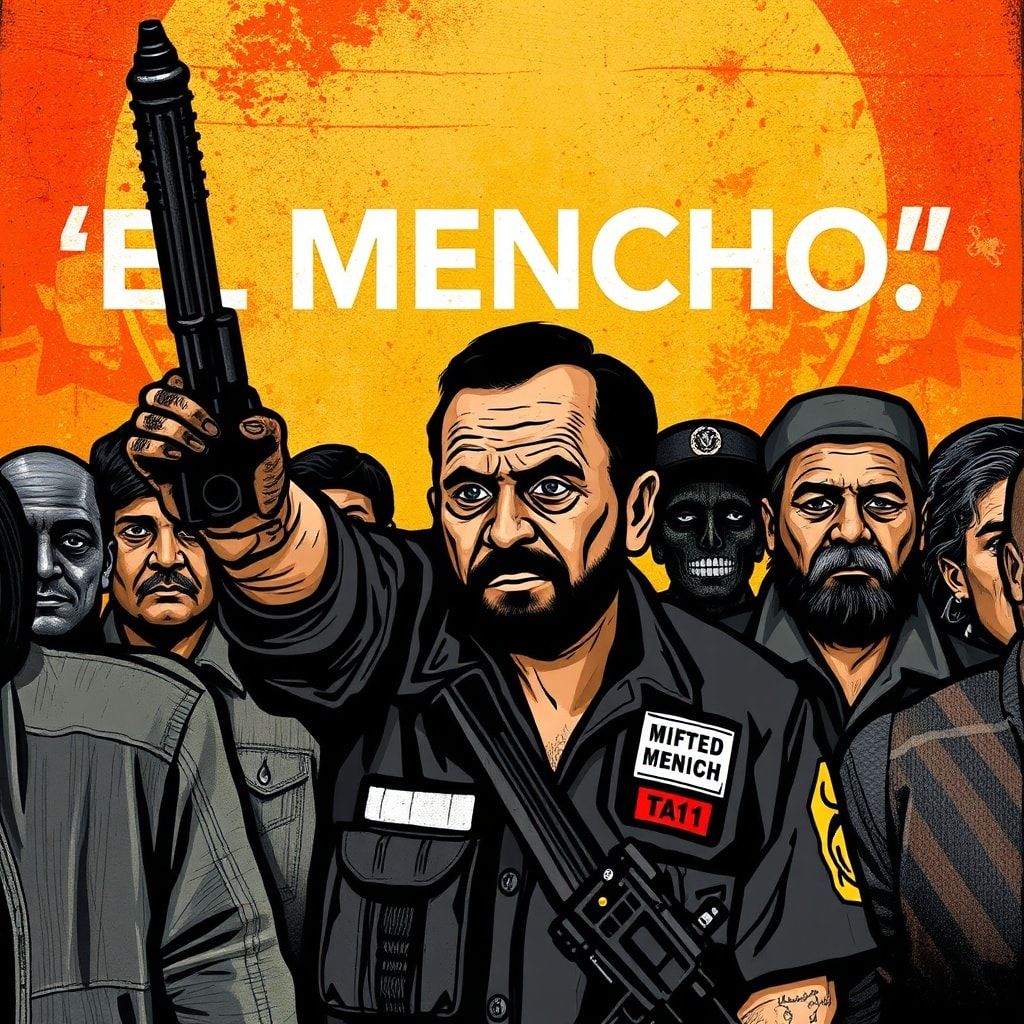
The Fall of ‘El Mencho’: Unpacking the Seismic Shift in Mexico’s Cartel Landscape
The news reverberated through the shadowy corridors of international organized crime like a seismic shockwave: Nemesio Oseguera Cervantes, known ominously as ‘El Mencho,’ the undisputed and feared leader of the Jalisco New Generation Cartel (CJNG), met his end in a fierce firefight this past February. For years, ‘El Mencho’ stood as the seemingly untouchable apex predator of Mexico’s criminal underworld, presiding over an empire built on unparalleled violence, sophisticated logistics, and global reach. His reported demise marks a pivotal moment, demanding rigorous analysis from law enforcement, geopolitical strategists, and investigative journalists alike. This development does not merely signify the end of a single kingpin’s reign; it portends a potentially radical reshaping of Mexico’s intricate and brutal cartel landscape, with far-reaching implications for drug trafficking, regional stability, and international security.
The Ruthless Ascent: El Mencho’s Reign of Terror
Born into poverty in Michoacán, Nemesio Oseguera Cervantes embarked on a criminal career that rapidly escalated from petty theft and marijuana cultivation to the leadership of one of the world’s most formidable and terrifying drug trafficking organizations. His journey through the echelons of organized crime began with a stint in the United States, facing drug charges, before returning to Mexico and joining the Milenio Cartel. It was from the ashes of this fragmented organization, following the arrests of its leaders, that ‘El Mencho’ shrewdly orchestrated the formation of the CJNG. Unlike traditional cartels, CJNG distinguished itself through a paramilitary structure, brutal discipline, and an unprecedented willingness to directly confront state forces.
Under ‘El Mencho’s’ iron fist, the CJNG transformed from a regional player into a transnational criminal enterprise. His signature was a terrifying blend of strategic ruthlessness and calculated expansion. The cartel became synonymous with acts of extreme violence – public executions, mass graves, ambushes on military convoys, and the brazen use of improvised explosive devices (IEDs) and weaponized drones. This overt display of power was not merely for intimidation; it was a cornerstone of his strategy to establish undisputed territorial control and instill fear among rivals, authorities, and the populace alike. ‘El Mencho’ cultivated a cult of fear, using social media and propaganda to amplify his cartel’s destructive capabilities, making the CJNG a household name in terror tactics.
His operational ingenuity extended beyond brute force. The CJNG diversified its revenue streams aggressively, moving far beyond traditional marijuana and cocaine. Under ‘El Mencho,’ the cartel became a dominant force in the production and distribution of synthetic drugs, particularly methamphetamine and the highly lethal fentanyl, which flooded markets in the United States and beyond. This pivot to synthetic opioids proved immensely profitable, granting the CJNG unprecedented financial power and further entrenching its global footprint. Furthermore, extortion, kidnapping, human trafficking, and oil theft became integral components of their vast criminal portfolio, weaving the cartel into the fabric of daily life in many parts of Mexico, often through corruption and intimidation.
The Jalisco New Generation Cartel: A Hydra with Global Tentacles
The CJNG, under ‘El Mencho’s’ command, grew into a complex, decentralized, yet highly effective criminal machine. Its structure, while appearing hierarchical, also allowed for significant operational autonomy among its regional cells, enabling rapid adaptation and resilience against law enforcement efforts. The cartel’s reach extended across at least two-thirds of Mexico, and its influence spanned continents. Distribution networks for illicit drugs stretched into the United States, Canada, Europe, Asia, and Australia, establishing the CJNG as a truly global threat.
The cartel’s sophisticated logistical capabilities, combined with extensive money laundering operations often integrated into legitimate businesses, allowed it to operate with a veneer of pseudo-legitimacy in some areas, while simultaneously waging open warfare in others. Its recruitment strategies, often targeting young, disaffected individuals, were effective, promising wealth and power to those willing to embrace its violent ideology. The CJNG’s relentless territorial expansion frequently brought it into direct and bloody conflict with established rivals, most notably the Sinaloa Cartel, igniting brutal turf wars that destabilized entire regions and resulted in catastrophic levels of violence and human suffering.
The government of Mexico, with support from international agencies, had invested immense resources into hunting ‘El Mencho.’ For years, he remained one of the world’s most wanted fugitives, his ghost-like existence a testament to his security apparatus, his deep ties to corrupt officials, and his ability to melt into the rugged terrain of Mexico’s hinterlands. His elusiveness drew comparisons to figures like Osama bin Laden or Pablo Escobar, epitomizing the seemingly insurmountable challenge posed by modern cartel leadership.
The February Firefight: A Turning Point in the Shadows
The reported firefight in February, culminating in ‘El Mencho’s’ death, represents the climax of years of relentless intelligence gathering and high-stakes operations. While specific details surrounding the engagement remain shrouded, consistent with the clandestine nature of such high-value target pursuits, the mere confirmation of his demise sends a powerful message. It underscores the unwavering determination of state forces to dismantle the highest echelons of organized crime, despite the immense risks and challenges involved. Such an operation would have required meticulous planning, precise intelligence, and considerable bravery from the specialized units tasked with apprehending or neutralizing a figure as heavily guarded and notoriously violent as ‘El Mencho.’
The event itself likely involved a significant deployment of military or elite police forces, confronting a well-armed contingent of cartel enforcers. The ‘firefight’ suggests intense resistance, a final, desperate stand by those sworn to protect their leader. The aftermath would have undoubtedly been chaotic, involving immediate verification procedures, the securing of evidence, and the careful management of intelligence assets. The symbolism of such a targeted operation’s success, even amid the endemic challenges of the drug war, cannot be overstated. It offers a glimmer of hope that even the most formidable criminal structures are not entirely impervious to sustained pressure.
The Imminent Power Vacuum: Scenarios for CJNG’s Future
The removal of a leader as dominant and charismatic (in a criminal sense) as ‘El Mencho’ inevitably creates a profound power vacuum within the CJNG. History teaches us that such moments are rarely followed by peace; instead, they often usher in periods of intense instability and escalated violence. Several scenarios could unfold:
Firstly, an internal succession could see a close family member or a trusted, long-standing lieutenant attempt to consolidate power. Potential candidates might include his wife, children, or highly ranked commanders who have proven their loyalty and strategic acumen. However, even within a seemingly disciplined organization like the CJNG, such a transition is fraught with peril. Factions could emerge, challenging the legitimacy of a new leader and potentially igniting bloody internal purges or splintering events.
Secondly, the absence of ‘El Mencho’s’ unifying and intimidating presence could lead to significant fragmentation. Smaller, ambitious commanders might seize the opportunity to break away, establishing their own independent cells or aligning with rival cartels to gain an advantage. This fragmentation, while weakening the overall CJNG structure, could paradoxically lead to more localized violence as numerous smaller groups vie for control over specific territories, drug routes, and illicit rackets.
Thirdly, rival cartels, particularly the Sinaloa Cartel, will undoubtedly view this as a prime opportunity to expand their territories and seize control of lucrative drug corridors previously dominated by the CJNG. This external pressure could further destabilize regions already ravaged by cartel warfare, leading to an intensification of conflict across Mexico’s criminal battlegrounds.
Wider Implications for Mexico’s Enduring Drug War
‘El Mencho’s’ death carries immense implications for Mexico’s broader struggle against organized crime. While some might hope for a de-escalation of violence, historical precedents suggest the opposite often occurs. The decapitation strategy, while removing key figures, frequently leads to a temporary increase in violence as the criminal ecosystem reconfigures itself.
For the Mexican government, this event presents both an opportunity and a monumental challenge. It is an opportunity to intensify pressure on a potentially destabilized CJNG, aiming to dismantle its networks and reduce its influence. However, it is also a challenge to anticipate and mitigate the inevitable surge in violence that could accompany the power struggles. The government’s response will need to be swift, coordinated, and multifaceted, encompassing not only law enforcement but also social programs designed to address the root causes of recruitment into these criminal organizations.
Internationally, especially for the United States, the impact on the flow of illicit drugs, particularly fentanyl, will be closely watched. A fragmented CJNG might lead to new distribution patterns, or even increased competition among suppliers, potentially impacting drug prices and purity on the street. The event underscores the enduring need for robust cross-border cooperation in intelligence sharing and anti-narcotics efforts.
Ultimately, the fall of ‘El Mencho’ serves as a stark reminder of the hydra-headed nature of organized crime. While a significant victory for law enforcement, it is unlikely to signal an immediate end to the drug war. Instead, it marks the beginning of a new, unpredictable chapter, where new leaders will emerge, new alliances will form, and the relentless struggle for power and profit will continue to evolve, demanding constant vigilance and adaptive strategies from all who seek to counter its destructive force.