
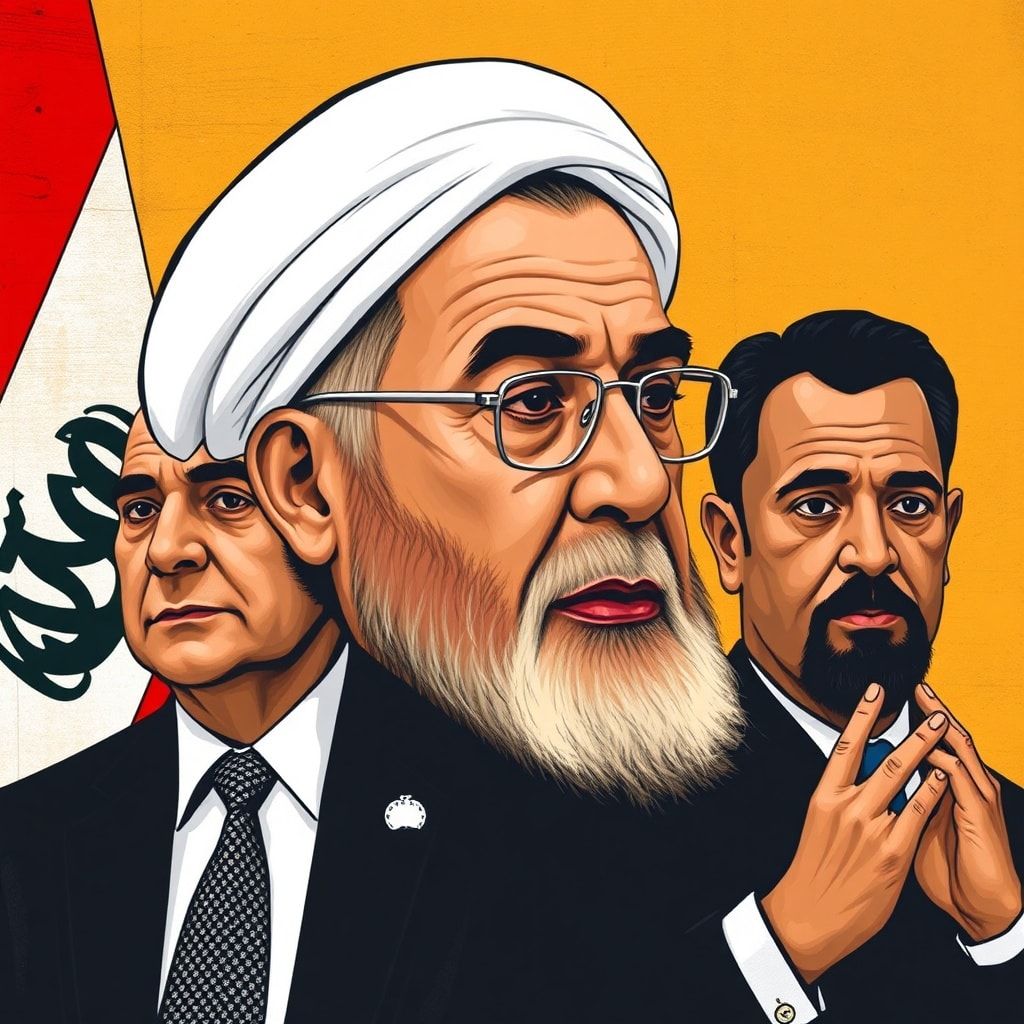
The news of extensive preparations for a three-day ceremony in Tehran, where the supreme leader will lie in state, immediately brings the critical issue of **Iran Supreme Leader Succession** into sharp focus. This solemn event, while marking a period of national mourning, simultaneously initiates a complex and highly sensitive process for the Islamic Republic.
The transition of power at the apex of Iran’s political and religious hierarchy is not merely a ceremonial formality; it is a foundational moment that will undoubtedly shape the nation’s future direction, both domestically and internationally.
The Gravity of Leadership Transition in Iran
The supreme leader holds ultimate authority in Iran, presiding over the armed forces, judiciary, and state media. This position, currently held by Ayatollah Ali Khamenei, is far more than a figurehead role.
The individual who occupies this office dictates the country’s strategic policies and ideological trajectory. This means that understanding the context of **Iran Supreme Leader Succession** is crucial for comprehending the nation’s future. Therefore, any discussion surrounding a leader lying in state naturally pivots to the mechanisms and implications of selecting their successor.
Historical Precedents and Challenges
Iran has experienced only one such transition since the 1979 revolution: the succession of Ayatollah Khamenei himself after the passing of Ayatollah Ruhollah Khomeini in 1989. That event, though carefully managed, revealed the intricate power dynamics at play.
The process is enshrined in the constitution but subject to real-world political maneuvering and consensus-building among key religious and political figures. The preparations currently underway underscore the monumental significance placed on ensuring a smooth and unified transition.
The Assembly of Experts and the Succession Process
The responsibility for selecting a new supreme leader falls to the Assembly of Experts. This body comprises 88 highly influential clerics, elected by popular vote every eight years.
However, candidates for the Assembly are vetted by the Guardian Council, another powerful institution, ensuring only those loyal to the current system can run. This layered vetting process highlights the meticulous control exerted over the selection of future leadership.
Vetting and Qualifications
For a cleric to be considered for the supreme leadership, they must possess a deep understanding of Islamic jurisprudence, a track record of political acumen, and demonstrate courage and management capabilities. More critically, they must command respect within the religious establishment and possess the trust of powerful factions.
The discreet discussions and lobbying that occur behind closed doors leading up to such a selection are intense, shaping the future of millions. The very need for “more preparations” suggests the intricate web of considerations for this pivotal decision. It’s a testament to the weight of the responsibility.
Potential Candidates and Future Directions
While no official list of candidates is ever publicized, speculation within Iranian political circles often centers on a few prominent figures. These individuals typically have strong ties to the existing establishment, possess significant religious credentials, and have held influential positions within the government or judiciary.
The choice of successor will inevitably signal the ideological direction Iran intends to pursue. Will it be a continuation of the current conservative path, a more pragmatic approach, or even a subtle shift towards greater openness? The **Iran Supreme Leader Succession** is a closely guarded secret until the moment of announcement. This secrecy adds to the intrigue and global focus.
Domestic and Regional Ramifications
The aftermath of the ceremony and the subsequent selection will have profound implications for Iran’s domestic stability. A unified and accepted transition could reinforce the legitimacy of the Islamic Republic, fostering national cohesion.
Conversely, any perceived internal discord or struggle for power could embolden opposition elements and create instability, potentially leading to social unrest. Regionally, the supreme leader’s foreign policy dictates Iran’s posture towards its neighbors and international adversaries. A new leader could potentially alter alliances, escalate or de-escalate tensions, and reshape the geopolitical landscape of the Middle East.
Global Observation of Iran Supreme Leader Succession
The international community will be watching the events in Tehran with intense interest. World powers, particularly those involved in negotiations regarding Iran’s nuclear program or regional conflicts, understand that the new supreme leader’s stance will be paramount.
Their decisions will impact everything from oil markets to international security agreements. The meticulous preparations for the lying in state ceremony reflect not just internal reverence but also an awareness of the global stage upon which this transition will unfold. The stability of Iran, a pivotal nation in a volatile region, is a concern for many.
The Role of the Revolutionary Guard
The Islamic Revolutionary Guard Corps (IRGC), a powerful military and economic force, will play a crucial, albeit often behind-the-scenes, role during this transition. Their allegiance and support are critical for legitimizing the new leader and maintaining order.
The IRGC’s influence extends deeply into various aspects of Iranian society, making their alignment essential for a seamless transfer of power. Their preparedness and coordination are integral to the overall “preparations” mentioned by the official, ensuring state security during this sensitive period.
Ensuring Stability and Continuity
The entire process, from the initial preparations for the ceremony to the eventual selection and public introduction of the new supreme leader, is designed to project an image of continuity and stability. The Iranian establishment is acutely aware of the need to prevent any power vacuums or challenges to the system during such a sensitive period.
This careful management aims to reassure both the domestic population and international observers that the foundations of the Islamic Republic remain firm. The focus on meticulous “preparations” is a direct reflection of this overarching goal, signaling a well-orchestrated future.
Conclusion
The announcement regarding the three-day ceremony in Tehran is more than just an administrative update; it is a signal of a monumental period ahead for Iran. The **Iran Supreme Leader Succession** is a moment laden with historical weight, political complexity, and far-reaching consequences.
As the nation prepares to honor its departing leader, the intricate mechanisms of power, religion, and governance will converge to determine the trajectory of one of the world’s most strategically important countries. The world watches keenly, understanding that the choices made in Tehran will resonate across continents for years to come.