
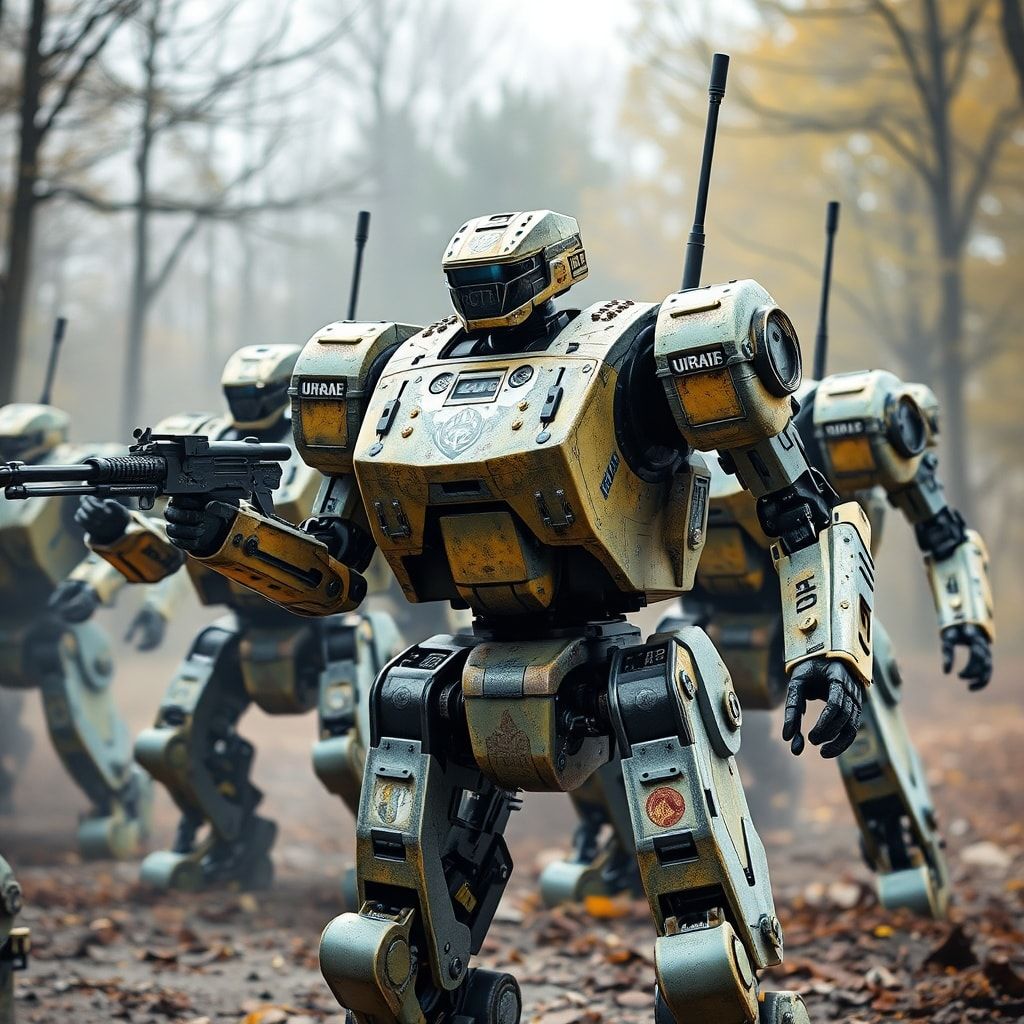
The conflict in Ukraine has served as a crucible for military innovation, pushing the boundaries of conventional warfare. A significant development now emerging from the front lines is the systematic deployment of Ukraine’s armed robots against Russian forces. This strategic shift represents not just a tactical adjustment but a profound re-imagining of battlefield dynamics, raising critical questions about the future of combat.
For months, reports have hinted at Ukraine’s burgeoning capabilities in unmanned systems. From surveillance drones to explosive FPV (First Person View) drones, the Ukrainian military has demonstrated an unparalleled adaptiveness. The current program, however, signals a more organized and sophisticated integration of robotic platforms designed for direct engagement.
The Rise of Ukraine’s Armed Robots in Modern Warfare
The decision by Ukraine to actively deploy armed robotic systems is a direct response to the immense human cost of the ongoing conflict. Faced with a numerically superior adversary, Kyiv has consistently sought asymmetrical advantages. Robotics offer a means to project force, conduct reconnaissance, and even engage targets without risking human life.
Necessity as the Mother of Innovation
Ukraine’s indigenous defense industry, bolstered by international support, has rapidly accelerated its development and procurement of advanced military technology. This urgency stems from the imperative to preserve its fighting force while inflicting maximum damage on invading units. Robotic platforms reduce exposure to enemy fire, mitigating casualties and allowing human soldiers to focus on more complex, decision-intensive tasks.
The conflict environment itself—characterized by extensive trench lines, urban combat, and vast open fields—provides ideal scenarios for robotic deployment. These machines can navigate treacherous terrain, enter compromised structures, and operate in conditions too dangerous for human soldiers. Their integration reflects a pragmatic approach to modern warfare.
Types of Robotic Systems Deployed
While specific models remain closely guarded secrets, open-source intelligence and leaked reports suggest a diverse array of robotic systems. These likely include unmanned ground vehicles (UGVs) equipped with light machine guns, anti-tank guided missiles, or even anti-personnel mines, capable of remote operation or semi-autonomous functions. Additionally, advanced aerial drones, beyond mere surveillance, are being modified for precision strike capabilities.
Sources indicate a focus on smaller, agile units that are difficult to detect and target. These systems often work in conjunction with human-crewed units, providing forward observation, suppressing enemy positions, and even serving as mobile firing platforms. The synergy between human operators and machine capabilities is central to Ukraine’s strategy.
Tactical Advantages and Ethical Dilemmas
The strategic benefits of integrating armed robots into military operations are clear: enhanced situational awareness, reduced human risk, and increased precision. However, this evolution also brings forth a complex web of ethical and legal considerations, particularly concerning the level of human control in targeting decisions.
Saving Lives and Enhancing Reconnaissance
One of the primary drivers behind the adoption of Ukraine’s armed robots is the potential to save lives. Deploying robots for high-risk missions such as clearing fortified positions, engaging snipers, or patrolling contested areas means fewer soldiers are exposed to direct combat. This psychological and practical benefit cannot be overstated for a nation defending its sovereignty.
Beyond direct combat, these robots excel in reconnaissance. Equipped with advanced sensors, thermal imaging, and high-definition cameras, they can provide real-time intelligence from deep within enemy territory, improving targeting accuracy and minimizing collateral damage. Their stealth and endurance capabilities far surpass human limitations, offering a continuous eye on the battlefield.
The Autonomous Weapon Debate
The emergence of armed robots inevitably reignites the global debate surrounding autonomous weapon systems, often dubbed “killer robots.” While Ukraine likely maintains a “human-in-the-loop” or “human-on-the-loop” control system for critical engagements, the increasing sophistication of AI raises questions about future autonomy. International humanitarian law dictates that humans must retain meaningful control over the use of force.
The challenge lies in defining “meaningful control” as technology advances. Ensuring accountability, preventing unintended escalation, and upholding the principles of distinction and proportionality become paramount. Ukraine’s program, therefore, is not just a military endeavor but also a significant test case for these global ethical frameworks.
Russia’s Response and the Future of Robotic Combat
Russia, itself a significant player in military robotics, is undoubtedly observing Ukraine’s advancements with keen interest. The deployment of Ukraine’s armed robots will likely prompt a reciprocal escalation in robotic warfare, intensifying what many analysts already describe as a new arms race.
Countermeasures and Electronic Warfare
As Ukraine fields more robotic units, Russian forces will redouble efforts to develop and deploy effective countermeasures. This includes advanced electronic warfare (EW) systems designed to jam communication links, disrupt navigation, and even hijack enemy robots. Cyberattacks targeting robotic control systems also present a persistent threat.
The ongoing struggle between robotic innovation and counter-robotics will shape the tactics and technologies of both sides. This technological arms race is dynamic, with each advancement prompting a counter-development, leading to a rapidly evolving battlefield where superiority is constantly contested.
A New Arms Race?
The large-scale integration of armed robots by Ukraine could mark a turning point, signaling the official entry of autonomous and semi-autonomous systems into mainstream conventional warfare. This paradigm shift will inevitably influence military doctrines worldwide, prompting other nations to accelerate their own robotic programs to maintain strategic parity.
The implications extend beyond the immediate conflict, potentially reshaping global defense expenditures and military-industrial complexes. Nations that fail to adapt to this technological wave risk being left behind in future geopolitical power struggles.
Challenges and Long-Term Implications for Ukraine’s Armed Robots
Despite their numerous advantages, the deployment of armed robots presents significant operational challenges. These include logistical complexities, maintenance requirements, and vulnerability to sophisticated countermeasures. Sustaining a large-scale robotic force demands robust infrastructure and highly skilled personnel.
Operational Hurdles and Maintenance
Robotic systems, particularly those operating in harsh combat environments, require constant maintenance, spare parts, and software updates. Training operators and technicians to effectively deploy, manage, and repair these advanced machines is a monumental task. The reliance on complex electronics also makes them susceptible to environmental factors and electromagnetic interference.
Logistical chains must be capable of delivering specialized components and technical support to the front lines, often under hostile conditions. These practical challenges temper the revolutionary promise of robotic warfare, demanding substantial investment in human capital and infrastructure.
Shaping the Battlefield of Tomorrow
The aggressive adoption of Ukraine’s armed robots against Russian forces is setting a precedent. It demonstrates that advanced robotic warfare is no longer a theoretical concept but a tangible reality being integrated into high-intensity conflicts. This development will undoubtedly inform military strategists globally.
The long-term implications for international law, arms control treaties, and the very nature of human conflict are profound. As the line between human and machine combatants blurs, societies will grapple with new moral questions and the imperative to establish clear international norms governing these potent technologies.
In conclusion, Ukraine’s bold move to deploy armed robots represents a pivotal moment in military history. It underscores a nation’s ingenuity in the face of aggression and foreshadows a future where machines play an increasingly prominent, and potentially decisive, role in warfare. The world watches closely as these innovations unfold on the battlefields of Ukraine, shaping the doctrines and ethics of future conflicts.