
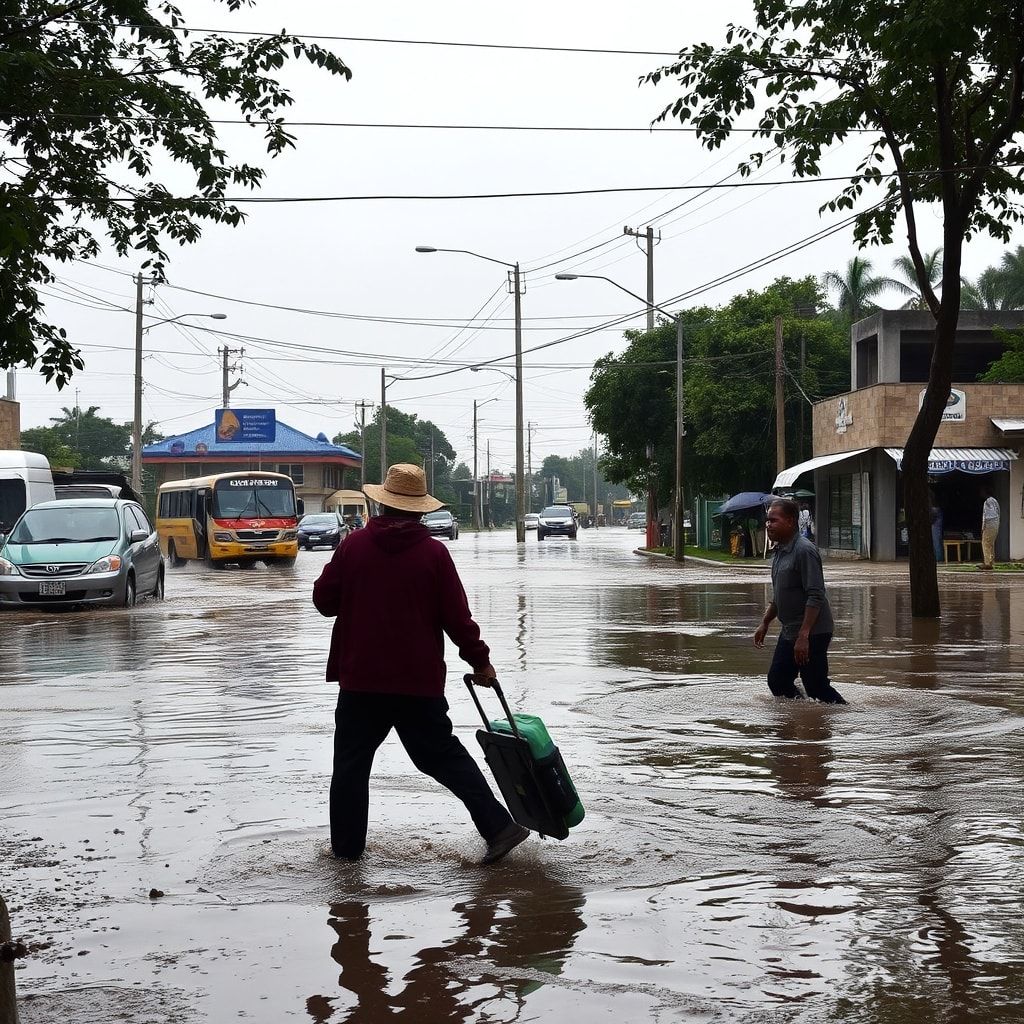
Nairobi Airport and City Paralyzed by Flooding: An Investigative Report
Recent torrential downpours have brought Kenya’s capital, Nairobi, to a grinding halt, triggering widespread **Nairobi airport disruptions** and submerging critical road networks. The Jomo Kenyatta International Airport (JKIA), a vital hub for East Africa, has seen its operations severely hampered, leading to significant delays and cancellations that have cascaded across regional and international flight schedules. This crisis not only disrupts travel but also exposes long-standing vulnerabilities in the city’s infrastructure and urban planning.
Flights in and out of Nairobi Airport have been disrupted while some roads in the capital are submerged, painting a stark picture of a city struggling to cope with the deluge. This isn’t merely a weather event; it’s a critical test of Nairobi’s resilience and its preparedness for extreme climatic conditions.
Unprecedented Nairobi Airport Disruptions
The heart of East African air travel, Jomo Kenyatta International Airport, has been at the epicenter of the chaos. Passengers have reported lengthy delays, canceled flights, and a general state of disarray as airport staff grapple with the unexpected severity of the conditions. Runways, taxiways, and terminal access roads have all been affected, compromising safety and operational efficiency.
Ground Zero: Jomo Kenyatta International Airport (JKIA)
At JKIA, the impact of the flooding has been immediate and severe. Some areas of the airport grounds have become impassable, directly affecting aircraft movement and ground services. This has led to a backlog of flights, stranding thousands of travelers and disrupting meticulously planned itineraries for both business and leisure passengers.
The operational challenges extend beyond the immediate tarmac. Issues with baggage handling and passenger transfers have exacerbated the situation, creating a difficult environment for both travelers and airport personnel. The integrity of crucial airport infrastructure, from drainage systems to electrical installations, is now under intense scrutiny.
The Ripple Effect on Air Travel
The **Nairobi airport disruptions** have sent shockwaves throughout the regional aviation network. JKIA serves as a crucial transit point for flights connecting various African nations to Europe, Asia, and the Americas. Cancellations here mean missed connections, significant re-routing costs, and a substantial economic hit for airlines and related services.
Airlines are struggling to re-accommodate passengers, leading to a surge in demand for alternative routes and creating a domino effect of delays at other regional airports. The logistical nightmare highlights the interconnectedness of global air travel and the fragility of even major hubs when faced with extreme weather.
Capital Under Siege: Submerged Roads and Urban Paralysis
Beyond the airport, Nairobi’s sprawling urban landscape has been transformed into a mosaic of waterlogged streets and choked arteries. Major thoroughfares, usually bustling with traffic, are now submerged, rendering them impassable for regular vehicles. This has brought daily life in the capital to a standstill.
Key Arteries Underwater
Reports indicate that several critical roads in the capital are submerged, effectively cutting off neighborhoods and commercial centers. Commuters face unprecedented challenges, with public transport grinding to a halt and private vehicles struggling to navigate the treacherous conditions. This widespread paralysis impacts essential services, emergency response times, and general accessibility.
The visual evidence of flooded roads and stalled vehicles underscores the urgency of addressing Nairobi’s drainage infrastructure. It raises questions about the capacity of the city’s existing systems to handle intense rainfall events, which are becoming more frequent and severe due to climate change.
Commuter Nightmares and Economic Fallout
The urban flooding has created a nightmare scenario for Nairobi’s residents, turning routine commutes into hours-long ordeals or impossible journeys. Beyond the immediate inconvenience, the economic cost of such widespread disruption is substantial. Businesses suffer from reduced productivity, delayed deliveries, and decreased consumer activity.
Essential services, from healthcare to food distribution, face immense challenges in reaching their destinations. The overall economic impact, though difficult to quantify immediately, will undoubtedly run into millions, affecting various sectors of Kenya’s economy.
What Caused the Chaos? An Analysis of Nairobi’s Infrastructure
While heavy rainfall is the immediate trigger, the scale of the crisis points to deeper, systemic issues within Nairobi’s urban planning and infrastructure development. This event serves as a stark reminder of the consequences of neglecting crucial public works.
Seasonal Rains or Systemic Failures?
Nairobi experiences two primary rainy seasons each year, and residents are accustomed to a certain level of disruption. However, the current event transcends typical seasonal challenges. Experts suggest that inadequate and poorly maintained drainage systems are key culprits, failing to cope with the volume of water. Decades of urban expansion without corresponding infrastructure upgrades have left the city vulnerable.
Climate change undoubtedly plays a role, with more intense and unpredictable weather patterns. However, even with increased rainfall, a robust, well-maintained drainage network should mitigate the worst effects, preventing the kind of paralyzing flood witnessed across the capital and impacting **Nairobi airport disruptions**.
The Role of Urban Planning
Rapid, often unplanned, urbanization has put immense pressure on Nairobi’s existing infrastructure. The encroachment on wetlands, conversion of open spaces into concrete jungles, and the proliferation of informal settlements lacking proper sanitation and drainage contribute significantly to the problem. These factors exacerbate surface runoff and prevent natural absorption of rainwater.
A critical examination of Nairobi’s urban planning policies is necessary. Sustainable development principles, including robust stormwater management and protection of natural floodplains, must be prioritized to prevent future catastrophes of this magnitude.
Immediate Responses and Long-Term Solutions
In the face of the crisis, authorities and emergency services have launched operations to mitigate the immediate impact and assist affected residents. However, the scale of the challenge necessitates a more comprehensive and forward-looking approach.
Emergency Operations Underway
Emergency response teams have been deployed across Nairobi, focusing on rescue efforts in flooded areas and clearing key transport routes. Airport authorities are working tirelessly to restore full operations at JKIA, prioritizing safety and efficiency. Collaborative efforts between various government agencies and disaster management units are crucial for navigating this immediate aftermath.
The focus is on ensuring the safety of citizens, providing assistance to those displaced, and working towards the swift resumption of normal services, especially at critical infrastructure points like the airport.
Building Resilience: A Path Forward
Looking beyond the immediate crisis, there is an urgent need for Nairobi to invest in climate-resilient infrastructure. This includes upgrading and expanding its drainage systems, implementing stricter urban planning regulations, and investing in green infrastructure that helps manage stormwater naturally. Public awareness campaigns on waste management, which often clogs drains, are also vital.
Learning from these **Nairobi airport disruptions** and urban paralysis is paramount. A long-term strategy involving sustainable urban development, preventative maintenance, and robust emergency preparedness protocols is essential to safeguard the city against future environmental challenges.
Conclusion
The recent flooding and the ensuing **Nairobi airport disruptions** serve as a sobering wake-up call for Kenya’s capital. While the immediate focus remains on managing the current crisis, the event has laid bare deep-seated infrastructural deficiencies and the critical need for proactive, climate-smart urban planning. Ensuring the safety and mobility of its citizens, and maintaining its status as a regional economic hub, hinges on Nairobi’s ability to learn from this experience and build a truly resilient future.
The path forward requires significant investment, stringent oversight, and a commitment to sustainable development to prevent such widespread paralysis from becoming a recurring nightmare.