
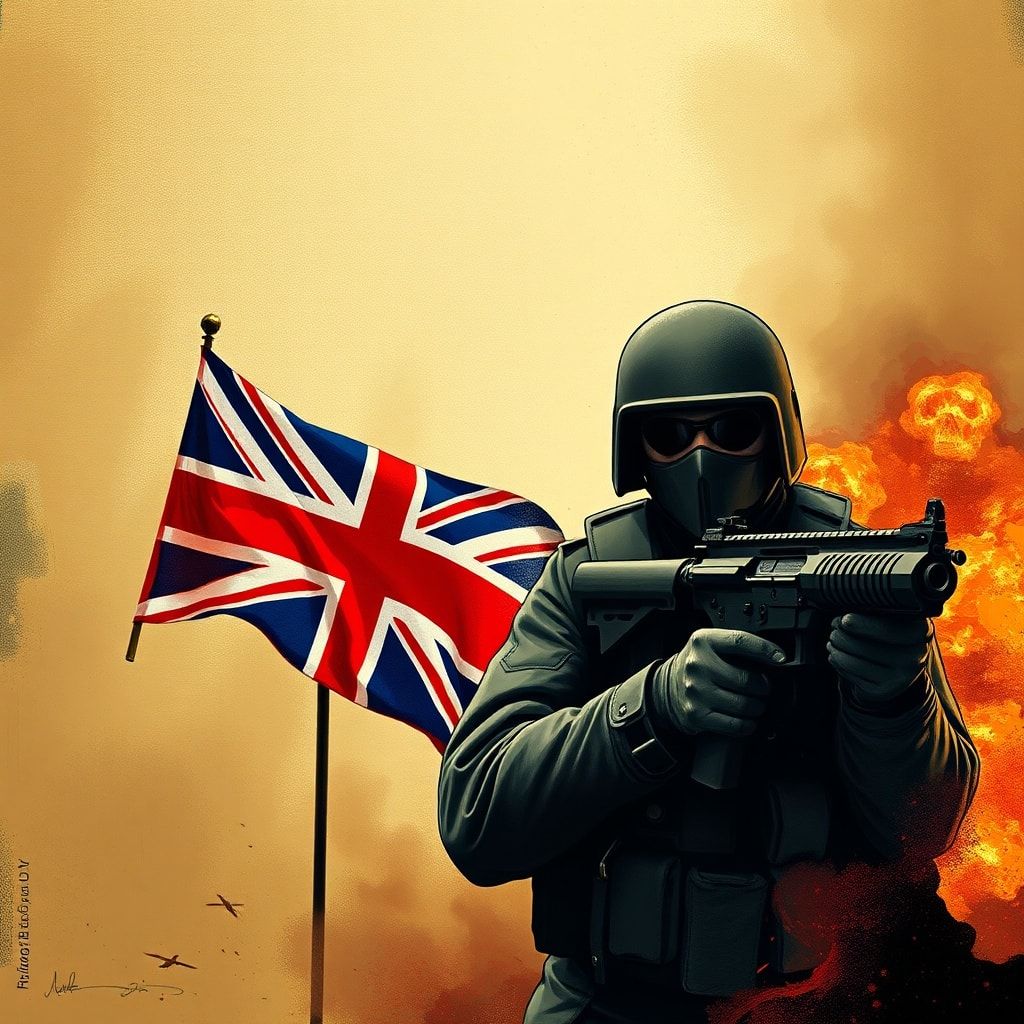
Iran Warns of “Right to Self-Defence” Amid UK Involvement in US-Israeli Attacks
The geopolitical landscape of the Middle East trembles on the brink of significant escalation following a stark declaration from Seyed Ali Mousavi, a prominent Iranian official. He asserts Iran’s “right to self-defence” if the United Kingdom directly participates in US-Israeli military actions within the region. This incendiary warning signals a perilous deepening of existing regional tensions, potentially drawing new global players into an already volatile mix and setting a dangerous precedent for international relations, particularly concerning Iran UK self-defence.
Mousavi’s comments, delivered against a backdrop of heightened regional military activity and political friction, underscore Tehran’s unwavering resolve to protect its national interests and sovereignty. The statement specifically highlights the potential for the UK’s direct military involvement to trigger a robust Iranian response, emphasizing the gravity with which Tehran views any expansion of Western military engagement in its vicinity.
Understanding Iran’s Stance on Self-Defence
Iran’s declaration of a “right to self-defence” is deeply rooted in its revolutionary ideology and its historical experiences of perceived foreign interference. Tehran views any direct military intervention by external powers, particularly those allied with the United States and Israel, as a direct threat to its national security and regional standing. This perspective is shaped by decades of complex geopolitical interactions and a fundamental distrust of Western intentions.
Historical Precedents of Iranian Retaliation
Historically, Iran has demonstrated a consistent willingness to respond to actions it deems aggressive. This often involves a multifaceted strategy including direct military action, support for regional proxy groups, and cyber warfare. Incidents such as the downing of a US drone in 2019, missile strikes against bases housing US troops in Iraq, and ongoing maritime incidents in the Persian Gulf serve as clear examples. Each response has been framed by Tehran as a legitimate exercise of its sovereign right. The current warning aligns with this pattern, signalling potential activation of similar retaliatory measures should the UK cross the stated red line.
The Islamic Revolutionary Guard Corps (IRGC) plays a pivotal role in formulating and executing these defensive strategies. Its doctrine often emphasizes asymmetrical warfare and leveraging regional alliances to project power and deter adversaries. Mousavi’s statement reflects this strategic thinking, serving both as a warning to external actors and a reaffirmation of national resolve to its domestic audience.
The UK’s Potential Role: A Dangerous Precedent
The statement specifically targets the United Kingdom, implying that London’s involvement would be distinct from and more provocative than existing US-Israeli cooperation. While the UK already maintains a significant military presence in the Middle East, direct participation in offensive actions against Iran would represent a substantial escalation. This entails a significant departure from its current posture of strategic support and intelligence sharing.
Strategic British Interests in the Gulf
Britain’s strategic interests in the Persian Gulf are extensive, encompassing vital energy security, the protection of critical global trade routes, and long-standing alliances with Gulf Arab states. The deployment of naval assets, like HMS Diamond in the Red Sea, underscores the UK’s commitment to regional stability. However, moving from defensive operations to active engagement in direct US-Israeli attacks against Iran would undoubtedly be perceived by Tehran as an act of aggression. Such a move would necessitate a profound political decision from London, weighing the implications of direct conflict against its broader foreign policy objectives.
Furthermore, the UK’s involvement would carry significant political weight, potentially lending an international veneer to actions Iran frames as US-Israeli aggression. This shift could galvanize anti-Western sentiment, complicating diplomatic efforts and potentially isolating the UK internationally. London would need to carefully consider the legality, proportionality, and political fallout of any such direct military participation.
The Legal Framework of Self-Defence: An International Perspective
The concept of a “right to self-defence” is a cornerstone of international law, enshrined in Article 51 of the UN Charter. This article allows a state to use force in response to an armed attack, subject to reporting to the UN Security Council. However, interpreting what constitutes an “armed attack,” the criteria for “imminence,” and the proportionality of response are frequently contentious issues, leading to diverse interpretations among nations.
Interpreting “Directly Joins US-Israeli Attacks”
Iran’s precise framing of “directly joins US-Israeli attacks” is crucial. It suggests a clear distinction between indirect forms of support—like arms sales or intelligence—and overt military participation. Direct involvement could encompass active air support, coordinated naval blockades, or deployment of ground troops alongside US or Israeli forces. The ambiguity inherent in such terms often provides both a strategic deterrent and a potential justification for future actions. The international community would scrutinize Iran’s interpretation very closely, as any response by Tehran would need to be legally defensible under international law principles.
The challenge lies in the subjective nature of threat perception. What one nation perceives as legitimate self-defence, another might view as an unprovoked act of aggression. This divergence is a perennial source of international tension, particularly in complex geopolitical environments like the Middle East, where historical grievances and competing interests are deeply entrenched.
Escalation Pathways: Regional and Global Ramifications
The potential for the UK to enter directly into US-Israeli operations against Iran opens several dangerous escalation pathways. The ripple effects would extend far beyond the immediate conflict zone, impacting global energy markets, international diplomacy, and the delicate balance of regional stability. A move from a proxy conflict to direct military engagement involving a major European power would mark an alarming shift in Middle East dynamics.
Impact on Regional Actors
Neighbouring countries, already grappling with proxy conflicts and humanitarian crises, would face immense pressure. States like Saudi Arabia, the UAE, and Qatar, major oil producers and key US allies, could become indirect targets or experience severe economic disruption. The Strait of Hormuz, a vital chokepoint for global oil shipments, would almost certainly face increased threats, potentially triggering a significant surge in global oil prices and disrupting international trade. The prospect of regional spillover, including increased terror activity and refugee flows, would exacerbate existing humanitarian challenges.
Broader Geopolitical Consequences
A direct military confrontation involving Iran and major Western powers could draw in other global players like Russia and China. Both nations maintain complex economic and strategic relationships with Tehran and could view Western military action as a challenge to their own regional influence. This could further destabilize international relations and undermine de-escalation efforts. The unresolved issue of Iran’s nuclear program would almost certainly return to the forefront of international concerns, potentially leading to renewed proliferation fears and intense diplomatic standoffs. [Internal Link: The Evolving Dynamics of Proxy Conflicts in the Middle East]
Iran’s Strategic Calculus: Deterrence and Resolve
Mousavi’s statement serves multiple strategic purposes for Iran. Primarily, it functions as a clear warning and a potent deterrent, aiming to signal Iran’s unwavering resolve and its capacity to retaliate against any direct military intervention by the UK. Tehran frequently employs strong rhetorical warnings to project strength, solidify its position as a regional power, and maintain its leverage in any future negotiations. This tactic is designed to shape perceptions and influence the strategic decisions of its adversaries.
Domestic and International Messaging
Domestically, such declarations serve to consolidate public support for the government by portraying it as a vigilant defender of national sovereignty and interests. This narrative is crucial for maintaining internal cohesion. Internationally, the message reinforces Iran’s position as a regional power unwilling to be intimidated by larger military forces. Tehran aims to demonstrate that any cost-benefit analysis of intervention must include the significant price of an Iranian response. Furthermore, it seeks to highlight what it perceives as the hypocrisy of Western powers.
The activation of Iran’s “Axis of Resistance” – a network of allied groups across the Middle East – would be a key component of any retaliatory strategy. These groups, ranging from Hezbollah in Lebanon to various militias in Iraq and Yemen, provide Iran with asymmetrical response capabilities that can project power across the region without direct engagement of the Iranian military. [Internal Link: A Historical Review of British Influence and Intervention in the Persian Gulf]
Conclusion: A Call for Diplomatic Restraint
Seyed Ali Mousavi’s stark warning regarding Iran UK self-defence underscores the extremely delicate and perilous balance of power in the Middle East. The prospect of the United Kingdom directly engaging in US-Israeli attacks against Iran presents an alarming scenario with catastrophic potential, capable of plunging the region into an even deeper and more expansive conflict. Such an escalation would carry immense human, economic, and geopolitical costs, with ramifications felt across the globe.
The international community must prioritize immediate de-escalation and robust diplomatic solutions to avert a wider confrontation that no party truly desires. All actors involved must exercise extreme caution, carefully weighing the potential repercussions of their actions. The path forward demands multilateral engagement, a commitment to international law, and a renewed focus on peaceful conflict resolution to prevent an already fragile region from spiraling into an unprecedented crisis. The world watches, hoping that restraint and reason will prevail over the dangerous rhetoric of conflict.