
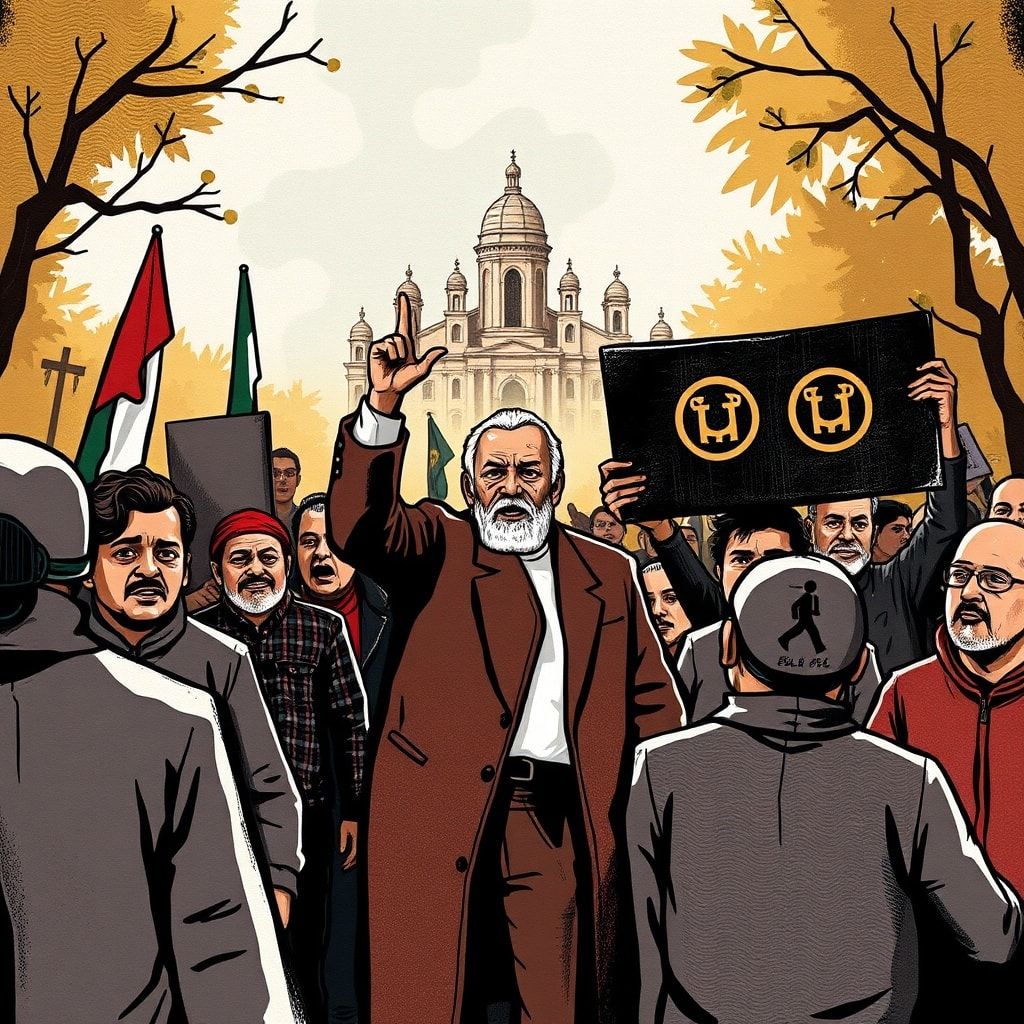
Eldoria’s general election, held last Thursday, transcended a mere democratic exercise, marking its critical **Post-Protest Election**. It was the nation’s inaugural vote since September’s violent, youth-led uprising irrevocably altered the political landscape, toppling a long-standing government. This pivotal moment signals a nation grappling with its recent tumultuous past and cautiously stepping towards an uncertain future, hoping to consolidate genuine democratic gains.
The election did not emerge from a vacuum. It was the direct consequence of years of simmering discontent that finally boiled over into the “September Uprising.” For two decades, President Kaelen’s administration had presided over a state plagued by rampant corruption, dwindling public services, and a suffocating lack of political freedoms.
The Tumultuous Road to the Post-Protest Election
Seeds of Deep-Seated Discontent
Economic disparities were stark. While a select few flourished, youth unemployment soared above 70%, leaving an entire generation feeling disenfranchised and without hope. Basic commodities became luxuries, and dissent was met with an iron fist. The tipping point arrived with a brutal crackdown on a peaceful student rally protesting rising food prices, igniting the tinderbox of public frustration across the nation.
A Nation on the Brink
The protests, initially localized, rapidly metastasized into a nationwide movement. Weeks of violent clashes ensued, culminating in demonstrators storming government buildings and President Kaelen’s swift, ignominious flight from power. An interim military council, facing immense public pressure, reluctantly promised free and fair elections within six months, a pledge that shaped the path to this historic **Post-Protest Election**.
A Mandate for Transformative Change?
The atmosphere leading up to the election was a complex tapestry of hope, cynicism, and palpable tension. Millions registered to vote, particularly young people who saw this election as the ultimate validation of their sacrifices. Yet, memories of past electoral irregularities and the pervasive influence of money in politics tempered optimism, reminding citizens of the fragility of democratic transitions.
A Revitalized Political Landscape
This election saw the emergence of fresh political entities, notably the “Youth for Democracy Movement” (YDM), founded by key figures from the September Uprising, and the “National Renewal Front” (NRF), a broad coalition promising swift economic reforms and constitutional amendments. However, elements of the old guard, often rebranded and reorganized, also sought to reclaim influence, adding layers of complexity to the ballot and raising concerns about genuine change.
The Youth Vote: A Decisive Force
The demographic driving the September Uprising proved to be a formidable electoral bloc. Activist groups tirelessly campaigned, urging their peers to translate street power into ballot power. Their platforms often centered on anti-corruption measures, investment in education and jobs, and robust democratic institution-building, directly addressing the grievances that sparked the initial unrest. This high engagement underscored the significance of the **Post-Protest Election** for Eldoria’s future, as young people sought to cement their gains.
Formidable Challenges for the Incoming Administration
Whoever assumes power will inherit a nation in critical need of comprehensive rehabilitation. The immediate task involves restoring public trust in institutions eroded by decades of corruption and the recent political upheaval. This demands transparency, accountability, and a genuine commitment to the rule of law and democratic principles from the outset.
Economic reconstruction represents another monumental hurdle. Eldoria faces crippling national debt, dilapidated infrastructure, and a dire need to attract foreign investment while simultaneously fostering local enterprise. Crafting policies that create sustainable jobs for the burgeoning youth population, which fueled the initial protests, will be paramount to prevent a relapse into instability.
Beyond economics, the new government must navigate the delicate terrain of social cohesion. The protests, while unifying against a common enemy, also exposed deep societal fissures. Reconciliation efforts and inclusive governance strategies will be vital to heal divisions and ensure all voices are heard and represented in the new democratic framework, ensuring the promise of the uprising is fulfilled.
Eldoria’s Future in the Post-Protest Election Era
The Thursday election, regardless of its immediate outcome, is merely the first stride on a long and arduous path towards sustainable democracy. The fragility inherent in post-revolutionary transitions means the international community will keenly observe Eldoria’s adherence to democratic principles and human rights. The stability of the nascent government will depend heavily on its ability to deliver tangible improvements in the lives of ordinary citizens, particularly the youth.
The success of this **Post-Protest Election** will ultimately be measured not just by the peaceful transfer of power, but by the new government’s unwavering commitment to upholding the ideals that inspired the September Uprising. Eldoria’s journey serves as a potent reminder that democratic change is a continuous process, demanding vigilance, perseverance, and the sustained, active engagement of its people to forge a truly stable and prosperous future.