
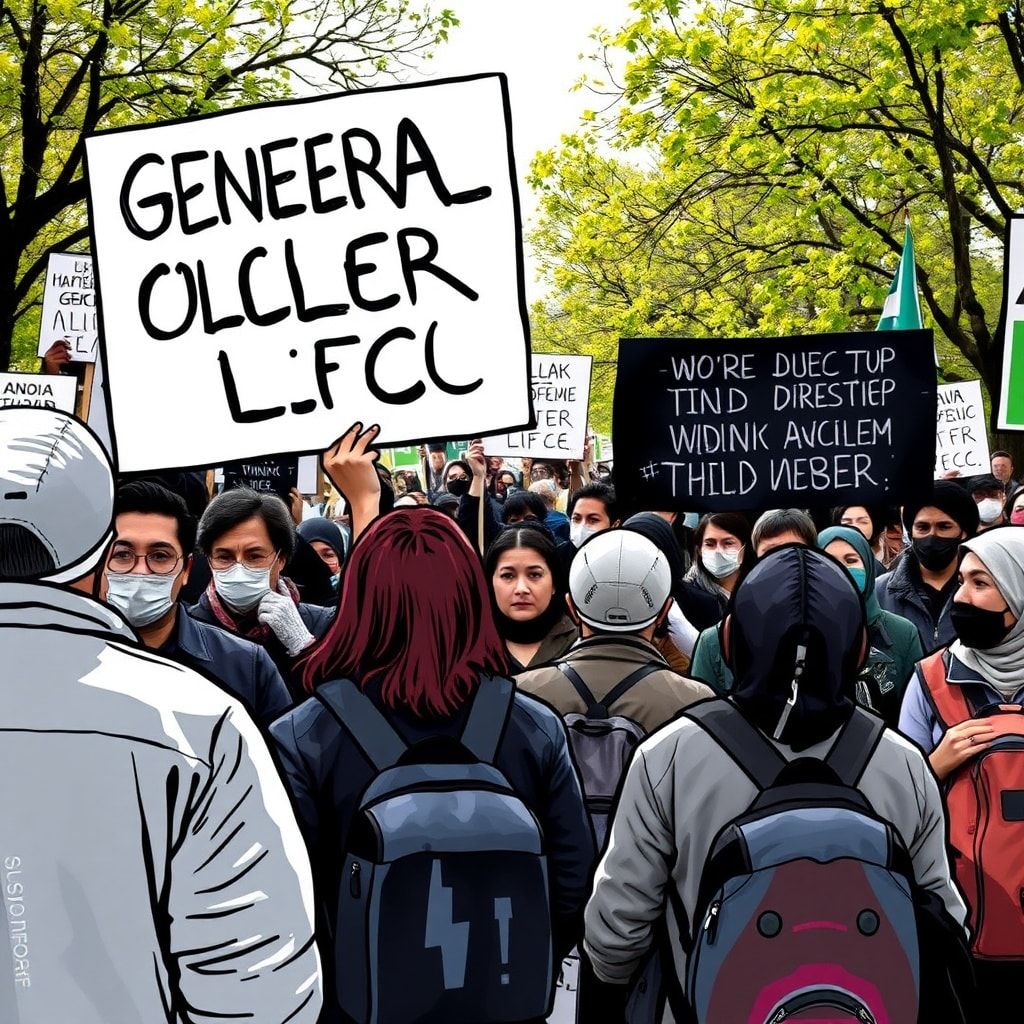
The upcoming general election in Veridia, scheduled for Thursday, is not just another poll; it represents the nation’s first significant step towards democratic restoration since violent, youth-led protests spectacularly toppled the long-standing government in September. This **post-protest election** carries the weight of a nation’s hopes and fears, promising either a fragile stability or further upheaval. The eyes of the international community are firmly fixed on Veridia as its citizens prepare to cast their votes, determining the trajectory of a country scarred by recent turmoil and yearning for a more equitable future.
For months leading up to the September revolution, Veridia was a crucible of simmering discontent. Decades of economic mismanagement, rampant corruption, and a widening chasm between the ruling elite and the impoverished populace had pushed the nation to its breaking point. Young Veridians, facing bleak job prospects and a future stifled by a lack of opportunities, found their voices through organized dissent.
## The Seeds of Discontent: Understanding the Protests
The protests, initially localized and sporadic, quickly gained momentum, fueled by social media and a collective sense of betrayal. What began as peaceful demonstrations against rising food prices and high unemployment rates soon escalated into widespread calls for systemic change and the immediate resignation of President Alaric Thorne, whose administration was widely perceived as autocratic and unresponsive.
### Economic Hardship and Youth Frustration
Veridia, rich in natural resources, had paradoxically seen its wealth concentrated in the hands of a few, while the majority struggled. Inflation soared, basic services deteriorated, and the promise of a better life for the burgeoning youth population remained an illusion. This economic stagnation directly contributed to the fervent participation of young people in the protests. They felt disenfranchised and unheard, their grievances dismissed by a government seemingly out of touch with their daily struggles.
The government’s heavy-handed response only served to inflame tensions further. Attempts to suppress the demonstrations with force backfired, galvanizing more citizens to join the cause. Images of young students clashing with riot police, shared globally, brought international condemnation and intensified calls for President Thorne to heed the demands of his people.
### Escalation and Government Collapse
The turning point came in late August when a general strike crippled the capital, bringing the nation to a standstill. The security forces, strained and demoralized, began to show cracks in their loyalty. Faced with an unprecedented national uprising and mounting pressure from regional powers, President Thorne’s government eventually collapsed in early September. He fled the country, leaving a power vacuum and a nation in jubilant yet uncertain transition.
A transitional council, comprised of respected civil society leaders, former opposition figures, and military representatives, was swiftly established. Their primary mandate was clear: restore order, initiate key reforms, and pave the way for a free and fair general election within a strict timeframe. This fragile interim period has been fraught with its own challenges, navigating deep-seated political rivalries and the urgent need for economic recovery.
## Navigating the Post-Protest Election Landscape
The **post-protest election** represents not just a change in leadership but a profound test of Veridia’s commitment to democratic principles after years of suppressed political discourse. Voters are not merely choosing candidates; they are voting for the kind of society they wish to rebuild from the ashes of the old regime. The electoral commission has worked tirelessly to ensure transparency and prevent the electoral fraud that plagued previous polls.
### The Interim Government’s Role
The interim government, led by respected jurist Dr. Elena Petrova, has focused on stabilizing the economy, ensuring freedom of assembly, and rehabilitating institutions damaged by years of corruption. Their non-partisan approach has garnered cautious optimism, but the political landscape remains highly fragmented, with numerous parties vying for power and influence. Ensuring the smooth conduct of this pivotal election has been their paramount duty.
### Key Players and Political Divisions
Several key political figures have emerged as frontrunners in this crucial election. Veteran opposition leader Marcus Kael, head of the Alliance for Democratic Renewal, promises sweeping institutional reforms and a tough stance on corruption. His populist rhetoric resonates with many who suffered under the previous regime. Competing against him is Anya Sharma, a young, charismatic former activist who led some of the initial protests. Her newly formed “Veridia Youth Movement” party advocates for radical social justice initiatives and direct youth participation in governance. The election will undoubtedly reflect these divergent visions for the nation’s future.
Furthermore, several smaller parties represent various regional and ethnic interests, complicating the electoral math and raising the specter of coalition governments. The challenge for any incoming administration will be to bridge these divides and forge a national consensus for genuine reform and reconciliation.
## A Nation at the Crossroads: What’s at Stake?
The stakes in this **post-protest election** could not be higher. Veridia stands at a critical juncture, facing both immense opportunities for renewal and significant risks of relapse into instability. The outcome will reverberate far beyond its borders, influencing regional stability and potentially setting a precedent for other nations grappling with similar challenges.
### Rebuilding Trust and Institutions
One of the most immediate tasks for the new government will be to rebuild public trust in state institutions. Years of abuse of power eroded confidence in the judiciary, law enforcement, and even the electoral process. A commitment to transparency, accountability, and the rule of law will be paramount to healing these deep wounds and ensuring the legitimacy of the new political order. This trust is essential for the long-term viability of Veridia’s nascent democracy.
### Economic Recovery Challenges
Economically, Veridia faces a daunting road ahead. The protests, while bringing down an oppressive regime, also took a toll on the economy, disrupting trade and deterring investment. The incoming government must formulate a clear and sustainable economic recovery plan, addressing unemployment, particularly among the youth, and tackling the structural issues that led to the initial widespread discontent. This will require delicate balancing acts between austerity and social spending, and attracting foreign investment while protecting national interests.
### International Scrutiny and Support
The international community has closely monitored Veridia’s transition. Organizations like the United Nations and the African Union have dispatched observer missions to ensure the fairness and credibility of the election. Continued international support, both financial and diplomatic, will be vital for Veridia’s journey towards stability and prosperity. Any signs of irregularities or a return to authoritarian tactics would undoubtedly lead to swift condemnation and potential sanctions.
## The Path Forward for the Post-Protest Election Winner
The party or coalition that emerges victorious from this **post-protest election** will face an immediate test of its capacity to govern a deeply fractured society. Their ability to deliver on promises of reform and address the root causes of the September unrest will define their legitimacy and the future stability of Veridia.
### Addressing Youth Demands
Crucially, the new administration must prioritize the demands of the youth, who were the driving force behind the revolution. This means not only creating jobs and educational opportunities but also ensuring their voices are heard in policy-making. Engaging with youth organizations and establishing formal channels for their input will be key to preventing future outbreaks of discontent.
### Securing Long-Term Stability
Ultimately, securing long-term stability will hinge on the new government’s commitment to inclusive governance, respect for human rights, and the establishment of robust democratic institutions. The **post-protest election** is merely the first step in a long and arduous journey towards building a truly democratic and prosperous Veridia, where the grievances of the past are acknowledged and the aspirations for the future are realized. The world watches, hoping Veridia can emerge from the shadows of its recent past stronger and more united.