
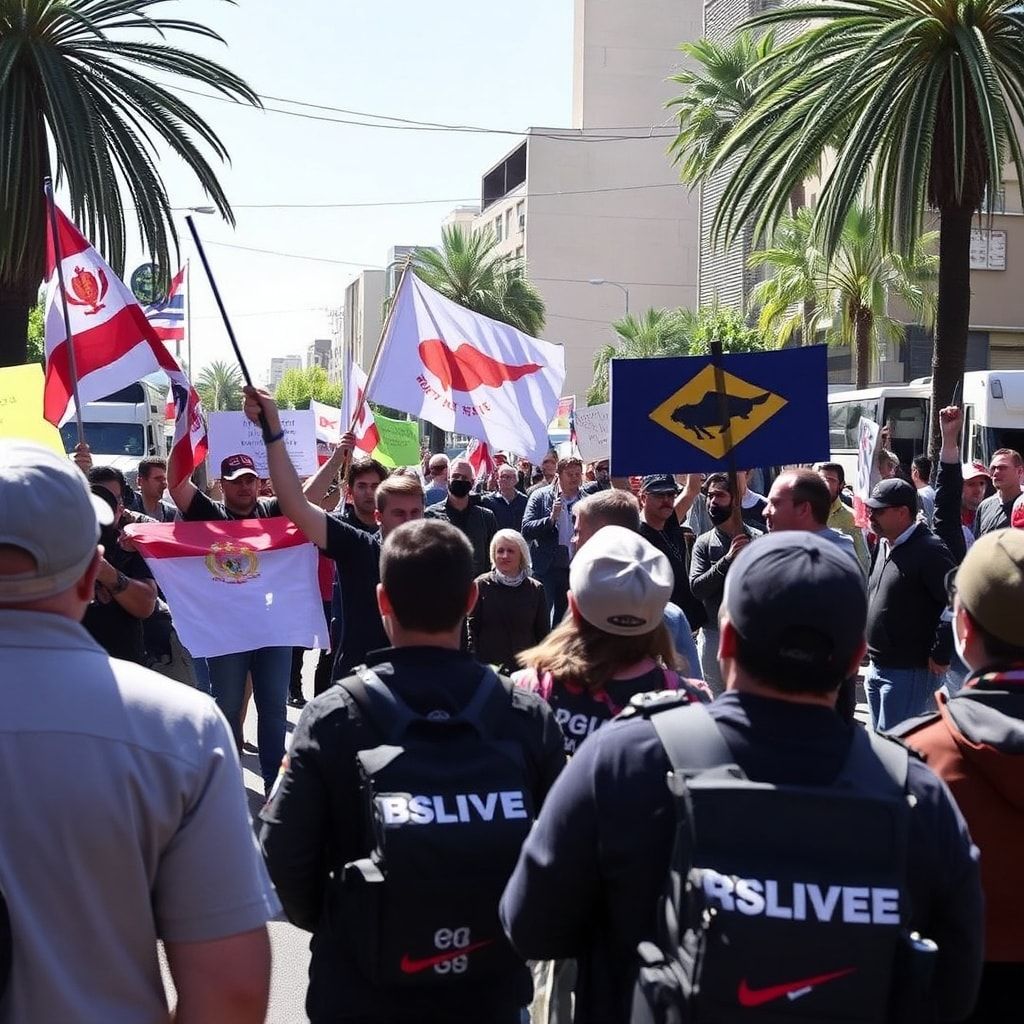
The resonant chant of “British Bases Out” has surged across Cyprus, following a recent drone strike that targeted the strategically vital RAF Akrotiri airbase. This incident has not only ignited fresh protests but also dramatically pushed the contentious issue of **British Bases Cyprus** back into the national discourse, compelling a critical re-evaluation of the island’s role and vulnerability within the volatile regional landscape. The attack underscores a deep-seated apprehension among Cypriots regarding their involuntary entanglement in international conflicts.
## A Legacy of Sovereignty and Unwavering Strategic Importance
The enduring presence of British military installations on Cyprus is a profound and often debated legacy, deeply rooted in the island’s colonial history. Upon Cyprus achieving independence from British rule in 1960, the United Kingdom, through the meticulously negotiated Treaty of Establishment, retained two “Sovereign Base Areas” (SBAs): Akrotiri, situated on the southern coast, and Dhekelia, located on the eastern side. These areas collectively encompass approximately 3% of the island’s total landmass and, crucially, remain under full British sovereignty, not merely leased, but owned outright by the UK – a unique post-colonial arrangement that continues to fuel debate.
From a geopolitical and strategic perspective, these bases are considered invaluable assets for the United Kingdom and its NATO allies. Their prime location in the Eastern Mediterranean offers an unparalleled vantage point for extensive surveillance, sophisticated intelligence gathering (including Signals Intelligence, or SIGINT), and robust power projection across a vast expanse encompassing the Middle East, North Africa, and the wider Levant. RAF Akrotiri, in particular, has consistently served as a forward operating base and a crucial launchpad for a multitude of British military operations, ranging from the Gulf Wars and interventions in Afghanistan and Iraq to more recent aerial sorties targeting ISIS in Syria and, crucially, responses to Houthi rebel activities in Yemen. Their utility extends beyond active combat, facilitating crucial training exercises, logistical support, and rapid deployment capabilities that bolster the UK’s ‘Global Britain’ foreign policy agenda.
## The Akrotiri Incident: A Sharp Catalyst for Renewed Discontent
While comprehensive details surrounding the drone strike on RAF Akrotiri remain under wraps, initial intelligence assessments strongly suggest the assault was orchestrated by Iranian-backed Houthi rebels operating from Yemen. This attack occurred amidst an intensifying regional crisis in the Red Sea, where the UK, in close coordination with the United States, has been actively engaged in joint military operations specifically designed to counter Houthi forces who have been systematically targeting international shipping lanes and commercial vessels.
The direct targeting of a British sovereign base on Cypriot soil represents a dangerous and unprecedented escalation. For a significant segment of the Cypriot population, this incident has irrevocably transformed their island, long perceived as a relatively secure and neutral haven, into a potential flashpoint for conflicts in which they have no direct stake. The attack serves as a stark and tangible demonstration of the inherent security risks and vulnerabilities associated with hosting foreign military installations that are deeply embedded in complex, global power dynamics. It dispels any illusion of insulation from the region’s instability and raises serious questions about the long-term safety of nearby Cypriot communities.
## “British Bases Out”: Amplifying the Voice of the People
The rallying cry of “British Bases Out” is by no means a novel sentiment in Cyprus, but the recent drone strike has undeniably amplified its urgency and resonance. A diverse coalition of protesters, encompassing student organizations, various political parties from across the spectrum, environmental groups, and concerned citizens, have taken to the streets. Their demonstrations articulate a multifaceted set of grievances and demands for an immediate end to the United Kingdom’s military presence on the island.
* **Undermining Sovereignty:** At the core of the protests is the profound belief that the continued British sovereignty over the SBAs represents an anachronistic relic of colonialism. Many Cypriots argue that this arrangement fundamentally infringes upon their nation’s hard-won independence and its right to complete self-determination, perceiving it as a persistent stain on their full sovereign integrity.
* **Escalating Security Risk:** The most immediate and palpable concern remains the heightened security risk posed to the Cypriot population. The drone strike served as irrefutable proof that the bases are not impregnable, and their involvement in overseas operations can directly expose Cyprus to retaliatory attacks, thereby drawing the island unwillingly into broader regional instability and potentially devastating conflicts.
* **Environmental and Social Impact:** Beyond security, there are longstanding and unresolved concerns regarding the environmental footprint of extensive military operations within the SBAs. These include significant noise pollution from aircraft, potential damage to fragile local ecosystems, and concerns over military waste disposal and possible contamination of natural resources, impacting both wildlife and nearby communities.
* **Compromised Neutrality:** A substantial portion of the Cypriot populace actively advocates for a genuinely neutral foreign policy, particularly given the island’s unique and delicate geopolitical position and its own unresolved “Cyprus problem.” They argue that the active use of the bases by a foreign power for military interventions irrevocably compromises this desired neutrality, making Cyprus an unwitting participant in global power struggles.
The escalating protests vividly underscore a profound and growing frustration among Cypriots. They feel that their island is being involuntarily leveraged and entangled in conflicts driven by external powers, thereby jeopardizing its own hard-earned peace and long-term stability in service of another nation’s strategic imperatives. The increasingly vocal demand for the removal of **British Bases Cyprus** reflects a deeply ingrained desire for the island to exercise full control over its own destiny, free from the entanglements and inherent risks of foreign military influence.
## Geopolitical Crossroads: Cyprus in the Shifting Eastern Mediterranean
The evolving situation surrounding **British Bases Cyprus** carries significant and far-reaching geopolitical implications for multiple actors. For the United Kingdom, these bases remain absolutely critical for sustaining its global defense posture, projecting military and diplomatic influence, and conducting intelligence operations in an increasingly volatile and strategically vital region. Their potential closure or any significant reduction in their operational capabilities would undeniably impact Britain’s strategic reach, its capacity to respond to crises, and its perceived role as a global security guarantor. This comes at a time when the UK is actively seeking to redefine its international standing post-Brexit.
For Cyprus, the situation presents an exceptionally delicate balancing act. While public sentiment against the bases is demonstrably growing, the Cypriot government has historically maintained a pragmatic and nuanced stance. They acknowledge the tangible economic contributions through employment and local spending, as well as the indirect security benefits perceived through the presence of a powerful ally. Furthermore, challenging the provisions of the 1960 Treaty of Establishment is a legally complex and politically arduous undertaking, fraught with potential diplomatic and economic repercussions that the government must carefully weigh. The government must navigate popular demand with the realities of international treaties and strategic partnerships.
Regionally, the Eastern Mediterranean has emerged as a complex hotbed of geopolitical competition. This involves intense disputes over energy resources (particularly natural gas), unresolved maritime boundary delimitations, and escalating rivalries between regional and great powers. The stability of Cyprus, and by extension the operational status of the British bases, is inextricably intertwined with these broader regional dynamics, involving key players such as Turkey, Greece, Israel, Egypt, and others. Any dramatic alteration to the existing status quo of the bases could send ripple effects through these intricate alliances and rivalries, potentially destabilizing an already fragile equilibrium. Furthermore, major global powers like Russia, which maintains its own strategic interests in the Eastern Mediterranean, would closely monitor any developments, potentially seeking to exploit any perceived vacuum or instability.
## The Road Ahead: Uncertainty, Diplomacy, and Demands for Change
The recent drone strike on RAF Akrotiri and the subsequent surge in public protests unequivocally mark a new and critical chapter in the protracted debate concerning **British Bases Cyprus**. While a sudden, unilateral withdrawal by the United Kingdom remains highly improbable given their strategic importance, the sustained and intensifying public pressure, coupled with the undeniable security risks highlighted by the attack, will almost certainly compel both the British and Cypriot governments to address these concerns with greater urgency and transparency.
Future diplomatic discussions may well focus on avenues for enhanced transparency regarding military operations conducted from the bases, the implementation of more robust security cooperation protocols, or even the challenging prospect of renegotiating specific aspects of the original Treaty of Establishment to better reflect contemporary realities and Cypriot sovereignty aspirations. For Cyprus, the clamour for full sovereignty and self-determination is growing ever louder, asserting its inherent right to define its own path as a peaceful and independent island nation, rather than serving as a military launchpad for the strategic interests of external powers. The future of these strategically vital, yet increasingly contentious, military installations remains shrouded in uncertainty, poised precariously at the intricate intersection of historical agreements, enduring strategic necessity, and the undeniable force of public will.