
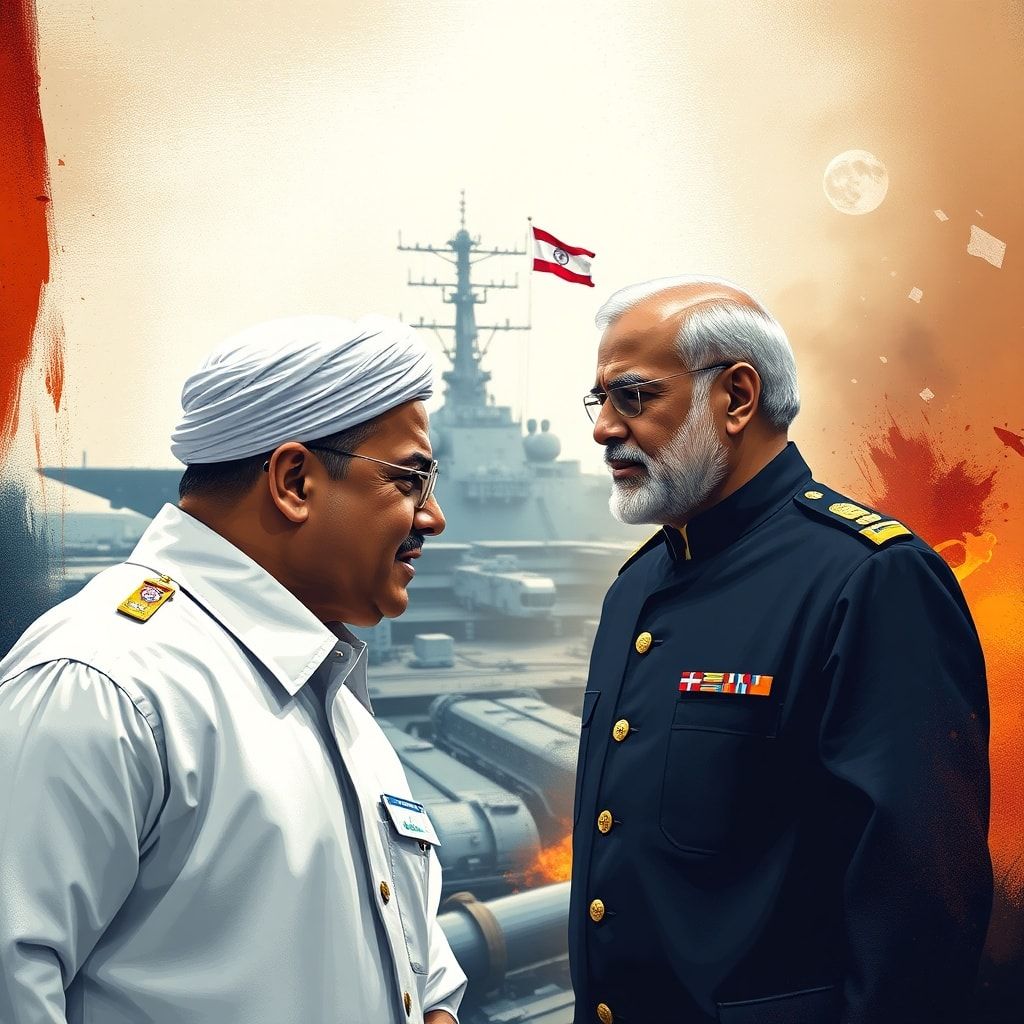
Unraveling the Geopolitical Puzzle: India’s Revelation on Iran Ship Docking India
India’s recent disclosure regarding Iran’s request to dock three warships in an Indian port has sent ripples through the international diplomatic community. This revelation, coming precisely as the United States and Israel reportedly commenced a period of intensified military posturing against Iran, underscores the intricate and often volatile nature of Middle Eastern geopolitics and India’s pivotal role as a regional maritime power. The timing of this **Iran ship docking India** request raises critical questions about strategic intentions and the delicate balance of power in a highly sensitive region.
The incident, confirmed by Indian authorities, highlights the complex web of alliances and rivalries that define contemporary international relations. It places India in a delicate diplomatic position, caught between its strategic partners in the West and its long-standing ties with Tehran. As an investigative journalist, the goal is to peel back the layers of this event, providing context and analysis on its potential implications for global security and India’s foreign policy.
The Incident: A Request Amidst Heightened Tensions
According to an official statement from New Delhi, Iran had sought permission to dock three of its naval vessels in an Indian port. What makes this request particularly noteworthy is the specific date: it coincided with the commencement of what India described as a “war on Iran” by the United States and Israel. This phrase, while strong, likely refers to a period of aggressive joint military exercises, cyber operations, and heightened rhetoric, rather than a formally declared armed conflict.
The request itself, involving three naval ships, indicates a significant projection of Iranian naval power and logistical needs. Docking rights in foreign ports are crucial for navies undertaking extended missions, allowing for resupply, refuelling, and crew rest. The choice of India as a port of call is not coincidental, given the two nations’ historical ties and India’s strategic location in the Indian Ocean.
Decoding “War on Iran”: Rhetoric vs. Reality
The phrase “war on Iran” used by Indian officials warrants closer examination. While no formal declaration of war was made by the US or Israel against Iran, the period in question was marked by undeniable and severe military pressure. This typically involved large-scale joint military drills designed to simulate responses to Iranian aggression, advanced missile defense system deployments, and an aggressive stance from both Washington and Tel Aviv regarding Iran’s nuclear program and its regional proxy networks.
Such activities are often accompanied by intense diplomatic pressure, sanctions, and strong statements from political leaders, creating an atmosphere akin to a covert or impending conflict. For instance, the US and Israel have frequently conducted exercises like “Juniper Cobra,” which focuses on integrated air and missile defense, sending a clear message of deterrence to Tehran. This context is crucial for understanding the gravity of Iran’s request for **Iran ship docking India** rights at that specific moment.
Iran’s Maritime Ambitions and the India Connection
Iran’s decision to seek docking permission from India reflects its broader maritime strategy. Tehran has been actively working to expand its naval presence beyond the Persian Gulf, particularly into the Indian Ocean, viewing it as a critical area for projecting influence, safeguarding its trade routes, and breaking out of perceived regional encirclement. Extended naval deployments require reliable logistics and access to friendly ports.
India, a major power with a non-aligned foreign policy tradition, presents an attractive option. Historically, India and Iran have shared cultural and economic ties, with India being a significant importer of Iranian oil and a key investor in Iran’s Chabahar Port. This port, developed by India, provides a vital trade route to Afghanistan and Central Asia, bypassing Pakistan, and underscores the strategic importance of the India-Iran relationship.
Strategic Implications for the Persian Gulf and Beyond
An increase in Iranian naval activity, particularly if supported by port access in key regional states, has significant strategic implications. It impacts the delicate balance of power in the Persian Gulf and the wider Indian Ocean, regions crucial for global trade and energy security. Maritime security, freedom of navigation, and the safety of critical sea lanes, such as the Strait of Hormuz, are perennial concerns for international powers.
Any move that could be perceived as bolstering Iran’s military capabilities or reach during a period of high tension is closely scrutinized by Western powers and Gulf Arab states alike. The request for **Iran ship docking India** rights could be interpreted either as a routine diplomatic formality or as a strategic probe to test regional reactions and strengthen alliances, depending on one’s geopolitical perspective.
India’s Balancing Act: Navigating Complex Alliances
For India, the situation presents a classic diplomatic tightrope walk. New Delhi maintains robust strategic partnerships with both the United States and Israel, encompassing extensive defense cooperation, intelligence sharing, and economic ties. At the same time, India has long-standing, albeit sometimes strained, relations with Iran, driven by energy security needs, connectivity projects like Chabahar Port, and a desire to maintain strategic autonomy.
India’s foreign policy has historically championed non-alignment and multi-alignment, aiming to maintain cordial relations with all major powers rather than taking definitive sides in international disputes. This approach allows India flexibility and leverage, but it also means navigating complex demands from various partners. Granting or denying **Iran ship docking India** permission would send a powerful message, potentially pleasing one side while alienating another.
A Test of Diplomatic Skill
India’s response to such a sensitive request would have been a testament to its diplomatic acumen. Any decision would have to carefully weigh the immediate security implications, the long-term strategic interests, and the potential for diplomatic fallout with key international players. The incident underscores India’s growing stature as a regional power whose decisions can significantly impact global geopolitical dynamics.
The challenge lies in upholding its own national interests—such as ensuring maritime security in the Indian Ocean, maintaining access to diverse energy sources, and promoting regional connectivity—while simultaneously managing expectations and pressures from its international partners. The precise outcome of Iran’s request for **Iran ship docking India** was not immediately clear, but the revelation itself serves as a stark reminder of these intricate diplomatic challenges.
Regional Security and the Future of Maritime Cooperation
This incident highlights the inherent fragility of peace and security in the broader Indo-Pacific region. As naval powers expand their reach and competition for influence intensifies, clear communication channels, adherence to international maritime law, and robust diplomatic engagements become even more critical. The Indian Ocean is increasingly becoming an arena for strategic competition, and the movement of naval assets is a key indicator of shifting power dynamics.
The episode serves as a prompt for international stakeholders to consider the mechanisms for de-escalation and confidence-building in times of heightened tension. Transparency in naval operations and reciprocal port visits, when conducted under mutually agreed terms, can foster understanding rather than suspicion. However, when such requests are made amidst a backdrop of intense geopolitical rivalries, they inevitably become subjects of scrutiny and strategic interpretation.
The Specter of Proxy Conflicts
The naval request also indirectly connects to the broader specter of proxy conflicts involving Iran, the US, and Israel across the Middle East. Any move that could be perceived as strengthening Iran’s position, even subtly, fuels concerns among its adversaries and their allies. The ripple effects of Middle Eastern conflicts often extend far beyond the immediate region, influencing global energy markets, trade routes, and security architectures. India, as a major player in the extended neighbourhood, cannot remain immune to these dynamics.
Conclusion
The revelation regarding Iran’s request for **Iran ship docking India** at a moment of significant US-Israel pressure on Tehran offers a crucial insight into the complex and interconnected world of international diplomacy and security. It underscores India’s unique position as a rising global power, navigating intricate alliances while upholding its strategic autonomy.
This event is more than a simple request for port access; it is a geopolitical marker, highlighting the ongoing power struggles in the Middle East and the Indian Ocean. As regional dynamics continue to evolve, India’s role in maintaining stability and balancing diverse interests will remain a critical element to watch, shaping not only its own foreign policy but also the broader trajectory of international relations.