
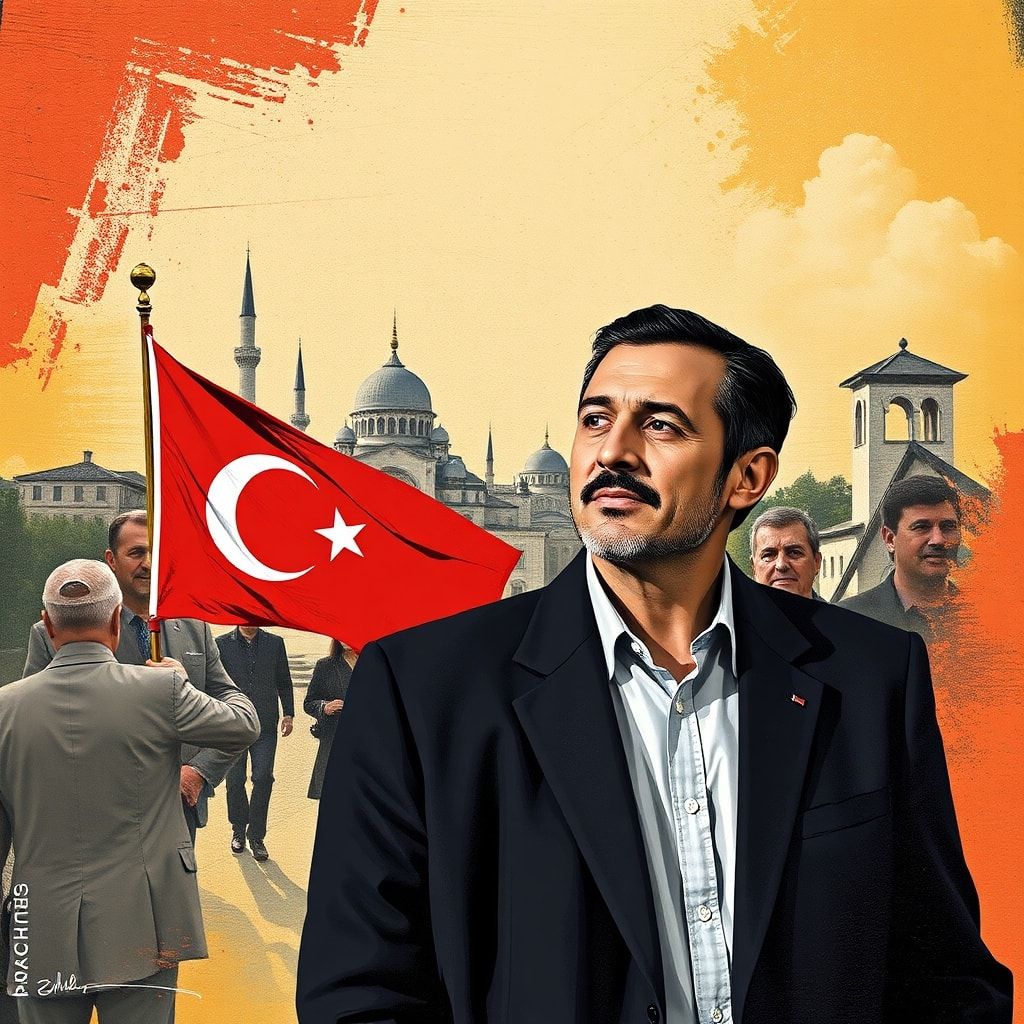
In the volatile landscape of Turkish politics, one figure consistently stands out as the primary challenger to President Recep Tayyip Erdogan: Ekrem Imamoglu. The mayor of Istanbul has emerged as the most significant **Ekrem Imamoglu Rival**, representing a potent opposition force capable of galvanizing a diverse electorate against the ruling AK Party.
His rise marks a critical juncture for Turkey, signaling a potential shift in a political arena long dominated by Erdogan. Understanding this rivalry is crucial for grasping the future trajectory of the nation.
The Meteoric Rise of an Opposition Star
Ekrem Imamoglu’s journey to national prominence was swift and largely unforeseen by many outside Istanbul. Born in 1970 in Akçaabat, Trabzon, Imamoglu initially pursued a career in business before entering local politics.
He served as the district mayor of Beylikdüzü, a rapidly developing area of Istanbul, from 2014 to 2019. His tenure there was marked by an emphasis on transparent governance and urban development.
His pivotal moment came in the 2019 Istanbul mayoral elections. Running as the candidate for the Republican People’s Party (CHP), he secured a narrow victory over the AK Party candidate, Binali Yıldırım.
This initial win was controversially annulled, leading to a rerun election. The subsequent campaign saw Imamoglu gain even greater public sympathy and support, culminating in a resounding victory that solidified his status as a national political heavyweight.
Erdogan’s Enduring Grip and the Challenge Ahead
President Recep Tayyip Erdogan has been the undeniable titan of Turkish politics for over two decades. From his time as Istanbul mayor in the 1990s to prime minister and then president, he has reshaped Turkey’s political and social fabric.
His political machine, the AK Party, has built a formidable base of support, particularly among conservative and religious segments of the population. Erdogan’s charisma and ability to connect with the populace have been key to his sustained power.
However, the 2019 Istanbul election was a stark reminder that even Erdogan’s dominance is not absolute. Imamoglu’s victory in Turkey’s largest city, often considered the heart of its economy and culture, exposed vulnerabilities in the ruling party’s electoral strategy.
This has set the stage for a compelling showdown, where the **Ekrem Imamoglu Rival** dynamic becomes central to Turkey’s political narrative. The country finds itself at a crossroads, with competing visions for its future.
Clash of Ideologies: Modernity vs. Conservatism
The rivalry between Imamoglu and Erdogan is not merely a personality clash; it represents a deeper ideological struggle. Imamoglu largely embodies a more secular, social-democratic vision for Turkey, appealing to urban, educated, and liberal voters.
He often emphasizes inclusive governance, democratic values, and a more open society. His political rhetoric focuses on unity and addressing the economic anxieties of the populace.
Erdogan, on the other hand, champions a conservative, nationalist, and religiously-tinged agenda. His supporters often laud his leadership in infrastructure development, asserting Turkey’s role on the global stage, and protecting traditional values.
This fundamental divergence in political philosophy fuels their competition. The future of Turkey hinges on which of these visions ultimately prevails in the hearts and minds of its citizens.
Key Battlegrounds and Political Maneuvers
The political battle between Imamoglu and Erdogan plays out on multiple fronts. Local elections, like the 2019 Istanbul contest, have proven to be significant indicators of national sentiment.
Economic policy is another critical arena. Turkey has grappled with high inflation and currency instability, issues that the opposition, led by figures like Imamoglu, frequently highlight to criticize the government’s handling of the economy.
Legal challenges have also become a feature of this rivalry. Imamoglu has faced court cases, which critics argue are politically motivated attempts to sideline him. These legal battles often draw international attention and raise concerns about the rule of law in Turkey.
Understanding these complex dynamics is key to appreciating the political tightrope that both leaders walk. The stakes are incredibly high, not just for the politicians involved, but for the entire nation.
Navigating the Challenges Faced by Imamoglu
As a prominent opposition figure, Ekrem Imamoglu faces immense pressure from the state apparatus. Control over media, judicial processes, and significant financial resources largely rests with the ruling party.
Imamoglu and the CHP must carefully navigate these challenges while attempting to build a broad coalition across different segments of Turkish society. This requires strategic communication and consistent outreach.
His success depends on his ability to maintain public trust despite governmental scrutiny and to present a credible alternative vision that resonates beyond traditional opposition strongholds.
Public Perception and Support Bases
Both Imamoglu and Erdogan draw their support from distinct, yet sometimes overlapping, demographic groups. Erdogan’s base is strong in Anatolia, among religiously conservative voters, and those who have benefited from the AK Party’s economic policies.
Imamoglu finds strong backing in metropolitan areas, among secularists, Kurds, and younger voters disillusioned with the current government. His ability to project an image of calm competence and inclusivity has broadened his appeal.
However, both leaders face the challenge of appealing to the floating voter and those grappling with economic hardship. The perception of effective governance and a hopeful future often sways undecided voters.
His ability to connect with ordinary citizens, much like Erdogan once did, positions him as a significant **Ekrem Imamoglu Rival** in the next electoral cycle.
The Road Ahead: Implications for Turkish Democracy
The ongoing rivalry between Ekrem Imamoglu and Recep Tayyip Erdogan carries profound implications for the future of Turkish democracy. The next national elections will be a litmus test for the country’s political direction.
A strong showing by Imamoglu or the opposition could signal a desire for political change and a re-evaluation of current policies. Conversely, a decisive victory for Erdogan would reinforce the existing power structure.
The global community watches with keen interest, as Turkey’s geopolitical significance and its role in regional stability are undeniable. The outcome of this internal political struggle will have ripple effects far beyond its borders.
This evolving political landscape highlights the fragility and resilience of democratic processes in a country known for its vibrant and often tumultuous political history. For more on the historical context of Turkish elections, see [Internal Link: History of Turkish Elections].
Conclusion: The Enduring Significance of the Rivalry
The dynamic between Ekrem Imamoglu and President Erdogan is more than just a political contest; it is a battle for the soul of Turkey. Imamoglu’s emergence has injected new energy and hope into the opposition, providing a credible challenge to Erdogan’s long-standing authority.
As Turkey continues to navigate economic uncertainties and geopolitical pressures, the prominence of an **Ekrem Imamoglu Rival** will remain a defining feature of its political narrative. His actions and strategies will be closely scrutinized as the nation looks towards its next electoral challenges.
The outcome of this high-stakes rivalry will undoubtedly shape Turkey’s domestic and international standing for years to come. For further insights into Turkey’s current political climate, refer to [Internal Link: Current Turkish Politics].