
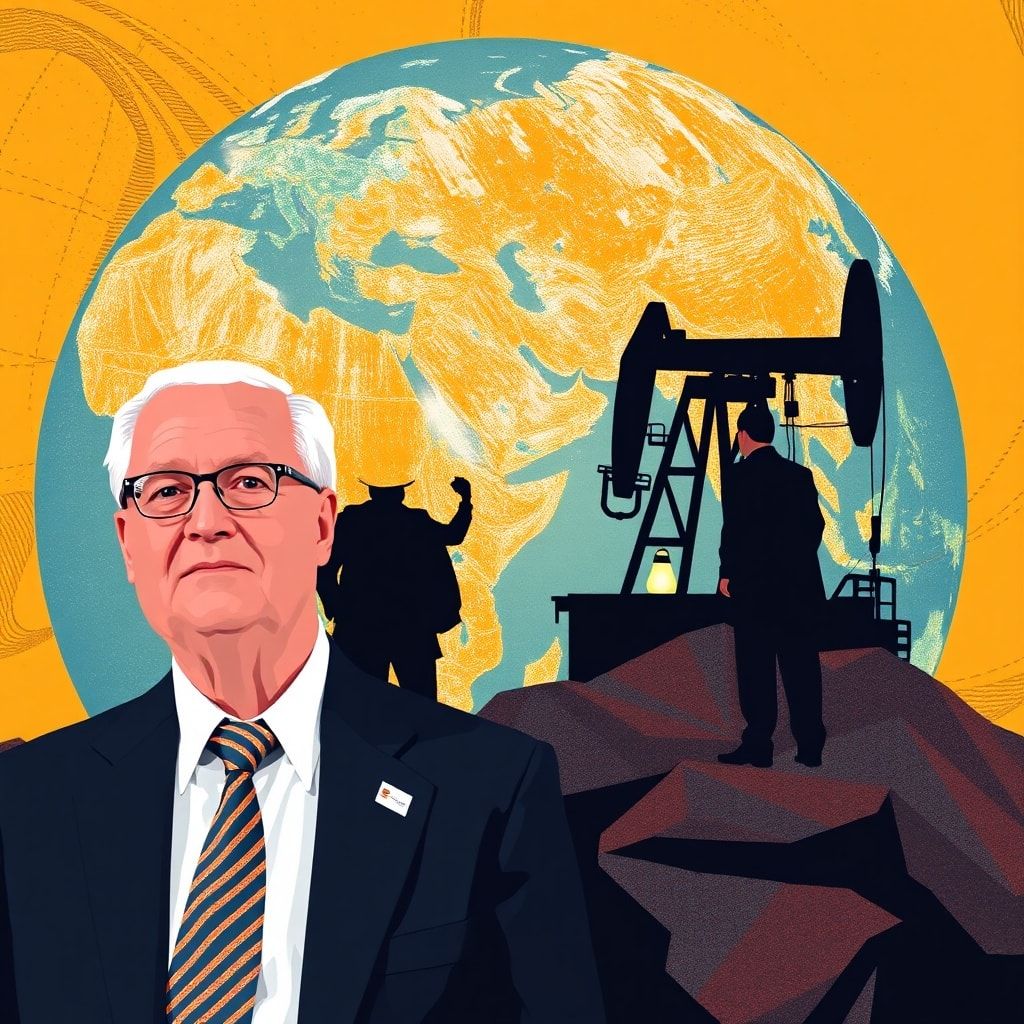
The global energy landscape is currently grappling with a significant challenge as global oil prices have surged past the critical $100 per barrel mark. This alarming increase has triggered urgent discussions among finance ministers from major economies and the International Energy Agency (IEA), all seeking viable options for market stabilization. The economic ramifications of such elevated prices are far-reaching, impacting inflation, consumer spending, and industrial production worldwide.
This investigative report delves into the underlying causes of the recent oil price surge, the critical role played by international bodies and national governments, and the potential strategies being considered to restore equilibrium to the volatile global energy markets. Understanding these dynamics is crucial for grasping the broader economic outlook.
The Surge in Global Oil Prices: Causes and Consequences
The recent escalation in global oil prices is not a singular event but rather the culmination of several complex factors. Geopolitical instability, supply chain disruptions, and a robust post-pandemic demand recovery have collectively exerted immense upward pressure on crude benchmarks like Brent and WTI. This volatility presents a significant headwind for global economic growth.
Geopolitical Tensions and Supply Shocks
Ongoing geopolitical conflicts in key oil-producing regions have introduced a layer of uncertainty into global supply. Sanctions, threats to shipping lanes, and political unrest directly impede the flow of crude oil to international markets. These disruptions are often sudden and unpredictable, making long-term supply planning extremely difficult for oil companies and governments alike. The risk premium associated with these regions naturally pushes prices higher.
Moreover, underinvestment in new oil and gas exploration and production over recent years has contributed to a tighter supply base. As demand rebounds, the industry finds itself with limited spare capacity to quickly ramp up output, further exacerbating supply-side pressures. This structural issue requires long-term strategic planning.
Demand Recovery and Inflationary Pressures
Following the initial downturn caused by the COVID-19 pandemic, global economies have largely reopened, leading to a vigorous recovery in demand for energy. Transportation sectors, manufacturing industries, and everyday consumer activity have all seen increased energy consumption. This rapid demand rebound has outpaced the more gradual recovery in supply.
The high cost of crude oil translates directly into higher prices at the pump for consumers and increased operational costs for businesses. This fuels broader inflationary pressures across economies, eroding purchasing power and potentially slowing economic recovery. Central banks worldwide are closely monitoring these developments as they consider monetary policy responses.
International Energy Agency (IEA) Role and Insights
The International Energy Agency (IEA) stands at the forefront of global energy security, providing crucial data, analysis, and policy recommendations to its member countries. Its role is particularly vital during periods of market instability, offering a coordinated response mechanism. The IEA’s insights are indispensable for understanding market fundamentals.
IEA’s Mandate and Market Monitoring
Established in 1974 after the first oil crisis, the IEA’s primary mandate is to ensure the security of oil supply for its 31 member countries. It continuously monitors global oil markets, assesses supply and demand trends, and provides forecasts. This comprehensive oversight allows the IEA to identify potential imbalances and inform policy decisions aimed at preventing or mitigating energy crises. Its reports are widely regarded as authoritative.
Strategic Petroleum Reserves (SPR) and Other Tools
One of the IEA’s most potent tools is the coordinated release of Strategic Petroleum Reserves (SPR). Member countries maintain these emergency stockpiles, which can be deployed to inject additional supply into the market during severe disruptions. Such releases are designed to ease immediate price pressures and signal international cooperation. However, the SPR is a finite resource, used sparingly for maximum impact. The IEA also encourages member states to implement energy efficiency measures and diversify their energy mixes to reduce reliance on volatile fossil fuel markets.
Finance Ministers’ Urgent Deliberations
The discussions among finance ministers underscore the severity of the economic threat posed by escalating oil prices. These officials are tasked with safeguarding national economies and are keenly aware of the ripple effects across various sectors. Their interventions often involve a blend of fiscal measures and diplomatic engagement.
Economic Impact on National Budgets
High oil prices exert considerable strain on national budgets, particularly for countries that are net importers of crude. Governments may face increased costs for energy subsidies, reduced tax revenues if economic activity slows, and greater pressure to provide relief to consumers and businesses. This can complicate fiscal planning and potentially lead to difficult spending choices. Maintaining fiscal stability becomes a paramount concern.
Consumer Burden and Policy Responses
For ordinary citizens, rising fuel costs translate directly into higher expenses for transportation, heating, and goods. This disproportionately affects lower-income households and can trigger public discontent. Finance ministers are exploring various policy responses, including temporary tax cuts on fuel, targeted subsidies, or other forms of financial assistance to mitigate the immediate burden on consumers. Such measures aim to cushion the impact without distorting market signals too severely.
Proposed Solutions for Oil Price Stabilization
Achieving oil price stabilization is a multifaceted challenge requiring a combination of short-term interventions and long-term strategic shifts. The discussions between finance ministers and the IEA focused on a spectrum of potential actions, reflecting the complexity of the global energy system. There is no single magic bullet to resolve the current situation.
Increasing Production vs. Demand Management
One immediate solution explored is the possibility of increasing global oil production. This would involve encouraging major oil-producing nations, particularly OPEC+ members, to boost their output. However, geopolitical considerations and the desire of some producers to maintain higher revenues often complicate such appeals. On the demand side, policies promoting energy conservation and efficiency, although slower to take effect, can contribute to reducing overall consumption and thus alleviate price pressures over time.
Diplomatic Efforts and International Cooperation
Diplomatic engagement is critical to resolving geopolitical tensions that disrupt supply. International cooperation among consuming and producing nations is essential for fostering market predictability and confidence. This includes dialogue on production levels, investment in infrastructure, and coordinated responses to crises. Multilateral platforms are vital for forging consensus and action.
Diversifying Energy Sources
In the long term, reducing reliance on fossil fuels through the diversification of energy sources is paramount. Investments in renewable energy technologies, nuclear power, and other alternative fuels will build resilience against future oil price shocks. This transition not only enhances energy security but also supports climate change mitigation efforts. Accelerating this shift is a strategic imperative.
The Road Ahead: Challenges and Outlook for Global Oil Prices
The path to achieving sustained stability in global oil prices remains fraught with challenges. The interplay of economic growth, geopolitical events, and climate policy will continue to shape the energy landscape for years to come. Vigilance and adaptability will be key for policymakers.
Market Volatility and Future Projections
Oil markets are inherently volatile, susceptible to rapid shifts based on news, sentiment, and unexpected events. While immediate measures may bring temporary relief, the long-term outlook suggests continued price fluctuations until fundamental supply-demand imbalances are resolved and greater energy security is achieved. Experts continue to provide diverse projections, underscoring the uncertainty.
Long-Term Energy Transition
Beyond immediate stabilization, the broader imperative of the global energy transition will dictate future strategies. As nations commit to decarbonization, the role of oil will evolve. However, in the interim, ensuring affordable and reliable energy supply remains critical for economic prosperity and social stability. Balancing these objectives is a delicate act for governments worldwide.
Conclusion:
The discussions among finance ministers and the IEA regarding soaring global oil prices highlight a pressing global economic issue. The combined forces of geopolitical instability, supply constraints, and resurgent demand have created a challenging environment. While immediate solutions like strategic reserve releases and diplomatic appeals offer short-term relief, the long-term imperative points towards sustained investment in diversified energy sources and enhanced international cooperation to build a more resilient and stable global energy system. The decisions made today will profoundly shape tomorrow’s economic stability and energy security.