
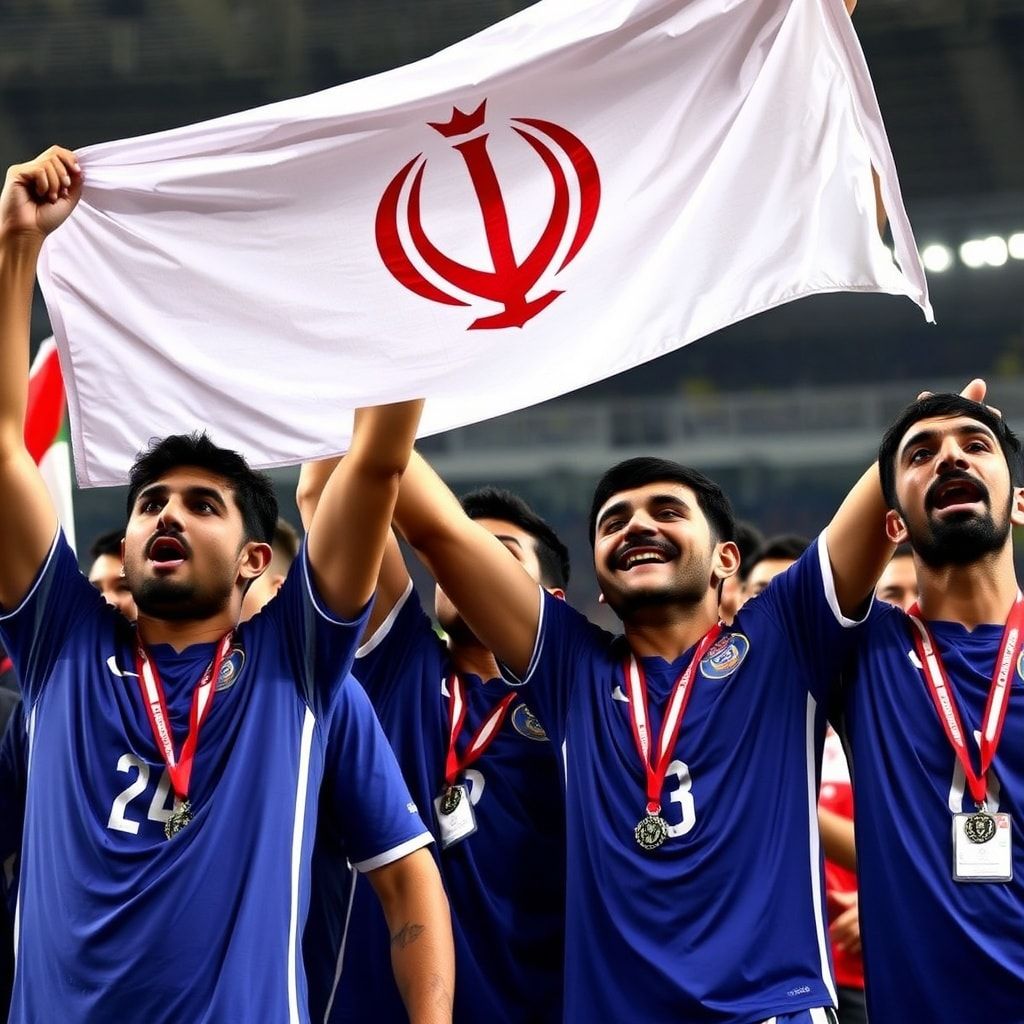
Iranian Team Labeled ‘Wartime Traitors’ After Anthem Controversy
Concern has escalated dramatically for an unnamed Iranian sports team, now branded “wartime traitors” by a prominent critic. The severe accusation stems from the team’s perceived failure to salute during the national anthem, an act interpreted as a silent protest. This incident has ignited a national debate, drawing international attention to the precarious position of athletes caught between national duty and personal conscience. The Iranian anthem protest underscores the deep political tensions currently gripping the nation.
The Iranian Anthem Protest Unfolds
The controversy erupted following a televised event where the team in question did not display the expected reverence during the playing of the Iranian national anthem. While specific actions remain debated, reports suggest a lack of enthusiastic participation, a quiet defiance that quickly spiraled into a national incident. This perceived slight, however subtle, carries immense weight in a country where national symbols are deeply intertwined with political loyalty.
A Silent Act of Defiance
Observers and human rights advocates suggest the team’s actions could be a discreet form of solidarity with ongoing protests across Iran. Athletes often serve as powerful symbols, and their public gestures, even understated ones, can resonate deeply with a populace yearning for change. In tightly controlled environments, such silent acts become potent expressions of dissent, communicating messages that cannot be openly spoken.
The Critic’s Harsh Rebuke
The incendiary label of “wartime traitors” was reportedly leveled by a well-known conservative figure or state-affiliated media outlet. This accusation is not merely rhetorical; it carries serious implications under Iranian law, potentially leading to severe penalties including imprisonment or bans from public life. The term “wartime” is particularly potent, evoking historical struggles and current geopolitical tensions to frame the athletes’ actions as an act against national security. The gravity of such a statement amplifies the concerns for the team following their Iranian anthem protest.
Broader Context: Sports and Politics in Iran
The intersection of sports and politics in Iran is a long-standing and often fraught dynamic. The state has historically utilized athletic achievements to bolster national pride and project an image of strength on the international stage. Consequently, any perceived deviation from nationalistic expectations by athletes is swiftly and often harshly addressed, setting precedents for severe repercussions.
A History of Athlete Activism
Iranian athletes have a complex history of both adherence and subtle defiance. Instances range from wrestlers refusing to compete against Israeli opponents – a state policy – to more covert gestures of solidarity with internal movements. These acts, though varied in their overtness, highlight the moral dilemmas faced by individuals who are both national representatives and citizens with their own beliefs. [Link to related article on human rights abuses in Iran]
The Regime’s Stance on Dissent
The Iranian government maintains strict control over most aspects of public life, including sports federations. Dissent, particularly from high-profile figures, is generally not tolerated and is often met with swift and decisive action. Athletes who step out of line can face career termination, travel bans, public condemnation, and even more severe legal consequences, serving as a stark warning to others.
International Reactions and Human Rights Concerns
News of the team’s predicament has reverberated internationally, drawing sharp condemnation from human rights organizations and sports advocacy groups. The global community is now closely watching the situation, raising questions about athlete protection and freedom of expression within authoritarian regimes. This scrutiny adds another layer of pressure on both the Iranian authorities and international sports bodies.
Global Scrutiny of Athlete Treatment
International bodies, including elements of the Olympic movement and various human rights watchdogs, are increasingly concerned with the welfare of athletes in countries where political freedoms are curtailed. The incident serves as a crucial test case for how these organizations will respond to allegations of political coercion and potential persecution of sportspeople.
Calls for Protection and Solidarity
Amnesty International and Human Rights Watch have previously documented cases of Iranian athletes facing reprisals for political statements or actions. They, along with other NGOs, are likely to issue urgent calls for the protection of the team members, advocating for their right to freedom of expression without fear of retribution. Such calls aim to mobilize international opinion and pressure.
The Iranian Anthem Protest: Unpacking the Fallout
For the athletes themselves, the fallout from the Iranian anthem protest is profoundly personal and potentially life-altering. Beyond the immediate public condemnation, they face a very real threat of official reprisal, which could include severe legal actions, professional ruin, and even threats to their personal safety and that of their families.
Potential Reprisals and Personal Safety
The label “wartime traitors” is not just a rhetorical flourish; it carries the weight of state security implications. Athletes could face interrogations, travel bans, asset freezes, or worse. The fear of reprisal is a powerful deterrent, forcing many to self-censor. The current situation places the team members in an acutely vulnerable position, with their futures hanging precariously.
The Dilemma of National Representation
These athletes embody a complex duality: they represent their nation on a global stage, yet they are also citizens who may harbor grievances against their government. The expectation to perform nationalistic rituals can clash fundamentally with individual conscience, creating an agonizing dilemma for those who wish to express solidarity with their struggling compatriots.
The Path Forward: Diplomacy or Deterioration?
The ongoing controversy demands careful navigation by all parties. The international community faces the challenge of upholding human rights principles without exacerbating the risks to the athletes, while Iranian authorities grapple with managing internal dissent and international perceptions.
International Bodies’ Role
Major sporting federations, such as FIFA or the International Olympic Committee, often espouse principles of political neutrality but are increasingly pressured to act when human rights abuses intersect with sports. Their response to this specific Iranian anthem protest will be critical in shaping future precedents for athlete protection worldwide.
Public Opinion Within Iran
While official media narratives might condemn the team, public sentiment within Iran is likely to be far more nuanced. Many citizens, familiar with the complexities of state control and dissent, may view the team’s actions as a courageous stand. This internal division further complicates the authorities’ response and determines the long-term impact of the incident. [Link to article on the history of athlete activism]
Conclusion
The incident surrounding the Iranian team and their perceived failure to salute the national anthem transcends a simple breach of protocol. It is a powerful illustration of the profound struggles for expression and human rights within Iran, where even subtle gestures can ignite a national crisis. The label of “wartime traitors” casts a long shadow, placing the athletes in grave danger and serving as a stark reminder of the courage required to challenge authority. The Iranian anthem protest serves as a potent symbol of these wider struggles, and the world watches, concerned for their safety, as this complex drama continues to unfold.