
Anglican Fault Lines: Nigerian Clerics Seek Rival to Canterbury Amidst Progressive Tensions
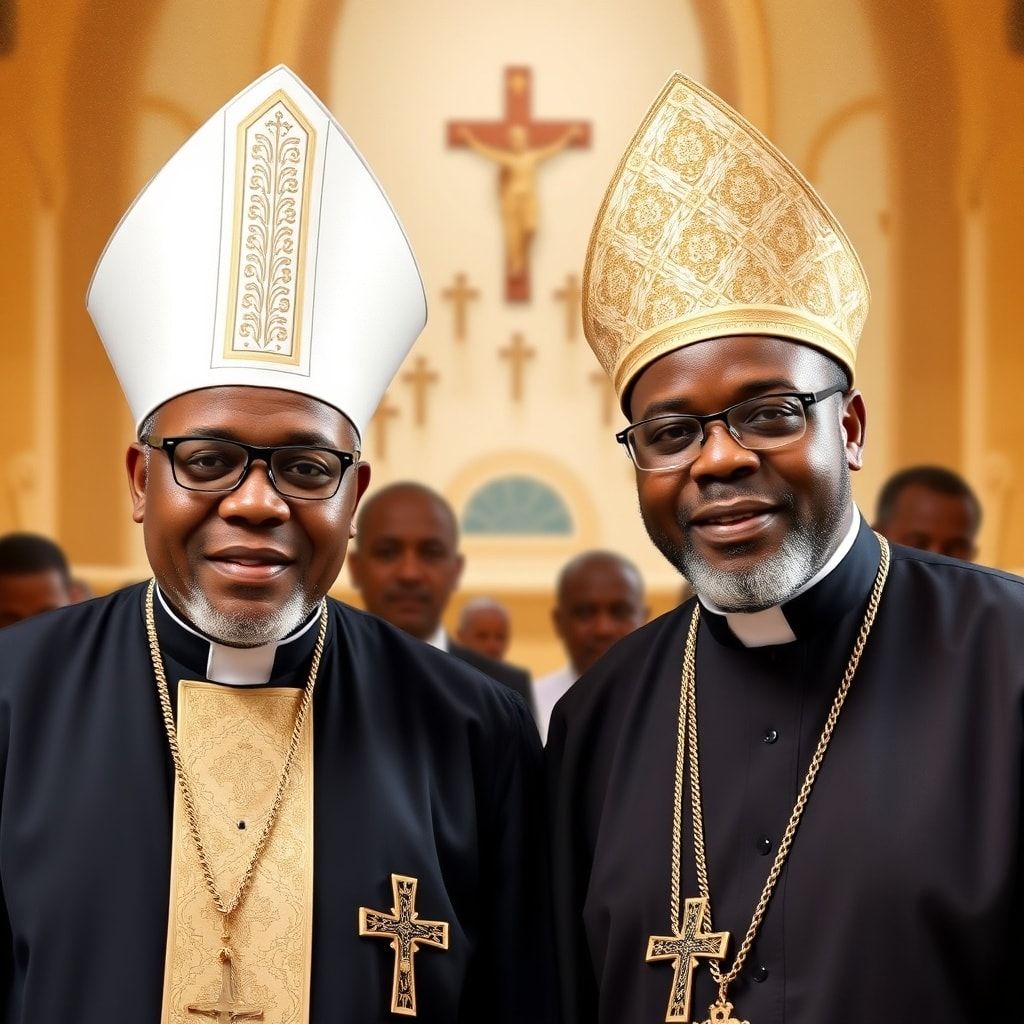
In a move poised to send seismic waves throughout the global Anglican Communion, a crucial gathering of conservative Anglican clerics is currently underway in Nigeria. Their stated objective: to identify and potentially elevate a “rival” figure to the Archbishop of Canterbury. This extraordinary development is not merely a jurisdictional squabble but a profound declaration against the perceived liberal trajectory of the Church of England and, by extension, the broader Communion. The very idea of seeking an alternative spiritual head underscores a deepening theological chasm, particularly exacerbated by the symbolic implications of progressive shifts, such as the potential for a first female Archbishop of Canterbury – a symbolic representation of the modernizing forces that deeply trouble traditionalists.
This Nigerian conclave represents a critical juncture in a long-standing struggle for the soul of Anglicanism. It highlights the growing assertiveness of the Global South’s conservative provinces, who feel increasingly alienated by what they perceive as theological drift and a departure from foundational Christian doctrines by their Western counterparts. The implications are vast, threatening to formalize an already existing de-facto schism and redefine the future landscape of one of the world’s largest Christian denominations. This isn’t just about leadership; it’s about divergent interpretations of scripture, tradition, and the very identity of the Church in the 21st century.
A Communion in Crisis: Historical Context of Division
The Anglican Communion, a global fellowship of churches tracing its spiritual lineage to the Church of England, has been grappling with internal strife and fissiparous tendencies for several decades. These profound rifts are not new but have intensified, primarily revolving around contentious issues such as human sexuality, the authority and interpretation of scripture, and the controversial ordination of women and, more recently, openly LGBTQ+ clergy. Key flashpoints that have pushed the Communion to the brink include the consecration of an openly gay bishop in the Episcopal Church (USA) in 2003 and the subsequent blessing of same-sex unions in various Western provinces.
For a significant bloc of conservative provinces, particularly those experiencing rapid growth in the Global South (Africa, Asia, and Latin America), these progressive developments are viewed not as legitimate theological evolution but as egregious departures from biblical truth and the orthodox Christian tradition spanning millennia. They perceive these actions as a betrayal of the foundational principles of the faith, challenging the very essence of Anglican identity and undermining the spiritual authority of the Communion. The inability of the Archbishop of Canterbury and the Instruments of Communion (like the Lambeth Conference) to enforce doctrinal discipline or meaningfully reconcile these disparate views has fueled a sense of disillusionment and urgency among conservatives, culminating in the current Nigerian initiative to forge an alternative path.
Nigeria’s Pivotal Role: A Voice of Orthodox Anglicanism
The Anglican Church of Nigeria (ACN) stands as an undisputed colossus within the global Communion, boasting an estimated 20 to 25 million adherents, making it one of the largest and most vibrant provinces. Its numerical strength is matched by its theological conviction, as it has consistently positioned itself as a leading voice and a formidable bulwark of orthodox, conservative Christianity. Under the influential leadership of figures like former Primate Archbishop Peter Akinola and the current Primate, Archbishop Henry Ndukuba, the ACN has steadfastly championed a literal and uncompromising interpretation of Holy Scripture.
The Nigerian church’s theological stance is characterized by an unwavering adherence to traditional moral teachings, particularly regarding marriage as exclusively between a man and a woman, and a firm rejection of any form of LGBTQ+ affirmation within the church. This is coupled with a strong emphasis on evangelism, discipleship, and social engagement rooted in conservative Christian values. The ACN views the progressive shifts occurring in Western Anglicanism not merely as differences in pastoral approach but as fundamental errors that directly contradict the divine revelation and threaten the spiritual integrity, missionary effectiveness, and salvific message of the entire Communion. Therefore, the current meeting in Nigeria is far from being an isolated local event; it is a powerful global declaration of dissent, leveraging the immense numerical strength and profound theological convictions of African Anglicanism to challenge the established order and chart a new course for orthodox believers worldwide.
The Theological Battleground: Scriptural Authority vs. Progressive Interpretation
At the very core of the deep-seated conflict tearing apart the Anglican Communion lies a fundamental and seemingly irreconcilable disagreement over biblical hermeneutics – the principles by which scripture is interpreted and applied to contemporary life and moral questions. Conservative Anglicans, exemplified by the influential Nigerian clerics, firmly uphold the Bible as the inspired, infallible, and authoritative Word of God, demanding strict and literal adherence to its teachings on matters of faith, doctrine, and moral conduct, including gender roles and the sanctity of marriage.
From this traditionalist perspective, developments such as the ordination of women to the episcopate, and especially the hypothetical but highly symbolic notion of a “first female Archbishop of Canterbury,” are viewed as direct contraventions of scriptural injunctions concerning male headship and the established hierarchical order within the church. This theological objection is further compounded by their unyielding opposition to any form of recognition, blessing, or solemnization of same-sex relationships, which they unequivocally deem contrary to explicit divine law and the created order. Conversely, progressive Anglicans advocate for more nuanced, contextual, and inclusive interpretations of scripture, often emphasizing evolving understandings of justice, love, human dignity, and drawing upon historical-critical methods of biblical scholarship. This profound divergence in hermeneutical approaches creates an almost unbridgeable theological chasm, making genuine reconciliation increasingly challenging and fueling the drive for separate ecclesiastical structures where core beliefs can be upheld without perceived compromise.
The Quest for a Rival: Undermining Canterbury’s Primacy
The audacious decision by the Nigerian clerics to actively seek and potentially enthrone a “rival” to the Archbishop of Canterbury is a direct, deliberate, and unprecedented challenge to the historical and symbolic primacy of the See of Canterbury. For centuries, the Archbishop of Canterbury has served as the “first among equals,” a revered focal point of unity, spiritual leadership, and pastoral care for the global Anglican Communion, holding no direct jurisdictional authority over autonomous provinces but acting as an essential moral and spiritual guide.
By proposing an alternative, parallel leadership structure, the conservative faction aims to effectively delegitimize Canterbury’s authority in matters they consider fundamental to biblical faith and orthodox Christian practice. Such a move would effectively formalize an existing “de-facto” schism that has been widening for years, creating distinct theological paths and potentially leading to a profound fragmentation of Anglican identity. The “rival” figure would serve as an alternative spiritual and administrative head for those provinces and dioceses worldwide unwilling to compromise on their traditional theological principles, thereby establishing a distinct and unified conservative Anglican voice on the global stage. This is not about personal animosity towards the incumbent Archbishop, but rather a high-stakes theological and ecclesiastical battle for the very soul and future direction of a major global Christian denomination, with the potential to fundamentally alter its structure and unity forever.
Global Anglican Realignment: A New Ecclesiastical Map
This momentous development carries profound implications for the future of the Anglican Communion, signaling a significant global Anglican realignment that could fundamentally redraw its ecclesiastical map. It dramatically underscores an ongoing power shift from the historically dominant Western churches, many of which are experiencing decline, to the rapidly growing and increasingly influential churches of the Global South. The initiative by the Nigerian clerics is part of a broader, well-organized movement within the Communion, spearheaded by entities like the Global Anglican Future Conference (GAFCON), which emerged precisely to advocate for a return to what they define as traditional Anglican faith and practice, free from what they perceive as liberal innovations.
A formal split, or the establishment of a robust rival leadership structure, would likely see numerous conservative provinces and dioceses worldwide consolidating under this new authority, forming a distinct, orthodox Anglican fellowship. Concurrently, more progressive provinces would likely maintain their alignment with Canterbury, leading to a situation where there are effectively two distinct, and potentially conflicting, Anglican Communions, each unequivocally claiming legitimacy and authentic Anglican identity. This fragmentation would have far-reaching consequences, impacting everything from inter-church relations and shared mission initiatives to resource allocation and the global witness of Anglicanism, presenting a complex challenge to ecumenical partnerships and the very concept of a unified Anglican presence in the world.
Conclusion: An Unfolding Saga of Faith and Power
The meeting of conservative clerics in Nigeria to identify a rival to the Archbishop of Canterbury marks an undeniably critical and potentially irreversible juncture in the protracted saga of theological and ecclesiastical division within the Anglican Communion. It powerfully encapsulates the profound and seemingly intractable tensions between traditional, scripturally literal interpretations of faith and more progressive, adaptative responses to contemporary societal shifts and modern ethical frameworks. Far from being a localized or regional dispute, this represents a global battle for the very future identity, doctrinal purity, and spiritual direction of one of the world’s most widespread Christian denominations.
The outcome of this pivotal Nigerian gathering and the subsequent strategic actions of these immensely influential Nigerian clerics will not only profoundly shape the immediate trajectory of Anglicanism but will also send significant ripples across the broader landscape of global Christianity. It offers a compelling and timely case study in the complex, often contentious, interplay of faith, cherished tradition, ecclesiastical power dynamics, and rapidly evolving societal values in the 21st century. The precise path forward for the Anglican Communion remains shrouded in uncertainty, yet the audacious call for a rival leader unequivocally signals the dawn of an era of unprecedented challenge, potential fragmentation, and a fundamental redefinition of what it means to be Anglican in a deeply divided world.