
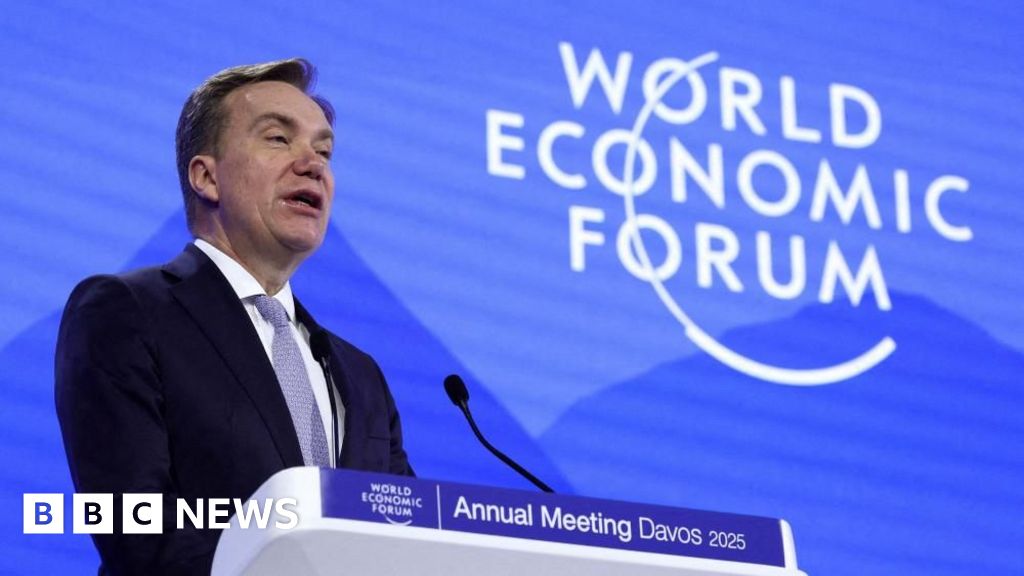
Brende acknowledged communications with Epstein but said he was “completely unaware” of his past criminal activity.
The Brende-Epstein Revelation: A Diplomat’s Defense Under Scrutiny
The recent acknowledgment by Børge Brende, the esteemed President of the World Economic Forum (WEF) and former Norwegian Foreign Minister, of communications with the late, convicted sex offender Jeffrey Epstein, has sent ripples through the usually composed corridors of international diplomacy and finance. Brende’s immediate assertion that he was “completely unaware” of Epstein’s extensive criminal history, particularly his sex trafficking convictions, has ignited a fierce debate and drawn the scrutiny of investigative journalists and the public alike. This revelation is not merely a footnote in the complex saga of Epstein’s global network; it represents a significant challenge to the credibility and ethical standards expected of leaders operating at the highest echelons of global governance and economic discourse. The question is not just whether Brende knew, but what constitutes due diligence for figures of his stature, and what implications such associations hold for the institutions they represent.
In an era demanding transparency and accountability from public figures, the association, however peripheral or unintentional it may be portrayed, with a figure as morally reprehensible as Epstein, casts a long shadow. The immediate defense of “unawareness” prompts an essential inquiry: how could a seasoned diplomat, privy to global intelligence and operating within highly sophisticated information environments, remain entirely ignorant of a scandal that had, for years, permeated media reports and judicial proceedings? This article delves deep into the layers of this unfolding story, examining Brende’s distinguished career, the insidious nature of Epstein’s influence, and the broader ethical implications for leaders entangled, however inadvertently, in such controversies. The need for a thorough examination is paramount, not to condemn without proof, but to understand the vulnerabilities that allow such associations to form and to reinforce the imperative for unwavering ethical vigilance.
Børge Brende: A Career Forged in Diplomacy and Economic Leadership
Børge Brende’s career trajectory has been nothing short of stellar, marked by significant contributions to international relations and global economic policy. Before assuming the presidency of the World Economic Forum in 2017 – a pivotal role that places him at the nexus of global business, political, and academic leadership – Brende served with distinction as Norway’s Minister of Foreign Affairs from 2013 to 2017. His tenure saw him navigate complex geopolitical landscapes, advocating for peace, human rights, and sustainable development on the world stage. Prior to this, he held portfolios as Minister of Environment and Minister of Trade and Industry, showcasing a versatile command over various policy domains. Such a resume paints a picture of a meticulously informed and globally connected individual, whose professional life has been characterized by engagement with high-stakes international affairs and adherence to stringent ethical frameworks. His role at the WEF, in particular, requires constant interaction with a diverse array of global leaders, philanthropists, and influential personalities, necessitating an acute awareness of the backgrounds and reputations of those within his professional orbit. The forum prides itself on fostering trust and collaboration among elites, making any association with a convicted felon particularly jarring and incongruous with its stated mission.
This esteemed background forms the crucial backdrop against which his interaction with Jeffrey Epstein must be evaluated. A leader of Brende’s experience is expected to possess an exceptional degree of situational awareness and access to information, raising legitimate questions about the circumstances and nature of his acknowledged communications with a figure whose past legal troubles were, by many accounts, public knowledge long before his final arrest and demise. The public expects leaders to not only embody integrity but also to exercise discretion and due diligence in their associations, particularly when representing institutions of global significance. The current revelation threatens to tarnish a reputation painstakingly built over decades, prompting a deeper investigation into the mechanisms of information flow and personal accountability at the very top of the international hierarchy.
Jeffrey Epstein’s Shadow: A Web of Deceit and Elite Entanglement
To fully grasp the gravity of Brende’s revelation, one must understand the pervasive and insidious nature of Jeffrey Epstein’s operations. Epstein, a disgraced financier, cultivated a vast and intricate network of influential individuals across politics, science, finance, and royalty. His method involved leveraging his immense wealth and social connections to gain access to the highest echelons of society, often using his luxurious properties – including his Manhattan townhouse, Palm Beach mansion, and private island – as stages for his illicit activities. His initial conviction in 2008 for soliciting a minor for prostitution, which resulted in a controversial plea deal, brought his criminal proclivities into the public domain. Despite this, he managed to maintain, and in some cases even expand, his social circle, continuing to associate with prominent figures globally. This ability to reintegrate into elite society, even after being branded a sex offender, highlights a deeply troubling aspect of how power and privilege can, for a time, shield individuals from the full consequences of their actions and obscure their true character from those around them.
Epstein’s modus operandi relied on a facade of philanthropy, intellectual curiosity, and financial acumen to draw in individuals who might otherwise have been wary. He presented himself as a sophisticated intellectual and a generous benefactor, hosting exclusive gatherings that promised access to an unparalleled network. For many, including potentially Brende, engagement might have been perceived as a legitimate opportunity for networking or collaboration, devoid of any immediate red flags. However, the sheer volume of public information available concerning Epstein’s criminal history, including detailed investigative reports and judicial documents, makes the claim of “complete unawareness” increasingly difficult to reconcile. His global reach, coupled with the scandalous nature of his crimes, meant that his name was far from obscure. The implication is that any due diligence, however cursory, would likely have unearthed deeply troubling information. Epstein’s story is a stark reminder of how a predator can skillfully exploit the prestige economy, blurring the lines between legitimate influence and malevolent manipulation, leaving a trail of complicity, perceived or real, in his wake.
Scrutinizing the Claim of “Complete Unawareness”
Brende’s defense of being “completely unaware” of Epstein’s past criminal activity is the central point of contention and requires rigorous scrutiny. For a figure of Brende’s international standing, whose daily work involves complex geopolitical analysis and a deep understanding of global affairs, such a claim raises fundamental questions about informational access, personal responsibility, and the due diligence expected from those in leadership roles. The initial conviction of Epstein in 2008 garnered significant media attention, particularly within legal and social justice circles. Subsequent investigative journalism, years before Epstein’s final arrest in 2019, continued to shed light on his activities and the controversial nature of his plea deal. Was this information simply overlooked, or was there a deliberate avoidance of potentially uncomfortable truths?
Analysts argue that leaders of major international organizations like the World Economic Forum are typically supported by extensive research teams and intelligence-gathering capabilities. It is standard practice for such teams to vet individuals with whom their principals interact, especially when those interactions are public or involve significant reputational capital. The absence of such vetting, or its failure to flag Epstein, would represent a significant institutional lapse. Alternatively, if the communications were informal or brief, occurring in large social settings, Brende might argue that he was simply one of many engaging with a well-connected individual without deeper knowledge. However, even in such scenarios, the onus is often on public figures to exercise caution. The nature, frequency, and context of these “communications” are critical. Without these details, the claim of unawareness remains largely unsubstantiated and open to interpretation, inviting skepticism rather than immediate acceptance. The precise timeline of these communications relative to the public revelations of Epstein’s crimes is also a crucial factor in assessing the veracity of Brende’s claim. Understanding when Brende communicated with Epstein, and what was publicly known about Epstein at those specific times, is paramount to unraveling the truth behind the “unawareness” assertion.
The Ethical Quandary: Power, Privilege, and Due Diligence
The Brende-Epstein entanglement throws into sharp relief the ethical quandaries faced by those in positions of power and privilege. When leaders engage with individuals like Epstein, even under claims of ignorance, it raises uncomfortable questions about the implicit legitimization of such figures. High-profile associations can inadvertently provide cover, lending an air of respectability that enables predators to continue their operations or at least delay their ultimate reckoning. This case underscores the profound responsibility that accompanies influence. Leaders are not just representatives of institutions; they are custodians of public trust. Their networks, their associations, and their choices are subject to intense scrutiny precisely because their actions can have far-reaching consequences, affecting not just their personal reputations but also the integrity of the organizations they lead.
Beyond personal culpability, there’s an institutional dimension. What mechanisms are in place within organizations like the World Economic Forum or governmental bodies to protect their leaders from unwitting associations with disreputable individuals? Is the vetting process robust enough, or does it prioritize connections and influence over thorough ethical assessments? The episode serves as a powerful reminder that “ignorance is not bliss” when it comes to safeguarding institutional integrity and upholding ethical leadership. The expectation is that individuals at Brende’s level would employ extreme caution and maintain rigorous standards of due diligence, not only to protect their own reputations but, more importantly, to uphold the moral standing of the organizations and countries they represent. The ethical imperative demands a proactive stance against any association that could compromise principles of justice and human dignity, and the defense of “unawareness” places the burden squarely on the individual to demonstrate how such a lapse occurred and what steps are being taken to prevent future occurrences.
Broader Implications: Accountability in Elite Networks
The ramifications of the Brende-Epstein connection extend far beyond the individuals involved, touching upon the broader issue of accountability within elite networks. Epstein’s ability to cultivate relationships with numerous powerful figures, even after his initial conviction, exposed a systemic vulnerability: a tendency within certain circles to overlook serious ethical failings in favor of perceived influence, financial gain, or social access. This incident serves as a crucial case study for how easily such networks can be exploited and how reputational risks can cascade. For institutions like the World Economic Forum, which thrive on trust and collaboration among global leaders, such revelations can erode public confidence and raise uncomfortable questions about the judgment of its leadership.
The public, increasingly cynical about the accountability of powerful elites, demands clear answers and robust mechanisms to prevent similar situations. It highlights the need for a re-evaluation of how high-profile individuals are vetted and how information about problematic figures is disseminated and acted upon within these exclusive circles. This scrutiny is not about ‘cancel culture’ but about ensuring that those who wield significant power are held to commensurately high standards of ethical conduct and due diligence. The long-term impact on Brende’s legacy and the WEF’s reputation will depend heavily on the transparency and thoroughness with which this matter is addressed. It underscores a global imperative: that the pursuit of influence and engagement must never overshadow the fundamental commitment to ethical integrity and the protection of vulnerable individuals from exploitation. This episode is a potent reminder that in the interconnected world of global elites, no association is truly private, and no claim of unawareness can entirely shield a public figure from intense scrutiny and the demand for unequivocal accountability. The lessons from this entanglement must resonate across all echelons of power, urging a renewed commitment to ethical vigilance and transparency as indispensable pillars of leadership.