
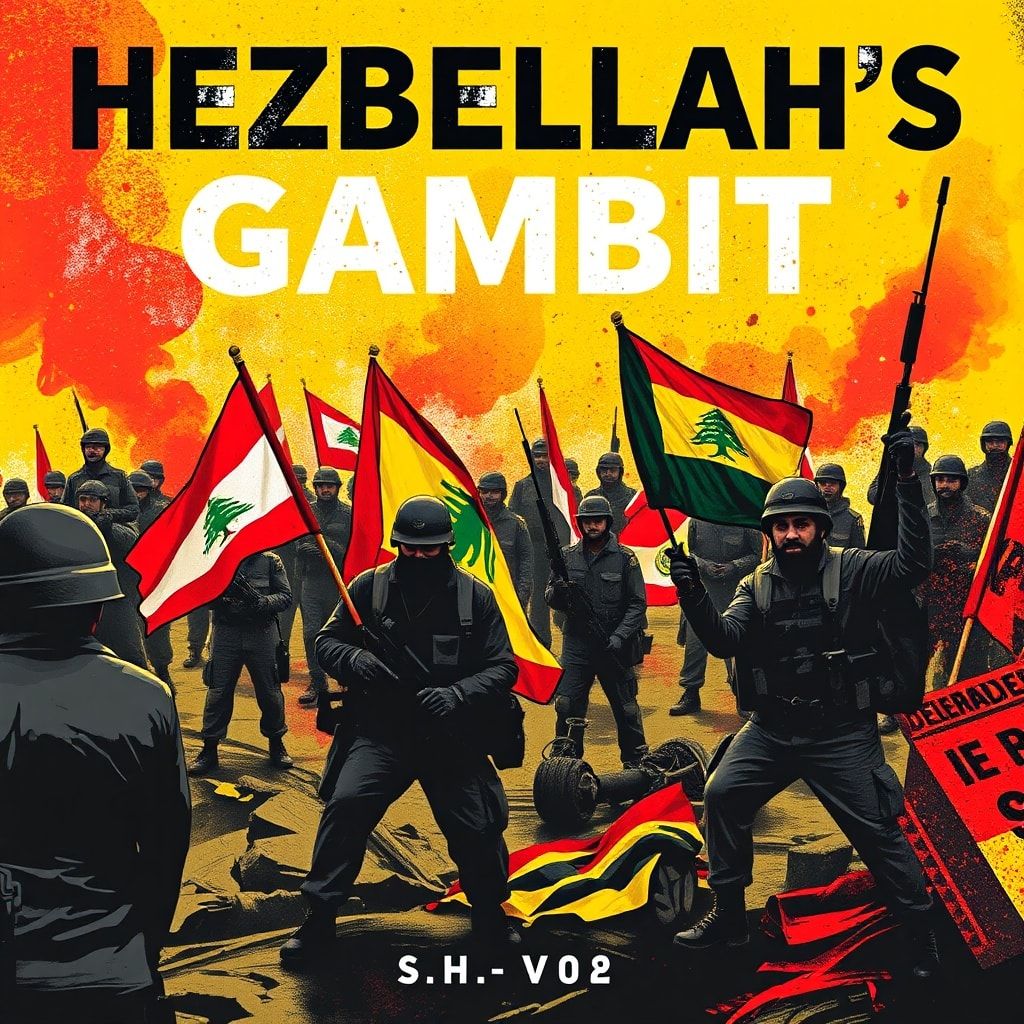
The latest escalation in the volatile tapestry of the Middle East, precipitated by actions attributed to Hezbollah in support of Iran against Israel, has once again plunged Lebanon into a profound crisis. This unfolding drama is not merely a localized conflict but a complex interplay of regional power dynamics, ideological alignments, and humanitarian catastrophes. The immediate repercussions are stark: fresh waves of mass displacements and intense Israeli retaliatory bombing, sparking widespread indignation and frustration among a Lebanese populace already grappling with multifaceted crises. This article delves into the intricate layers of this conflict, dissecting Hezbollah’s motivations, Iran’s strategic calculus, the devastating humanitarian impact, and the deep internal divisions it has exacerbated within Lebanon, all while considering the broader geopolitical ramifications.
The Genesis of a Proxy: Hezbollah’s Enduring Alliance with Iran
To comprehend the current state of affairs, one must first understand the origins and evolution of Hezbollah, the “Party of God.” Formed in the early 1980s with substantial backing from revolutionary Iran, Hezbollah emerged in response to the Israeli invasion of Lebanon and the perceived failure of the Lebanese state to protect its citizens. From its inception, the group fused a potent blend of Shiite Islamic ideology, staunch anti-Zionism, and a commitment to resistance against foreign occupation. Over decades, it has transformed from a clandestine militia into a formidable military and political force, deeply embedded within the Lebanese social and political fabric. Its military wing, armed and trained by Iran, possesses an arsenal capable of challenging regional powers, while its political wing holds significant sway in the Lebanese parliament and cabinet. This dual identity—a resistance movement and a political actor—is central to its power and, paradoxically, a source of constant tension within Lebanon. Its unwavering loyalty to Iran’s “Axis of Resistance” fundamentally shapes its strategic decisions, often superseding national Lebanese interests in the eyes of its detractors.
The Catalyst: Attacks and Escalation
The recent surge in hostilities, implicitly referenced in the initial statement, signifies a calculated move by Hezbollah, likely in direct response to broader regional conflicts or as a strategic show of force. While specific details of these attacks are often shrouded in the fog of war, they typically involve barrages of rockets, anti-tank guided missiles, and drone incursions targeting Israeli military positions and civilian areas along the northern border. Hezbollah’s stated rationale invariably centers on defending Palestinian rights, retaliating against Israeli aggression, or asserting its role as a regional defender against perceived Zionist expansionism. These actions, however, are rarely isolated; they are often synchronized with, or are a reaction to, a larger regional agenda orchestrated by Tehran. The timing and intensity of these attacks are critical, serving not only to inflict damage but also to signal resolve, draw red lines, and exert pressure on both regional adversaries and internal Lebanese dissenters.
Iran’s Strategic Imperative: The Axis of Resistance
Hezbollah’s actions are inextricably linked to Iran’s overarching foreign policy and its vision for regional hegemony. Tehran views Hezbollah as a cornerstone of its “Axis of Resistance,” a network of state and non-state actors extending from Iraq to Syria, Lebanon, and Yemen, all aimed at countering U.S. and Israeli influence. Through Hezbollah, Iran projects power without direct military confrontation, creating a strategic depth that deters attacks on its own territory and allows it to shape regional events. The support provided to Hezbollah—encompassing financial aid, advanced weaponry, and strategic guidance—is a critical investment in this strategy. For Iran, a strong Hezbollah is a strategic asset, a ready-made deterrent, and a proxy capable of complicating any Israeli or American military calculations in the region. This dynamic turns Lebanon into a strategic battleground, often against the will of a significant portion of its population, who bear the brunt of the consequent retaliation.
A Humanitarian Nightmare: The Plight of the Displaced
The immediate and most tragic consequence of this renewed conflict is the escalating humanitarian crisis. “Fresh mass displacements” refers to tens of thousands of Lebanese civilians abandoning their homes in southern border villages, fleeing the incessant Israeli bombardment. These communities, often rural and agricultural, are effectively emptied, transforming vibrant towns into ghost villages. The displaced population faces immense challenges: finding shelter, accessing food, water, and medical care, and coping with the psychological trauma of war. Many seek refuge with relatives in safer areas, while others are housed in temporary shelters, straining already fragile infrastructure and social services. The economic life of these regions grinds to a halt, agricultural seasons are lost, and livelihoods are destroyed. This internal displacement not only compounds Lebanon’s existing economic woes but also creates a long-term burden on a state already on the brink of collapse, necessitating significant international humanitarian assistance.
Israel’s Retaliation: Deterrence and Destruction
Israel’s response to Hezbollah’s attacks is swift, decisive, and often devastating, adhering to a well-established doctrine of disproportionate response aimed at deterrence. “Israeli bombing” typically targets Hezbollah’s military infrastructure, including rocket launchers, command centers, weapons depots, and operative cells. However, due to the nature of asymmetric warfare, where Hezbollah operates within civilian areas, these strikes invariably cause collateral damage, leading to civilian casualties and the destruction of homes and public infrastructure. The objective for Israel is clear: to degrade Hezbollah’s capabilities, restore a sense of security to its northern communities, and send a clear message that aggression will be met with severe consequences. Yet, this cycle of violence, while fulfilling immediate security imperatives for Israel, often fuels anti-Israeli sentiment and further destabilizes Lebanon, perpetuating the very conflict it seeks to contain.
The Fury of Many Lebanese: A Nation Divided
The phrase “to the fury of many Lebanese” encapsulates the deep schism within Lebanese society regarding Hezbollah’s actions. While a segment of the population, predominantly Shiite, views Hezbollah as a legitimate resistance movement protecting Lebanon from Israeli aggression, a significant and vocal majority, including Sunnis, Christians, and even some Shiites, express profound anger and frustration. Their fury stems from several critical concerns. Firstly, Hezbollah’s autonomous decision-making in matters of war and peace is seen as an usurpation of state sovereignty, dragging the entire country into conflicts it does not choose. Secondly, the economic devastation wrought by Israeli retaliation further cripples an already bankrupt nation, hindering any prospects of recovery. Thirdly, there is a deep-seated fear that Hezbollah’s actions make Lebanon a pawn in a larger regional power struggle between Iran and its adversaries, sacrificing national stability for foreign agendas. This internal dissent highlights the precarious balance of power in Lebanon, where a powerful non-state actor dictates critical aspects of national policy, often at the cost of national consensus and well-being.
Geopolitical Tremors and the Path Ahead
The current situation in Lebanon is a microcosm of broader geopolitical tensions in the Middle East. Hezbollah’s actions, influenced by Iran, carry the risk of a wider regional conflagration that could draw in other actors, including the United States and various Gulf states. The international community watches with bated breath, attempting to de-escalate tensions while providing humanitarian aid. For Lebanon, the path ahead is fraught with peril. The challenge lies in reasserting state authority, fostering national unity, and navigating the treacherous waters of regional geopolitics without succumbing to external pressures. The “fury” of many Lebanese is a poignant indicator of a populace yearning for peace, stability, and sovereignty, a yearning that remains largely unfulfilled as long as powerful non-state actors continue to dictate the nation’s fate.
Conclusion: Lebanon at a Crossroads
The recent escalation, driven by Hezbollah’s alignment with Iran and its attacks on Israel, has once again laid bare Lebanon’s extreme vulnerability. The resulting mass displacements and Israeli bombing are not mere statistics; they represent shattered lives, devastated communities, and a nation held hostage by external agendas and internal divisions. The fury of many Lebanese is a testament to their desire for a sovereign state that prioritizes its citizens’ welfare over proxy conflicts. As long as Hezbollah continues to operate as an independent military force beholden to Tehran, Lebanon will remain at the epicenter of regional proxy wars, its stability and future prospects hanging precariously in the balance. Addressing this multifaceted crisis requires not only immediate de-escalation but also a fundamental re-evaluation of national sovereignty and a concerted international effort to support a truly independent and stable Lebanon.