
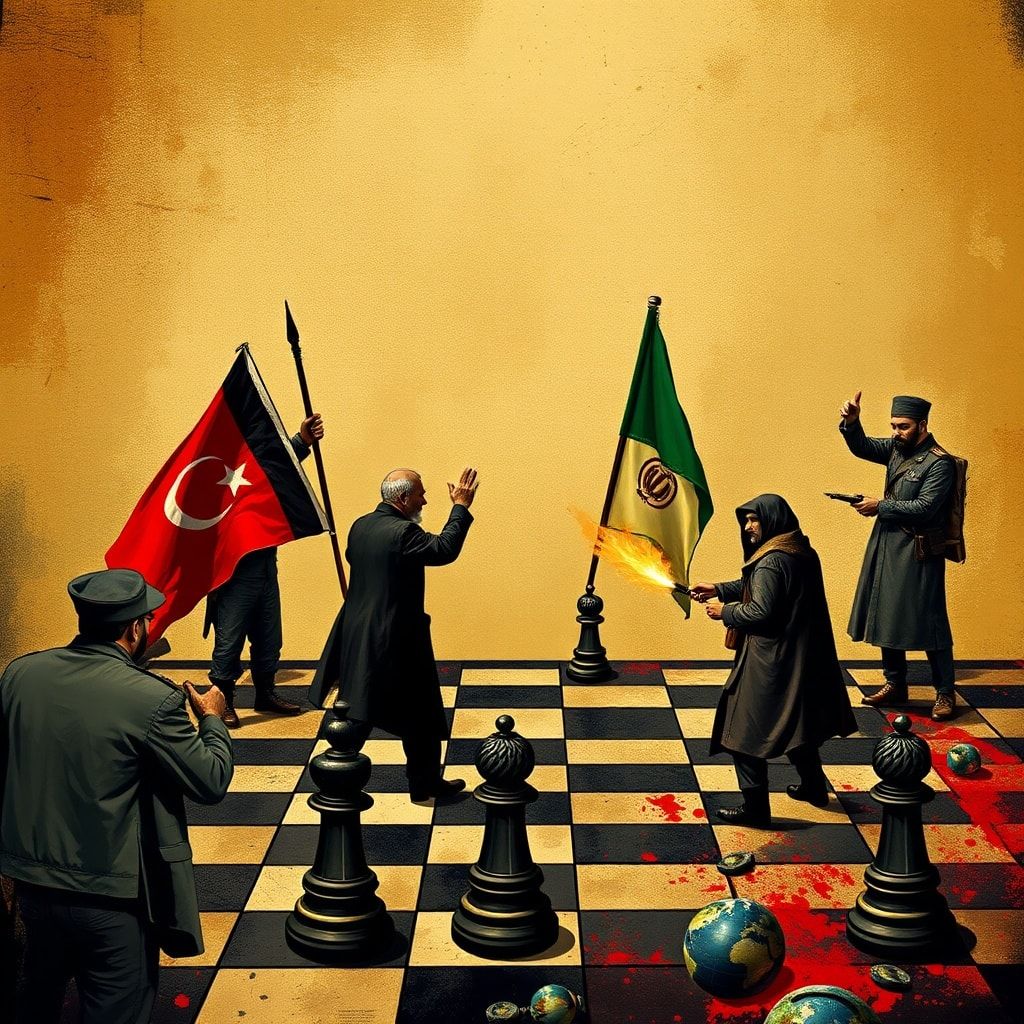
Recent Iranian military strikes against alleged militant positions have reignited concerns over Iran Kurdish Tensions. These actions come amidst growing speculation that the United States might be encouraging Iranian Kurdish groups to join a broader conflict with Tehran. This complex interplay of internal security concerns, regional proxy battles, and international geopolitical maneuvering demands a deeply detailed analytical examination. Understanding the various facets of this volatile situation is crucial to grasping the wider implications for stability in the Middle East.
The Historical Roots of Conflict
The relationship between the Iranian state and its Kurdish minority has long been fraught with challenges. Kurds, an ethnic group spanning Iran, Iraq, Syria, and Turkey, have historically sought greater autonomy and, in some cases, independence. In Iran, the Kurdish population largely resides in the western provinces, where various political and armed groups have been active for decades, advocating for Kurdish rights and challenging central government authority.
These groups, such as the Kurdistan Democratic Party of Iran (KDP-I) and the Kurdistan Free Life Party (PJAK), are considered terrorist organizations by Tehran. They often operate from bases in neighboring Iraqi Kurdistan, leveraging the porous border and the semi-autonomous status of the region. This cross-border activity has been a consistent source of friction between Iran and Iraq, particularly the Kurdistan Regional Government (KRG).
Recent Military Engagements and Their Immediate Impact
The most recent wave of Iranian military strikes targeted what Tehran claims are bases and training camps of these Kurdish opposition groups. These operations typically involve a combination of missile strikes, drone attacks, and sometimes cross-border artillery shelling. Iran maintains that these actions are necessary to protect its national security and prevent incursions by militants into its territory.
Such strikes invariably lead to civilian casualties and significant damage to infrastructure in Iraqi Kurdistan. This causes immense displacement and humanitarian concerns, further destabilizing an already fragile region. The KRG consistently condemns these attacks as violations of Iraq’s sovereignty, calling for an end to the aggression and stressing the importance of resolving disputes through diplomatic means rather than military force.
The Specter of US Involvement
Perhaps the most unsettling aspect of the current situation is the widespread speculation regarding potential US involvement. Reports suggest that Washington might be exploring avenues to support Iranian Kurdish groups, viewing them as a potential lever in its ongoing confrontation with the Islamic Republic. This speculation, while unconfirmed by official sources, is not entirely without historical precedent.
The United States has a complicated history with various Kurdish factions across the region, sometimes supporting them and other times withdrawing support based on broader strategic interests. For instance, the US has heavily backed Kurdish forces in Syria in the fight against ISIS. Any perceived US encouragement for Iranian Kurdish groups would be seen by Tehran as a direct act of aggression, transforming an internal security issue into a proxy conflict with international dimensions, further intensifying Iran Kurdish Tensions.
Motivations Behind Potential US Engagement
If the US were to engage with Iranian Kurdish groups, its motivations would likely be multifaceted. One perspective suggests it could be an attempt to pressure the Iranian regime internally, hoping to foment dissent and instability. Another theory posits it as part of a larger strategy to contain Iranian influence in the region, particularly in Iraq and Syria.
Providing material or logistical support, even if indirect, could empower these groups, enabling them to launch more effective operations within Iran. This would force Tehran to divert resources and attention to its western borders, potentially weakening its hand in other regional theatres. However, such a strategy carries significant risks, including escalating the conflict and potentially alienating regional allies who are wary of further instability.
Kurdish Groups: Between a Rock and a Hard Place
For Iranian Kurdish opposition groups, the prospect of external support presents both opportunities and severe dilemmas. While increased backing could strengthen their position against Tehran, it also exposes them to greater Iranian retaliation and risks being perceived as foreign proxies. They must carefully weigh the benefits of external assistance against the potential for intensified conflict and increased scrutiny.
Their primary objective remains the pursuit of greater autonomy and rights for Kurds within Iran. Aligning too closely with an external power, particularly one with a history of shifting alliances, could undermine their legitimacy among the Kurdish populace and complicate their long-term goals. The delicate balance they must strike is pivotal in navigating the complex web of Iran Kurdish Tensions.
Regional Reverberations: A Wider Instability
The Iran Kurdish Tensions do not exist in a vacuum; they have profound regional implications.
Impact on Iraq and the KRG:
Iraqi Kurdistan finds itself caught in the middle. Hosting Iranian Kurdish groups makes it a target for Iranian attacks, undermining its sovereignty and stability. The KRG must balance its relations with Baghdad, Tehran, and various international actors while protecting its own populace. The economic and security consequences of these cross-border strikes are significant.
Turkey’s Complex Stance:
Turkey, a major regional power with its own protracted conflict with Kurdish groups (primarily the PKK), watches these developments closely. While Turkey and Iran are often at odds, both share a common concern regarding Kurdish separatism on their borders. However, Turkey’s relationship with the Iraqi KRG and its own operations against the PKK in Iraq complicate its position.
Broader US-Iran Dynamics:
These developments fit into the larger narrative of US-Iran rivalry. From economic sanctions to proxy wars in Yemen and Syria, the two nations are locked in a persistent struggle for regional influence. The potential weaponization of Iranian Kurdish groups adds another layer of complexity to this already volatile relationship, raising the stakes considerably.
Iranian Motivations and Internal Dynamics
From Tehran’s perspective, the strikes are a legitimate defense against threats to its national security and territorial integrity. The Iranian government views these Kurdish groups as separatist terrorists funded and supported by hostile foreign powers. The speculation of US involvement only reinforces Tehran’s narrative that external forces are attempting to destabilize the country.
Internally, the Iranian government uses these operations to project an image of strength and resolve, particularly important during periods of domestic unrest or economic hardship. Cracking down on perceived threats from ethnic minorities also serves to reinforce national unity, albeit through coercive means. This strategy, however, often exacerbates grievances among the Kurdish population, creating a cycle of repression and resistance. The Iran Kurdish Tensions are thus deeply intertwined with Iran’s internal political stability.
International Responses and the Path Forward
International reactions to the Iranian strikes have been largely condemnatory, with calls for de-escalation and respect for Iraqi sovereignty. However, concrete actions to mediate or de-escalate the situation have been limited. The focus remains on containing the conflict and preventing a wider regional conflagration.
The path forward is fraught with challenges. For Iran, addressing the legitimate grievances of its Kurdish population through political means rather than military force could be a long-term solution. For the international community, careful diplomacy is required to prevent the region from spiraling into further instability. The US, if indeed considering engagement with Iranian Kurdish groups, must carefully weigh the risks of escalation against any perceived strategic gains.
The Future of Iran Kurdish Tensions
The current climate suggests a continued state of heightened Iran Kurdish Tensions. The confluence of Iran’s internal security concerns, the ambitions of Kurdish opposition groups, and the shadow of US-Iran rivalry creates a highly combustible environment. Any miscalculation or aggressive move could easily trigger a wider conflict, with devastating consequences for the region and potentially beyond.
Avoiding escalation requires a multi-pronged approach: diplomatic engagement, adherence to international law, and a genuine commitment from all parties to de-escalate military actions. The humanitarian toll of these conflicts cannot be overlooked. The international community, led by the UN, needs to play a more proactive role in facilitating dialogue and safeguarding human rights in the affected areas.
Conclusion
The recent Iranian military strikes and the accompanying rumors of US overtures to Iranian Kurdish groups underscore a dangerously complex geopolitical situation. What might appear as isolated incidents are, in fact, symptoms of deeply entrenched Iran Kurdish Tensions intertwined with broader regional power struggles and international rivalries. A careful, nuanced understanding of these dynamics is essential to preventing further destabilization and fostering a path towards a more peaceful resolution in this critical part of the world.