
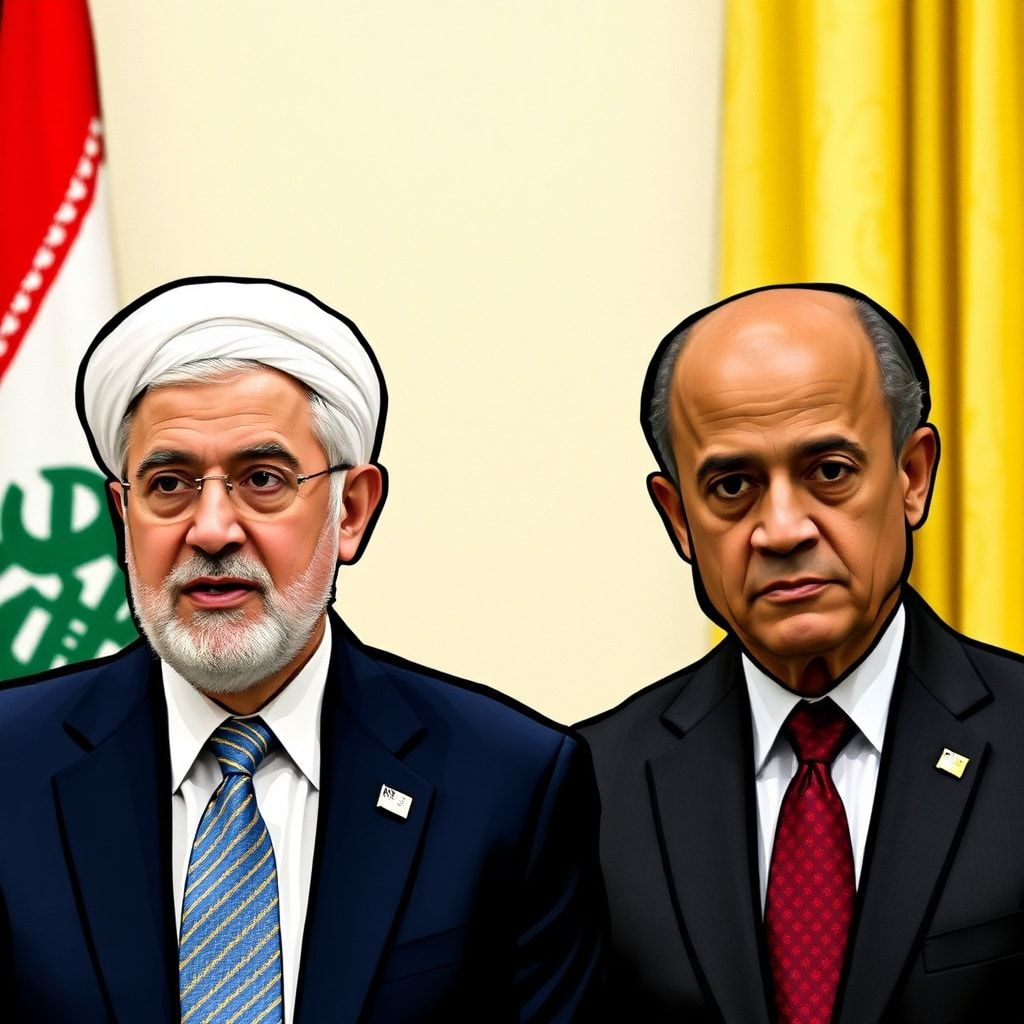
White House Demands New Leadership in Tehran Amidst Post-War Tensions
In a significant and highly provocative declaration following six days of intense regional conflict, the unnamed President has issued a direct demand for an Iran leadership change. The White House insists that Tehran must appoint new leaders deemed “acceptable” to Washington, a statement that dramatically escalates tensions and raises profound questions about international sovereignty and the future stability of the Middle East. This bold pronouncement comes at a volatile time, revealing a deep-seated chasm between the two nations.
The Aftermath of Six Days of War: A Precedent for Demands?
The President’s unprecedented call did not emerge in a vacuum. It follows a period of intense hostilities, referred to only as “six days of war,” which undoubtedly shaped the current diplomatic landscape. While the specific nature and location of these recent clashes remain officially undisclosed, their impact is clear: they have emboldened the White House to push for a complete overhaul of Iranian governance. This post-conflict demand signals a calculated move to reshape regional power dynamics.
The duration and intensity of the recent conflict suggest a significant military engagement, the ramifications of which are still unfolding. Such an explicit demand for an Iran leadership change is often reserved for circumstances of severe international condemnation or direct intervention, highlighting the gravity with which the White House views the current Iranian regime and its role in regional instability.
Historical Context: A Pattern of Intervention?
The relationship between the United States and Iran has been fraught with tension for decades, marked by periods of covert operations, economic sanctions, and proxy conflicts. From the 1953 coup d’état that restored the Shah to power, supported by the US and UK, to the 1979 Islamic Revolution and the subsequent hostage crisis, the historical narrative is one of mistrust and antagonism. The US has consistently expressed concerns over Iran’s nuclear program, its ballistic missile development, and its support for regional non-state actors.
From Sanctions to Demands
Previous administrations have employed various strategies to influence Iranian policy, from diplomacy and sanctions to covert actions. However, a direct public call for an Iran leadership change, particularly with the caveat of leaders being “acceptable to the White House,” crosses a significant diplomatic line. It echoes historical precedents where powerful nations have sought to dictate the internal political structures of sovereign states, often with complex and unforeseen consequences.
“Acceptable to the White House”: A Challenge to Sovereignty
The President’s specific qualification – that new Iranian leaders must be “acceptable” to Washington – is particularly contentious. This phrase implicitly rejects the legitimacy of Iran’s current political system and its internal decision-making processes. It suggests a desire not just for a change in policy, but for a fundamental alteration of Iran’s geopolitical orientation, aligned with US interests.
Such a declaration raises critical questions about international law and national sovereignty. Under the principle of non-intervention, states are generally prohibited from interfering in the internal affairs of other states. The White House’s demand could be interpreted by many as a direct breach of this principle, potentially isolating the US on the international stage and galvanizing anti-American sentiment within Iran and among its allies. The pursuit of an Iran leadership change through external dictates is fraught with peril. [Internal Link: The History of US-Iran Relations]
Tehran’s Potential Responses and Regional Fallout
Tehran’s reaction to this ultimatum is expected to be one of defiance and condemnation. The Iranian government is likely to frame the demand as an attack on its sovereignty and a clear example of Western imperialism, using it to rally internal support against external threats. This could strengthen hardliners and further entrench the existing regime, making any genuine Iran leadership change from within even more difficult.
Ripple Effects Across the Middle East
Regionally, the call could further destabilize the Middle East. Allies of the US might offer cautious support, while adversaries, such as Russia and China, are likely to criticize the move, viewing it as an aggressive posture. The proxy conflicts involving Iran across Syria, Yemen, Iraq, and Lebanon could intensify, as all parties reassess their positions in light of this new, overt US objective. Oil markets and global trade routes, already sensitive to regional tensions, would undoubtedly face increased volatility. [Internal Link: Regional Stability in the Middle East]
Challenges to Achieving an Iran Leadership Change
The practical challenges of imposing an Iran leadership change are immense. Without direct military intervention – an option fraught with catastrophic risks – external pressure relies on internal dissent or a complete collapse of the existing government. While protests and internal dissatisfaction exist within Iran, an externally dictated change risks being perceived as illegitimate by the Iranian populace, regardless of their views on the current regime.
Historical Precedents and Ethical Dilemmas
History is replete with examples of externally imposed regime changes leading to prolonged instability, civil war, and the rise of new, equally problematic authoritarian systems. The ethical considerations are also profound: does any nation have the right to choose the leaders of another sovereign state? The President’s statement forces the international community to grapple with these complex questions, setting a dangerous precedent for future international relations.
Looking Ahead: A Path Forward?
The President’s call for an Iran leadership change marks a critical juncture in US-Iran relations and global diplomacy. It casts a long shadow over any prospects for de-escalation or negotiated settlements. The immediate aftermath of the “six days of war” has transformed into a high-stakes standoff, where the rhetoric from Washington aims not just to influence policy, but to fundamentally alter the fabric of Iranian governance.
The international community watches with bated breath as Tehran formulates its response. The trajectory of this conflict will depend heavily on the diplomatic maneuvering, the internal dynamics within Iran, and the willingness of global powers to either support or challenge the White House’s ambitious and audacious demand for a complete Iran leadership change. The coming months will reveal whether this declaration pushes the region closer to conflict or forces a re-evaluation of long-term strategies.