
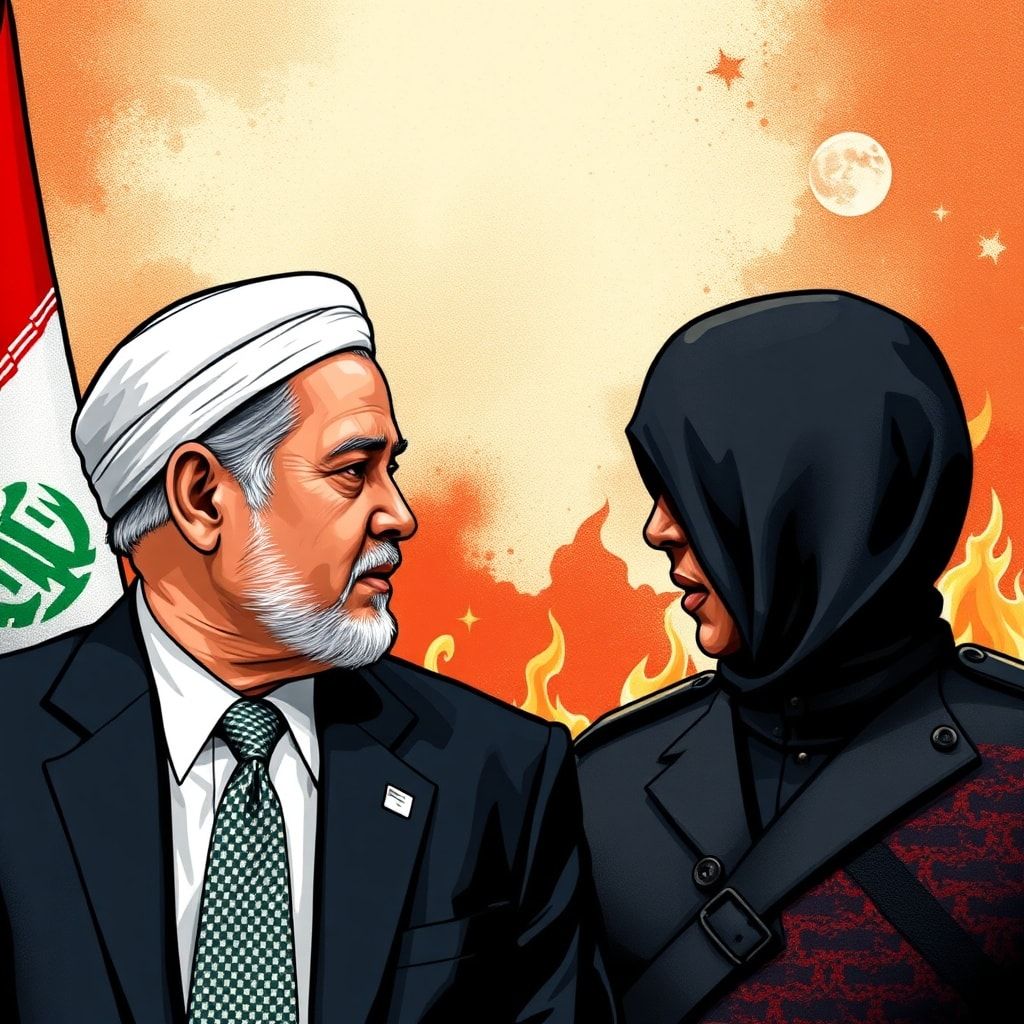
Seyed Ali Mousavi, a prominent figure in Iranian diplomatic circles, has delivered a stark message through Laura Kuenssberg, indicating that **Iran’s response** to the prevailing regional tensions hinges entirely on the forthcoming actions of the United States and Israel. This declaration underscores the volatile and interconnected dynamics at play in the Middle East, a region perpetually on the brink of wider conflict.
His words serve as a crucial barometer, reflecting Tehran’s strategic calculations amidst escalating pressures and a complex web of alliances and antagonisms. Understanding this conditional stance is key to deciphering future geopolitical maneuvers.
Unpacking Seyed Ali Mousavi’s Strategic Declaration
Mousavi’s statement is not merely a diplomatic platitude; it is a calculated pronouncement from a nation that views itself as a pivotal regional power. As a seasoned observer of international relations, his articulation to a journalist of Kuenssberg’s stature lends significant weight to Iran’s position, signaling a clear message to Western capitals.
The very public nature of this interview suggests an intentional effort by Tehran to project both resolve and a degree of strategic flexibility, while subtly placing the onus of de-escalation on Washington and Jerusalem.
The Diplomatic Undercurrents from Tehran
Behind the scenes, Iran maintains various channels of communication, both overt and covert, with regional and international actors. Mousavi’s comments can be interpreted as a public reiteration of private diplomatic warnings, emphasizing that the ball remains in Washington and Jerusalem’s court.
This approach allows Iran to maintain a posture of measured strength while subtly shifting the responsibility for preventing escalation onto its adversaries. It reflects a nuanced diplomatic strategy aimed at influencing perception.
A Legacy of Animosity: Historical Context of Iran-US Tensions
The relationship between Iran and the United States has been fraught with tension for over four decades, dating back to the 1979 Islamic Revolution and the subsequent hostage crisis. This foundational distrust has shaped every interaction, creating a complex backdrop against which current events unfold.
The shadow of past grievances looms large, influencing both nations’ strategic calculations and public rhetoric. Each perceived slight or aggressive action reinforces a cycle of mistrust that is difficult to break.
The 2015 Joint Comprehensive Plan of Action (JCPOA), or Iran nuclear deal, represented a brief period of de-escalation, only to be dismantled by the Trump administration in 2018. The re-imposition of crippling sanctions severely impacted Iran’s economy and intensified its isolation.
This withdrawal, viewed by Tehran as a betrayal, further solidified a narrative of American unreliability and aggressive posture. Consequently, Iran accelerated its nuclear program, pushing closer to weapons-grade uranium enrichment, a move that alarmed the international community.
This escalation was framed by Iran as a legitimate response to the US withdrawal and its failure to uphold its commitments. The nature of **Iran’s response** here set a precedent for future retaliatory actions. The cycle of action and reaction continues to define this precarious relationship.
Beyond the nuclear file, the two nations frequently clash through proxies in regional conflicts, particularly in Iraq, Syria, Lebanon, and Yemen. Iran’s support for groups like Hezbollah and various Shiite militias is seen by the US as destabilizing, while Iran views these actions as defensive measures against American influence and regional threats.
The Israel Factor: An Existential Rivalry Driving Iran’s Response
The animosity between Iran and Israel is profound and deeply rooted, marked by ideological clashes and competing regional ambitions. Israel views Iran’s nuclear program and its network of proxy forces as an existential threat.
This perception drives aggressive Israeli intelligence operations and military strikes aimed at disrupting Iranian capabilities and influence. These actions are often conducted covertly, adding to the regional instability and the difficulty of attribution.
Israel has openly conducted covert operations within Iran, targeting nuclear scientists and infrastructure, and has launched numerous airstrikes against Iranian-backed targets in Syria. These actions are designed to degrade Iran’s military reach and delay its technological advancements.
However, they also risk provoking a wider regional conflict, with Tehran consistently vowing retaliation for these perceived acts of aggression. The constant threat of Israeli intervention significantly influences Tehran’s strategic calculations.
The Gaza conflict and tensions in the West Bank have further inflamed this rivalry, positioning Iran as a staunch supporter of Palestinian factions and an opponent of Israeli policies. Any significant Israeli military action in the region or against Iranian assets is likely to trigger a severe reaction, directly impacting **Iran’s response** to the broader geopolitical situation.
Navigating Potential Paths: Scenarios for Iran’s Response
Given the delicate balance of power, Tehran faces a multitude of choices, each carrying significant risks and rewards. **Iran’s response** could range from calculated de-escalation to overt military action, depending on the perceived severity and nature of US and Israeli actions.
The stakes for regional stability, and indeed global energy markets, are exceptionally high. A misstep by any party could ignite a conflagration with far-reaching consequences across the Middle East and beyond.
One potential scenario involves a calibrated escalation, where Iran might activate its regional proxies to conduct retaliatory strikes against US interests or Israeli targets. This strategy allows Iran to inflict costs without direct military engagement, providing a degree of deniability while signaling resolve.
Such actions could include missile attacks, drone strikes, or cyber warfare, carefully chosen to demonstrate capability without necessarily triggering a full-scale war. This allows for a measured application of pressure.
Conversely, a more diplomatic approach cannot be entirely ruled out. Should the US signal a willingness for genuine de-escalation or a return to nuclear negotiations, Iran might respond by slowing its nuclear enrichment or engaging in indirect talks.
This path would likely be contingent on significant concessions, particularly regarding sanctions relief, which remains a key demand from Tehran. Diplomatic overtures, however, are rare given the current level of distrust.
A third scenario involves maintaining the current status quo—a state of perpetual low-level tension, characterized by rhetoric, proxy conflicts, and covert operations, without tipping into full-scale war. This “grey zone” conflict allows all parties to pursue their objectives while avoiding the catastrophic costs of direct confrontation.
However, miscalculation remains a constant danger in such an environment. Any minor incident could rapidly escalate into a major crisis, proving difficult to contain.
Domestic Pressures and Economic Realities Shaping Tehran’s Decisions
Iran’s foreign policy is not solely driven by external threats; internal dynamics play a crucial role. The Iranian economy has been severely crippled by years of international sanctions, leading to widespread public discontent and protests.
The regime must balance its geopolitical ambitions with the need to address domestic grievances and maintain stability. Any decision regarding **Iran’s response** must take into account its impact on the already fragile economy and the potential for increased internal unrest.
A major conflict could further destabilize the nation, potentially threatening the regime’s grip on power. This internal vulnerability acts as both a constraint and, at times, a motivator for certain actions designed to divert public attention.
The International Community’s Precarious Role
Global powers, particularly European nations and the United Nations, consistently advocate for de-escalation and a diplomatic resolution to the Iranian nuclear crisis and regional tensions. The EU has often attempted to mediate between Tehran and Washington, emphasizing the importance of preserving the JCPOA and preventing a wider conflict.
The UN Security Council closely monitors Iran’s nuclear activities and its regional conduct, often passing resolutions that seek to curb its proliferation activities. However, the divisions among permanent members, particularly between the US and its allies and Russia and China, often limit the effectiveness of concerted international action.
The world watches with bated breath, hoping that restraint will prevail. The complex interplay of global interests and regional volatilities means a resolution remains elusive, with any slight shift potentially altering the delicate balance.
Conclusion
Seyed Ali Mousavi’s declaration lays bare the precarious nature of Middle East geopolitics, emphasizing that the trajectory of **Iran’s response** is deeply intertwined with the calculated moves of the US and Israel. This intricate dance of deterrence, threat, and potential negotiation demands careful scrutiny from global observers.
As the region continues to grapple with historical grievances and contemporary rivalries, the actions—or inactions—of these key players will undeniably dictate the future path of stability or further conflict. The international community, therefore, remains on high alert, hoping for a diplomatic breakthrough amidst the ever-present shadow of confrontation.