
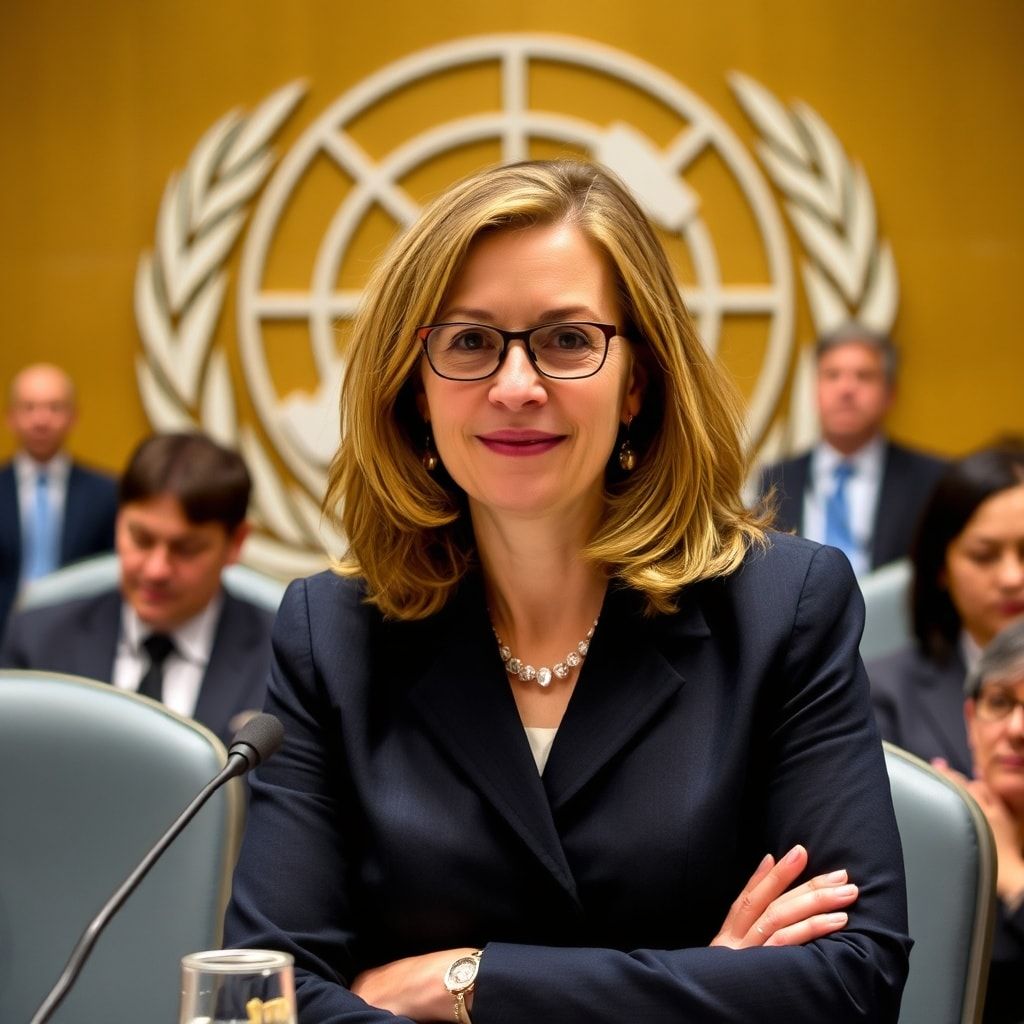
An Unprecedented Diplomatic Chapter: Olena Zelenska’s Historic Presiding Role at the UN Security Council
In a truly groundbreaking move, Olena Zelenska, the First Lady of Ukraine, made history on September 20, 2023, by presiding over a session of the United Nations Security Council. This was unprecedented: never before had the spouse of a world leader held the gavel at the UN’s most powerful body. Her leadership at the high-level meeting, dedicated to mental health in conflict zones, signaled a profound shift in diplomatic protocol, highlighting the evolving role of presidential spouses amid relentless aggression and showcasing Ukraine’s innovative global advocacy.
Zelenska’s role fundamentally challenges centuries of diplomatic tradition, which largely confined spouses to ceremonial functions. Her ascendance to this critical forum underscores her personal gravitas and Ukraine’s unique circumstances, compelling a re-evaluation of who speaks and what messages are deemed vital within the UN framework.
A Precedent Shattered: Spouses in Global Diplomacy
Historically, First Ladies and spouses occupied influential yet indirect diplomatic roles. Figures from Eleanor Roosevelt to Michelle Obama leveraged soft power for humanitarian work and social advocacy, supporting nations’ foreign policy without direct engagement in high-level international bodies. Their influence was primarily cultural and supportive.
The UN Security Council, a bastion of high-stakes geopolitics, debates war, peace, and security. Proceedings are typically led by accredited diplomats or heads of state. The idea of a presidential spouse presiding was, until Zelenska, an unthinkable departure. Her presence fundamentally reshaped perceptions of legitimate authority, especially representing a nation fighting for its survival. This audacious step demonstrates Ukraine’s determination to amplify its voice through unconventional methods.
Olena Zelenska’s Ascendance: Beyond Ceremonial Duties
Since the full-scale invasion, Olena Zelenska has redefined the role of a First Lady in wartime. She emerged as a formidable advocate, focusing on conflict’s human cost. Her international engagements humanize the war, bringing Ukrainian stories of resilience and suffering directly to global leaders. Her work covers humanitarian aid, cultural preservation, and critically, mental health support for war-traumatized populations.
Presiding over the Security Council meeting on mental health was a logical, yet profoundly powerful, extension of her advocacy. It transformed her from a storyteller into an active facilitator of international discourse, endowing her with diplomatic agency rarely afforded to a First Lady. She could steer discussions, guide a critical global forum, and project strength and deep commitment to her people’s well-being, showcasing Ukraine’s leadership in proposing solutions to conflict’s devastating psychological toll.
The UN Security Council in a New Light: Implications
The Security Council’s decision to allow Zelenska to preside sparked significant discussion. While many admired her courage and symbolic power, questions arose concerning protocol and precedent. Some view it as a necessary adaptation to extraordinary circumstances, reflecting the UN’s willingness to embrace unconventional engagement during unprecedented global crises.
Others might cautiously assess long-term implications, pondering whether this sets a broader precedent. However, Ukraine’s unique struggle provides powerful justification. Zelenska’s leadership brought a raw, human dimension to formal proceedings, underscoring the direct impact of Council decisions on individuals. Her presence reminded members that behind geopolitical machinations are lives irrevocably altered by conflict, making abstract discussions intensely personal and urgent.
Thematic Focus: Mental Health as a Diplomatic Imperative
The chosen theme—mental health in conflict zones—was profoundly resonant and strategically significant. For too long, war’s psychological impact has been an under-addressed crisis, often overshadowed by physical casualties. Yet, the invisible wounds of trauma, anxiety, and depression can cripple individuals and societies for generations. Olena Zelenska’s consistent advocacy for mental health services in Ukraine, coupled with her international efforts, has elevated this critical humanitarian concern to a central diplomatic imperative.
By bringing this topic to the UN Security Council, Zelenska strategically highlighted that mental well-being is not merely a social issue but an essential component of post-conflict recovery, stability, and sustainable peace. A population struggling with widespread trauma cannot effectively rebuild or participate democratically. Her initiative underscored that addressing mental health is integral to international security, preventing future conflicts, and fostering resilient societies.
Geopolitical Undercurrents: Ukraine’s Strategic Communication
Ukraine’s deployment of its First Lady in such a prominent diplomatic role reflects a sophisticated understanding of strategic communication. In its existential struggle against Russian aggression, Kyiv consistently seeks innovative ways to maintain international attention and support, prevent “Ukraine fatigue,” and articulate its narrative directly. Olena Zelenska’s engagement at the UNSC was a masterstroke, generating significant media coverage, humanizing the conflict through her advocacy, and projecting an image of a resilient, forward-thinking nation that actively shapes global discourse.
A New Era for Global Leadership Spouses?
Does Olena Zelenska’s unprecedented role signal a new era for spouses of global leaders? While wartime Ukraine’s unique circumstances enabled this departure from tradition, her actions could inspire a re-evaluation of the potential influence and diplomatic capacity of First Ladies worldwide. Future spouses might look to Zelenska’s example as a blueprint for more direct engagement on critical global issues, moving beyond purely ceremonial duties.
Such a paradigm shift requires significant political will from both spouses and international institutions. Success of Zelenska’s tenure at the UNSC could pave the way for broader recognition of the unique soft power and advocacy potential presidential spouses offer to complex diplomatic challenges. It might encourage a more flexible and inclusive approach to global governance, where diverse voices are brought to the forefront.
Conclusion: Redefining Diplomacy in a World Adrift
Olena Zelenska’s historic turn at the helm of the UN Security Council was a profound act of diplomatic innovation that challenged entrenched traditions and underscored the evolving nature of international engagement. Her leadership brought critical attention to the mental health crisis exacerbated by conflict, humanized war’s devastating impact, and demonstrated Ukraine’s strategic brilliance. This unprecedented event serves as a powerful reminder that in times of crisis, creativity and courage can redefine diplomacy, opening new avenues for advocacy and global cooperation. It marks a significant moment for the future role of influential figures in shaping international affairs.