
Introduction: A Defining Moment in Regional Volatility
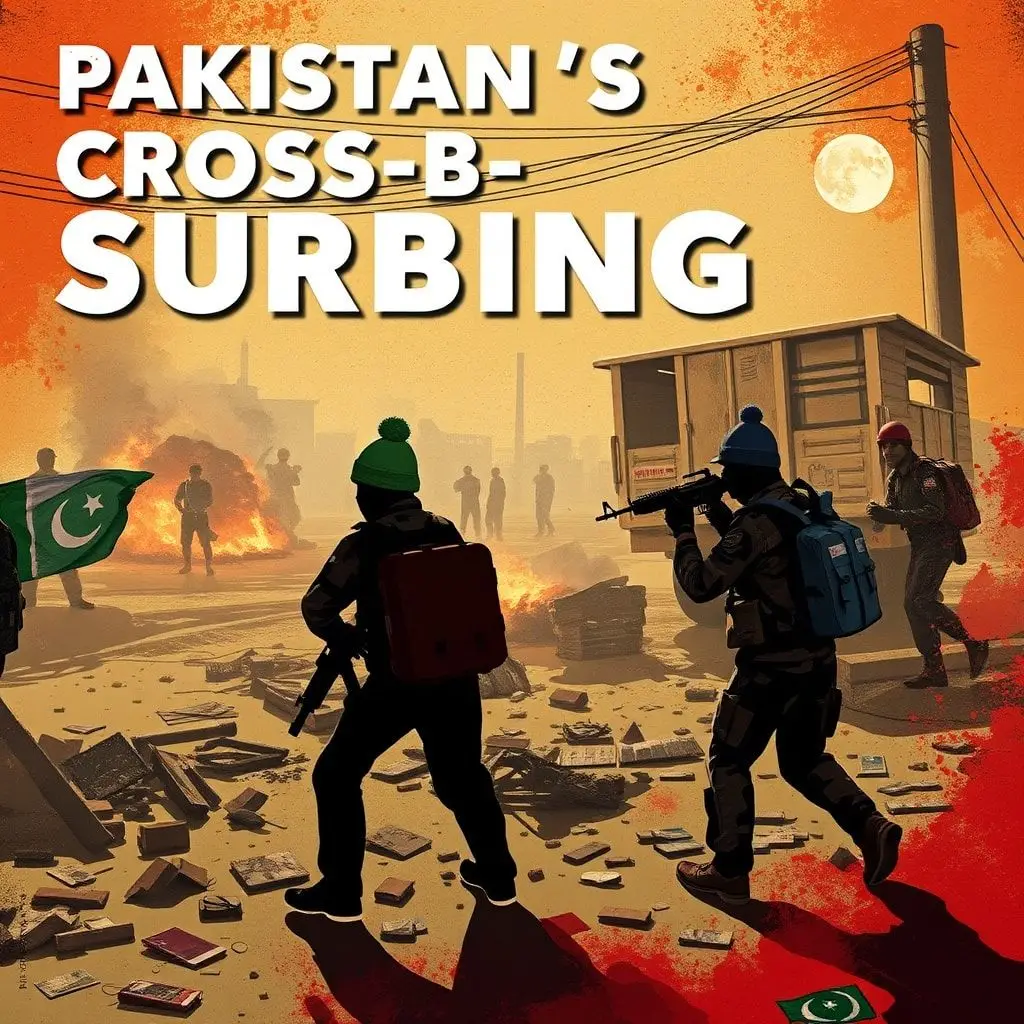
The recent reports of bombings initiated by Pakistan into a neighboring territory mark a profoundly significant and alarming development in an already volatile region. This is not merely another chapter in a series of border skirmishes, but a distinct escalation that carries immense geopolitical weight. Such overt military action, particularly cross-border aerial or artillery strikes, fundamentally alters the calculus of deterrence and reprisal, pushing long-simmering tensions to a dangerous precipice. Crucially, the lingering ambiguity surrounding the actual physical impact of these bombings adds a layer of complexity, fostering an information vacuum that complicates international responses and fuels local anxieties.
As senior investigative journalists, our mandate is to dissect this critical juncture, moving beyond sensationalism to offer a deeply analytical perspective. This article will delve into the historical backdrop that frames these events, examine the strategic implications of such an escalation, explore the ramifications of the unclear physical impact, unpack the potential geopolitical and domestic consequences, and finally, consider the precarious paths forward for de-escalation or, indeed, further conflict. Understanding this development requires a comprehensive, multi-layered examination of regional dynamics and the delicate balance of power.
The Historical Crucible: Decades of Uneasy Proximity
To fully grasp the gravity of Pakistan’s recent bombings, one must contextualize them within the region’s complex and often turbulent history. Pakistan shares borders with several nations, and its relationships with these neighbors have frequently been characterized by a volatile mix of cooperation and profound friction. Long-standing territorial disputes, historical grievances, ideological divergences, and accusations of supporting non-state actors or allowing militant groups to operate from safe havens across porous borders have been recurrent themes. These issues have created an enduring environment of distrust and suspicion, where even minor incidents can quickly spiral into larger confrontations.
This history of uneasy proximity means that any overt act of military aggression, particularly one involving bombings into sovereign territory, is immediately interpreted through a lens of deep-seated historical animosities and unresolved conflicts. It is within this crucible of decades-old disputes and a persistent cycle of accusation and counter-accusation regarding territorial integrity and interference that the recent bombings must be understood. The past dictates that such an event is rarely isolated; it often represents a peak in an ongoing narrative of tension, threatening to unravel fragile peace initiatives and reignite dormant hostilities.
The Anatomy of Escalation: Beyond Skirmishes
The distinction between routine border skirmishes and the deliberate act of “bombings” into another nation’s territory is critical. Border clashes, while dangerous, often involve limited engagements between ground forces and are frequently framed as defensive measures or responses to localized provocations. Bombings, especially those conducted via air power or long-range artillery, represent a significant strategic decision, moving beyond localized defense to a projection of force deep within another country’s boundaries. This constitutes a direct breach of sovereignty and a clear signal of heightened intent.
Such an act carries profound implications. It communicates a message of resolve, a willingness to cross established red lines, and potentially, a shift in tactical doctrine. It can be interpreted as a retaliatory strike, a preemptive measure, or a calculated warning. Regardless of the immediate motivation, the very act elevates the conflict from a border management issue to a direct military confrontation between states. The inherent risks of miscalculation and unintended consequences become exponentially greater when a nation opts for such an aggressive posture, potentially setting off a dangerous chain reaction that neither side may be able to control.
The Enigma of Unclear Physical Impact: Information, Ambiguity, and Perception
Perhaps one of the most unsettling aspects of this development is the reported “unclear physical impact” of the bombings. In an era saturated with real-time information, the absence of concrete details regarding casualties, destruction, or the precise nature of the targets struck, creates a dangerous vacuum. This ambiguity can arise from several factors: the remoteness of the strike locations, immediate censorship or propaganda from the involved parties, logistical difficulties for independent verification, or simply the chaotic and opaque nature of conflict zones. Access for international observers or media is often severely restricted, further obscuring the truth.
The consequences of this information vacuum are far-reaching. It allows for competing narratives to flourish, with each side capable of framing the events in a manner that serves its political agenda – minimizing its own aggression or exaggerating the damage inflicted by the other. This lack of clear, verifiable data complicates the ability of the international community to formulate a cohesive and appropriate response, potentially delaying condemnation or intervention. Furthermore, the unknown nature of the impact can heighten anxiety among local populations, breed distrust, and fuel further speculation, making rational de-escalation efforts all the more challenging. The battle for information becomes as significant as the military engagement itself, shaping perceptions and influencing the trajectory of the crisis.
Profound Geopolitical Ramifications: A Ripple Effect Across the Region and Beyond
Regional Stability in Peril
Pakistan’s bombings represent a severe blow to an already fragile regional stability. Such an aggressive act immediately raises the specter of retaliatory strikes, creating a dangerous tit-for-tat dynamic that can quickly escalate into a wider conflict. This jeopardizes not only the immediate belligerents but also threatens to draw in other regional actors who may have strategic interests, historical alliances, or security concerns. The destabilization can manifest in various ways: disrupted trade routes, mass displacement of populations, increased refugee flows, and heightened security alerts across neighboring states. The economic implications alone, from interrupted commerce to diminished investment, could cripple already struggling economies, creating a humanitarian crisis alongside the geopolitical one.
International Condemnation and Scrutiny
The global community will undoubtedly respond to this escalation, though the nature of that response will be nuanced and varied. International bodies such as the United Nations will likely issue calls for restraint and dialogue, emphasizing adherence to international law and the principles of national sovereignty. Major global powers will weigh in, their reactions often shaped by their own strategic interests and existing alliances in the region. Some may offer outright condemnation, while others might cautiously call for de-escalation without assigning blame, or even offer tacit support depending on geopolitical alignments. This event places Pakistan under intense international scrutiny, potentially impacting its diplomatic standing, economic aid, and strategic partnerships. Adherence to international law, especially regarding the use of force and non-interference in internal affairs, will be a central point of debate, challenging the very foundations of global peace and security frameworks.
Domestic Repercussions and Public Sentiment
Internally, both Pakistan and the targeted neighboring country will face significant repercussions. In Pakistan, the government will likely seek to portray the bombings as a necessary measure for national security, a decisive response to perceived threats, or a deterrent against future aggression. This narrative is often designed to consolidate domestic support, leverage nationalist sentiment, and divert attention from internal political or economic challenges. However, sustained military action carries enormous economic costs and risks generating public dissent if the conflict prolongs or results in unforeseen consequences. Similarly, in the targeted nation, the bombings will likely ignite a wave of patriotic fervor and calls for strong retaliation. The leadership will face immense pressure to respond forcefully, balancing public demand for justice with the strategic imperative of avoiding a full-blown war. The humanitarian impact on local populations, coupled with the economic strains, could also lead to significant internal instability for both nations.
Unpacking the Motivations: A Calculated Gamble?
Delving into the motivations behind Pakistan’s decision to launch these bombings requires careful, albeit speculative, analysis. Several factors could have converged to precipitate such a drastic measure. Foremost among these could be a response to perceived internal security threats, particularly the presence or activities of militant groups operating from across the border, which Pakistan might accuse the neighboring state of harboring or failing to control. This could be framed as a preemptive strike aimed at dismantling terrorist infrastructure or neutralizing immediate threats to its sovereignty and stability, acting on intelligence of imminent attacks.
Another significant driver could be domestic political considerations. In times of internal political instability or economic hardship, governments sometimes resort to assertive foreign policy actions to galvanize nationalist sentiment, consolidate power, or distract public attention from internal challenges. A robust military response could be presented as a demonstration of strength and resolve, appealing to a nationalistic base. Furthermore, the strategic calculus might involve asserting regional influence, signaling clear red lines to a neighbor regarding cross-border activities, or challenging a perceived aggressor. Regardless of the precise combination of factors, such an action is rarely taken lightly and represents a high-stakes gamble with potentially catastrophic consequences for regional peace and Pakistan’s standing on the global stage.
The Precarious Path Forward: De-escalation or Deeper Conflict?
The immediate aftermath of Pakistan’s bombings presents a precarious crossroads for the region. The most critical and urgent imperative is to initiate de-escalation mechanisms to prevent further military engagements. This could involve direct bilateral talks between the two nations, though trust levels are likely at an all-time low. Alternatively, third-party mediation from international organizations like the United Nations or influential global powers could play a crucial role in opening communication channels and fostering a ceasefire. The immediate goal must be to halt military action, establish clear lines of communication, and allow for transparent fact-finding regarding the incidents.
However, the path to de-escalation is fraught with challenges. If either side feels compelled to save face, maintain a hard line, or respond to domestic pressure for retaliation, the cycle of violence could easily perpetuate. The lack of verifiable information regarding the physical impact of the bombings further complicates efforts to build a consensus for peace. A sustained military posturing, coupled with inflammatory rhetoric, could push the region closer to a wider, more destructive conflict. The international community’s role will be pivotal, not only in mediating but also in applying diplomatic pressure and offering incentives for a peaceful resolution. Without a concerted and immediate effort from all stakeholders, the risk of a regional conflagration remains dangerously high.
Conclusion: A Call for Urgent Diplomacy
The bombings initiated by Pakistan against a neighboring country represent an undeniably significant and destabilizing development. This overt act of military aggression, compounded by the uncertainty surrounding its physical impact, has propelled regional tensions to an unprecedented and dangerous level. It is a moment that demands immediate, concerted, and responsible action from all parties involved, as well as the wider international community. The historical context, strategic implications, and potential for widespread geopolitical and humanitarian ramifications underscore the urgent need for de-escalation.
As a global community, we stand at a critical juncture where the choice between diplomatic engagement and continued confrontation will define the future of regional peace and security. Urgent, transparent, and sustained diplomatic efforts are paramount to prevent a wider conflict, address underlying grievances, and re-establish a semblance of stability in a region already grappling with immense challenges. The time for decisive and peaceful intervention is now, before the current hostilities spiral into an irreparable catastrophe.