
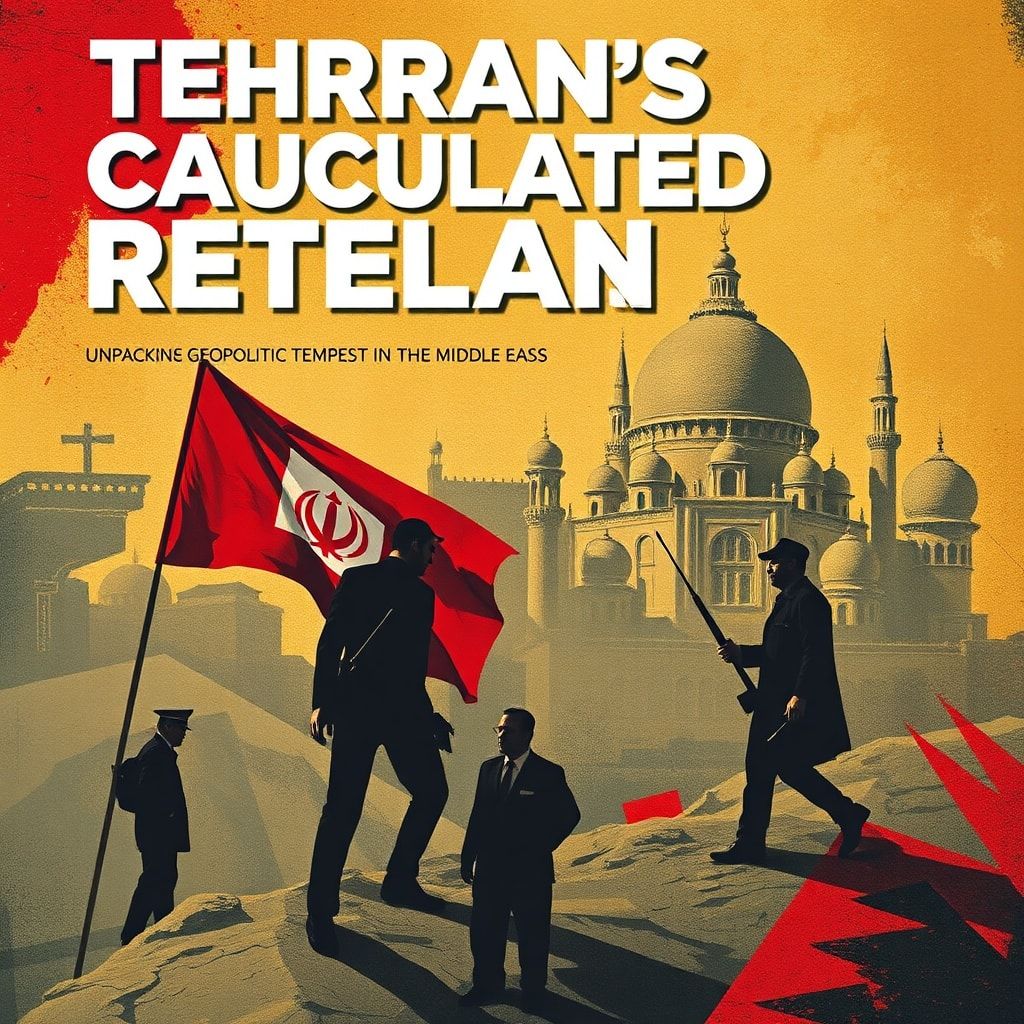
Introduction: A Fiery Response in a Volatile Region
In a stark and unsettling escalation, Tehran recently unleashed a formidable wave of missiles and drones, targeting not only its long-standing adversary, Israel, but also key Gulf countries hosting crucial United States military bases. This calculated, overt act of retaliation marked a significant turning point in the simmering “shadow war” that has long characterized Middle Eastern geopolitics. The decision by the Islamic Republic to move beyond covert operations and engage in direct, albeit distant, military action underscores a dangerous shift in regional dynamics. This response, coming on the heels of unspecified “strikes” against Iranian interests, signals a clear intent to project power, deter further aggression, and redefine the boundaries of acceptable engagement in a region perpetually on the brink of wider conflict. The implications of this broad assault ripple across international security, energy markets, and the delicate balance of alliances, demanding a deeper analytical dive into its antecedents, strategic objectives, and potential consequences.
The Genesis of Retaliation: Unpacking the Preceding Provocations
To truly understand Tehran’s dramatic riposte, one must first examine the murky depths of the provocations that preceded it. For years, Iran has been embroiled in a clandestine conflict with its regional adversaries, primarily Israel and, by extension, the United States. This “shadow war” has manifested in a series of covert operations: targeted assassinations of prominent Iranian nuclear scientists and military commanders, sophisticated cyberattacks against critical infrastructure, sabotage at nuclear facilities like Natanz and Fordow, and maritime incidents involving oil tankers and cargo ships in strategic waterways. While the specific “strikes” that triggered this recent missile and drone barrage remain officially undisclosed, they undoubtedly fit into this pattern of sustained pressure and perceived aggression against the Islamic Republic. Tehran views these actions not merely as isolated incidents, but as a systematic campaign aimed at destabilizing its regime, crippling its nuclear program, and diminishing its regional influence. The decision to respond overtly, breaking from the traditional playbook of deniable counter-operations, suggests a heightened sense of vulnerability within the Iranian leadership or, conversely, a newfound confidence in its deterrent capabilities. It represents a deliberate move to signal that a continued policy of “strategic patience” has its limits, and that direct attacks will now be met with a visible, if not proportional, military answer, thereby raising the stakes for all parties involved.
Tehran’s Arsenal and Strategic Calculus: A Message of Force
The “wave of missiles and drones” unleashed by Tehran was not a random act of aggression but a carefully orchestrated display of its growing military prowess and strategic doctrine. Over decades, Iran has invested heavily in developing a sophisticated arsenal of asymmetric warfare capabilities, focusing particularly on ballistic missiles, cruise missiles, and an array of unmanned aerial vehicles (UAVs). This indigenous development program, largely insulated from international sanctions, has yielded weapons systems capable of reaching targets thousands of kilometers away with increasing precision. The use of both missiles and drones in this retaliatory strike demonstrates a multi-layered attack strategy designed to overwhelm air defenses and project power across vast distances. Ballistic missiles offer speed and destructive capability, while swarms of drones, often launched from multiple locations, can saturate enemy radar systems and complicate interception efforts. Tehran’s strategic calculus behind such a display is multifaceted: it aims to showcase its capacity to inflict damage, thereby deterring future attacks; to reassert its regional influence by demonstrating reach; and to send a clear message that it possesses the means to strike at the heart of its adversaries and their allies. This deliberate demonstration of force transforms theoretical capabilities into a tangible threat, fundamentally altering the risk assessment for any party contemplating further actions against Iranian interests.
Targeting Israel: A Message of Deterrence and Enmity
The decision to aim a significant portion of the retaliatory barrage at Israel carries profound historical and geopolitical weight. The animosity between the Islamic Republic and the Zionist entity runs deep, rooted in ideological conflict, regional hegemony, and existential threat perceptions. For Iran, Israel represents the primary antagonist in the Middle East, a key American ally, and a destabilizing force in the Palestinian territories. Iran has long supported various proxy groups, including Hezbollah in Lebanon, Hamas and Palestinian Islamic Jihad in Gaza, and the Houthis in Yemen, to challenge Israeli security and extend its own sphere of influence. This direct targeting of Israel, however, moves beyond proxy warfare, representing a direct challenge to Israeli air superiority and its vaunted defense systems, such as the Iron Dome and David’s Sling. While the effectiveness of the barrage in causing significant damage would be a factor, the symbolic impact of missiles and drones explicitly launched from Iranian soil towards Israeli territory is immense. It signals Iran’s willingness to cross a critical threshold, daring Israel to respond directly and potentially igniting a broader, more devastating regional confrontation. This act serves as a potent message: any future “strikes” against Iran, particularly those attributed to Israel, will no longer be confined to the shadows but will provoke a visible, direct, and potentially widespread counter-response, thereby seeking to recalibrate the rules of engagement in a perilous game of brinkmanship.
The Gulf’s Precarious Position and US Interests: A Direct Challenge
Equally significant, and arguably more complex in its immediate implications, was the targeting of Gulf countries that host United States military bases. This aspect of Tehran’s retaliation serves a dual purpose: to warn regional Sunni monarchies (such as Saudi Arabia, the UAE, and Bahrain) against closer alignment with Israel and the US, and to directly challenge American military presence and influence in the Persian Gulf. For years, Iran has viewed the presence of US forces and bases (like Al Udeid in Qatar, Naval Support Activity Bahrain, and Prince Sultan Air Base in Saudi Arabia) as a direct threat to its security and a perpetuation of a perceived hostile encirclement. By aiming missiles and drones at these strategically vital locations, Tehran is sending an unambiguous message: US assets and personnel in the region are not immune to Iranian retaliation, and any future conflict will inevitably involve American interests. This places Gulf states in an exceedingly precarious position, caught between their security alliances with the US and the inescapable geographic reality of their proximity to Iran. The attack tests the credibility of American security guarantees and forces these nations to re-evaluate the costs and benefits of their strategic partnerships. Furthermore, it creates a dangerous precedent, blurring the lines between regional adversaries and directly implicating a global superpower in a localized conflict, thereby increasing the potential for miscalculation and rapid escalation that could destabilize global energy supplies and maritime trade routes through the Strait of Hormuz.
Geopolitical Fallout and the Escalation Spiral: Navigating a Dangerous Future
The immediate geopolitical fallout from Tehran’s calculated retaliation is one of heightened alert and intensified speculation about an impending escalation spiral. International reactions have ranged from condemnation of Iran’s actions to urgent calls for de-escalation from global powers. The United States, whose bases were directly threatened, faces immense pressure to respond decisively to uphold its deterrent posture and protect its assets and allies, while simultaneously seeking to avoid a full-blown war. Israel, having been directly targeted, must weigh its options for a counter-response, considering the potential for a chain reaction that could engulf the entire region. The attack inevitably complicates efforts to revive the Iran nuclear deal (JCPOA), as trust erodes further and hardliners on all sides gain leverage. Economically, the instability threatens global energy markets, potentially driving up oil prices and disrupting shipping lanes, with severe implications for a fragile global economy. The incident underscores the urgent need for robust diplomatic channels and de-escalation mechanisms, yet these often prove elusive in a region defined by deeply entrenched grievances, ideological divides, and a pervasive sense of mistrust. The path forward is fraught with peril, demanding cautious diplomacy and a clear understanding of red lines from all actors to prevent an already volatile region from descending into an even more catastrophic conflict.