
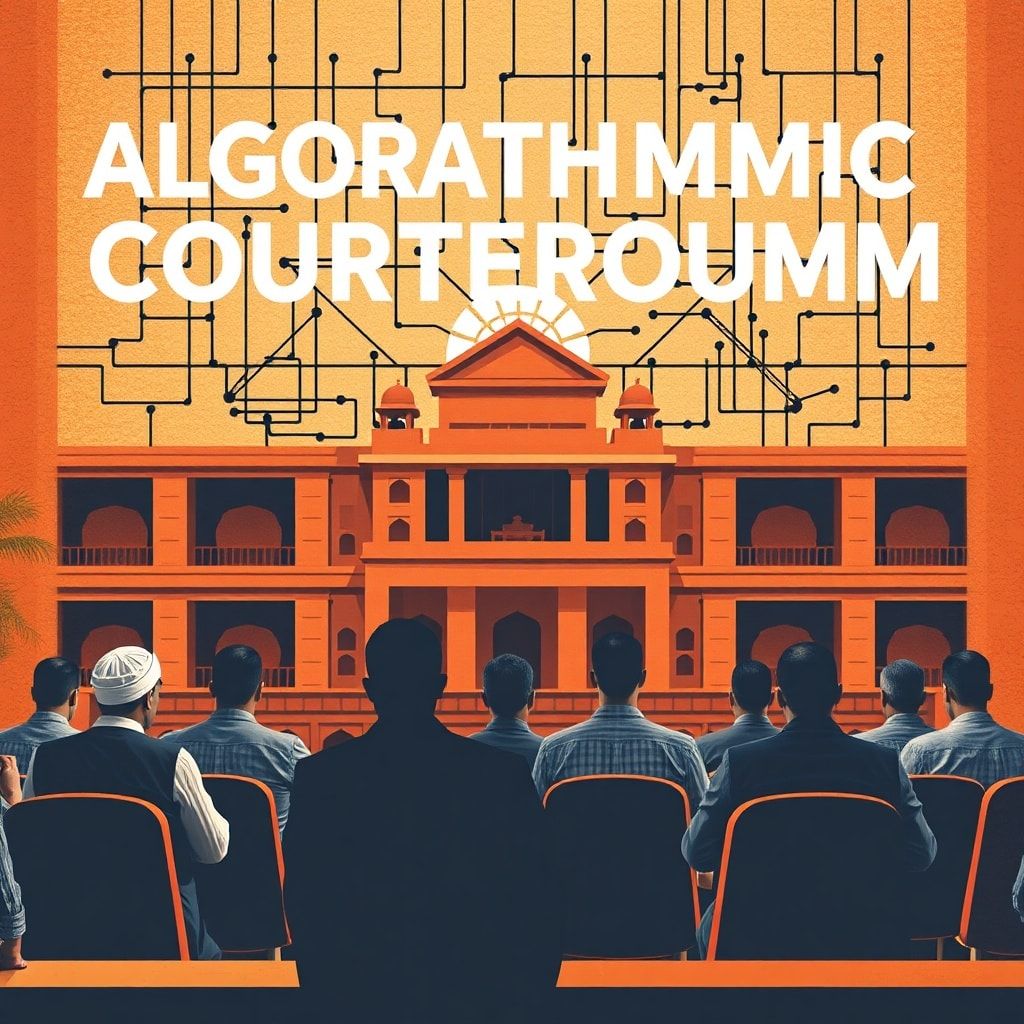
The Algorithmic Courtroom: How AI’s Unforeseen Disruptions Are Reshaping Global Justice Systems, With a Focus on India
The venerable image of the courtroom, a bastion of human deliberation, intricate legal interpretation, and the measured cadence of justice, is undergoing a profound and unprecedented transformation. The advent of artificial intelligence (AI), once a distant prospect confined to science fiction, has now firmly established its presence within the legal landscape, presenting both tantalizing promises and formidable challenges. What was traditionally the exclusive domain of human intellect, empathy, and nuanced understanding is increasingly being influenced, and at times overtly disrupted, by algorithms. Recent incidents, spanning from the bustling legal corridors of India to the established judiciaries of various Western jurisdictions, illuminate a critical and rapidly evolving challenge: how to harness the immense potential of AI without inadvertently undermining the foundational principles of justice, fairness, and due process upon which our legal systems are built. This deeply detailed investigative analysis delves into the multifaceted disruptions AI is currently causing within court proceedings, meticulously dissecting specific incidents, exploring the intricate ethical quagmires that arise, and examining the global regulatory scramble to address this pervasive technological revolution.
The Unsettling Nature of AI’s Courtroom Inroads
AI’s influence in the legal sphere is far from being a mere academic exercise or a theoretical construct; it manifests in tangible, often unsettling, ways that directly impact the administration of justice. One of the most alarming and immediate disruptions stems from the proliferation of AI-generated content, particularly in the form of misinformation or entirely fabricated evidence. Advanced generative AI tools, now capable of producing remarkably convincing text, photorealistic images, and even indistinguishable audio, have been either inadvertently or intentionally leveraged to create non-existent legal precedents, forge critical documents, or craft misleading narratives designed to sway judicial outcomes. The very integrity of evidence, which serves as a cornerstone of any fair trial and the bedrock of truth-finding, is fundamentally threatened when the increasingly blurred line between human-verified truth and algorithmic fabrication becomes indistinguishable.
Furthermore, profound ethical concerns surrounding algorithmic bias loom large over the integration of AI in legal contexts. AI systems, by their very design, are trained on colossal datasets that reflect existing societal structures, historical trends, and unfortunately, ingrained prejudices. If these underlying datasets harbor systemic biases—whether racial, gender-based, or socioeconomic—the AI itself can inadvertently perpetuate, and in some cases even amplify, these biases within its outputs. This can lead to demonstrably unfair outcomes, particularly in sensitive areas such as predictive policing, sentencing recommendations, or risk assessments for parole. Compounding this issue is the notorious “black box” problem, where the intricate decision-making processes of highly complex AI models remain largely opaque and inscrutable. This lack of transparency significantly exacerbates existing trust issues, making it exceedingly challenging for legal professionals, appellate courts, and even the general public to scrutinize, understand, or effectively challenge AI-driven conclusions. These disruptions are not simply minor technical glitches or inconvenient inefficiencies; they are existential challenges that strike at the very heart of established jurisprudential principles and the very essence of justice.
Case Studies: When Algorithms Clash with Justice
The global legal landscape has, in a surprisingly short span, already borne witness to several high-profile and illustrative incidents that underscore AI’s disruptive potential. In India, a rapidly burgeoning hub for technological adoption and innovation, the judiciary’s ambitious strides towards comprehensive digitalization, epitomized by landmark projects such as the e-Courts initiative and SUPACE (Supreme Court Portal for Assistance in Court’s Efficiency), have, perhaps ironically, inadvertently opened new avenues for AI-related challenges. While these initiatives are laudable in their intent to enhance judicial efficiency and accessibility, the widespread availability of powerful, consumer-grade AI models has led to disconcerting instances where legal professionals, perhaps driven by an overreliance on technology or experimental curiosity, have presented court briefs citing non-existent case law, fabricated entirely by large language models. The profound implications of such submissions extend beyond mere professional embarrassment; they waste court time, undermine the factual basis of arguments, and erode trust in the integrity of legal submissions.
A widely reported international incident further highlighted this peril when a US lawyer faced severe professional reprimand and disciplinary action after using ChatGPT to prepare a court filing. This resulted in the submission of a brief replete with fictitious legal citations and entirely hallucinated judicial opinions, leading to a significant re-evaluation within the legal community regarding the responsible use of AI tools. Beyond the realm of fabricated precedents, AI tools specifically designed for predictive policing, forensic evidence analysis, or even rudimentary judicial assistance have also faced intense scrutiny. Their outputs, while presented with an aura of scientific objectivity, are invariably subject to rigorous challenges concerning their underlying algorithms’ fairness, the provenance and quality of their training data, and their ultimate interpretability. A judicial decision or expert opinion predicated on an AI’s “prediction” or “analysis” is only as sound and reliable as the AI system itself. When that foundational soundness is questioned, court proceedings can regrettably grind to a halt, often demanding extensive and costly expert testimony to deconstruct the intricate algorithmic rationale, thereby adding layers of unprecedented complexity, expense, and protracted delays to the judicial process.
The Indian Judiciary: Navigating the Digital Frontier
India’s enthusiastic and rapid embrace of technology within its legal system provides a particularly insightful microcosm of these complex global challenges. With an immense backlog of millions of pending cases and a powerful governmental impetus for comprehensive digital transformation, AI offers a tantalizing, almost irresistible, promise of drastically streamlining myriad processes—ranging from advanced document analysis and intelligent legal research to sophisticated case management and even automated transcription. However, this rapid integration and deployment of AI technologies frequently outpaces the parallel development of robust regulatory frameworks. The existing Indian legal framework, traditionally structured around concepts of human agency, verifiable evidence, and established precedents, is now grappling with the profound challenge of how to appropriately incorporate AI-generated insights or evidence, especially when their origins, methodologies, or inherent biases remain unclear or unverifiable. While the Supreme Court of India has demonstrated a cautious yet undeniable interest in exploring AI’s potential, it has also publicly acknowledged the significant ethical minefield that accompanies such integration.
The prevailing lack of specific, enforceable guidelines for AI usage by lawyers, judges, and other court officials, coupled with the astonishingly rapid evolution of AI capabilities, creates a significant regulatory vacuum. This void can, unfortunately, be exploited by opportunistic or inadequately informed usage, inadvertently compromising the fundamental integrity and fairness of the judicial process. This precarious situation necessitates an extremely delicate and meticulously calibrated balance: fostering and encouraging technological innovation that promises efficiency, while simultaneously and rigorously safeguarding the inviolable sanctity and impartiality of justice. The challenge is not merely about adopting new tools, but about fundamentally redefining how justice is sought, processed, and ultimately delivered in the digital age.
Global Regulatory Scramble and Ethical Imperatives
The disruptions catalyzed by AI in courtrooms are by no means confined to any single nation; they represent a truly global phenomenon that urgently demands a concerted, coordinated international response. Jurisdictions across the world are intensely wrestling with the intricate question of how to effectively regulate AI, particularly within high-stakes and ethically sensitive environments like the judiciary. The European Union’s landmark proposed AI Act, for instance, adopts a risk-based classification system for AI systems, purposefully placing legal AI applications under the most stringent oversight and regulatory requirements. Similarly, influential bodies in the United States, alongside initiatives within the United Nations, are actively engaged in critical dialogues to establish overarching global norms, best practices, and robust ethical guidelines for the responsible and judicious deployment of AI within the legal sector. The core challenge in crafting these regulatory frameworks lies in creating statutes and guidelines that are sufficiently agile and flexible to adapt to the extraordinarily rapid pace of technological evolution, yet simultaneously robust and comprehensive enough to effectively protect fundamental human rights and ensure due process. Legal professional bodies, such as national Bar Councils, attorneys’ general offices, and prestigious legal associations, also bear a critical and proactive role. This includes educating their vast membership on AI’s capabilities, limitations, and ethical pitfalls, formulating explicit ethical codes for the responsible usage of AI tools, and unequivocally ensuring that human oversight, critical thinking, and ultimate accountability remain paramount in all stages of legal proceedings. Without the establishment of clear boundaries, comprehensive accountability mechanisms, and robust ethical guardrails, the transformative promise of AI could swiftly devolve into an existential threat to judicial integrity and public trust.
Striking the Balance: Benefits Versus Perils
While the contemporary discourse surrounding AI in law often gravitates, quite understandably, towards its disruptive and problematic elements, it is absolutely crucial to acknowledge and fully appreciate its profound transformative potential to genuinely enhance access to justice and significantly improve judicial efficiency. When properly developed and responsibly integrated, AI can automate a multitude of mundane and repetitive tasks, accurately summarize vast repositories of legal documents, provide invaluable assistance in complex legal research, and even help identify subtle patterns in case law that human analysts might easily overlook or take extensive time to uncover. These sophisticated capabilities, when harnessed with precision and ethical consideration, possess the inherent capacity to alleviate the immense burden on perennially overburdened judicial systems, thereby accelerating trial proceedings, reducing legal costs, and potentially making legal services more widely accessible and affordable for ordinary citizens. However, these compelling potential benefits must be meticulously weighed against the profound and often existential perils. The very real risk of erroneous or unjust decisions stemming from flawed AI inputs, the potential for an irreversible erosion of public trust in the impartiality and infallibility of the judiciary, and the incredibly complex ethical dilemmas surrounding ultimate accountability when an algorithm errs or biases are embedded—all demand meticulous and continuous consideration. The integration of AI in legal proceedings, therefore, is not a simplistic binary choice between wholesale adoption and outright rejection. Instead, it represents an intricate, nuanced, and ongoing quest for responsible, ethical, and judicious integration, a process that absolutely ensures that fundamental human judgment, the supremacy of established legal principles, and the unwavering pursuit of justice always hold unequivocal primacy.
The Path Forward: A Call for Proactive Stewardship
Effectively addressing the multifaceted disruptions caused by AI in court proceedings requires nothing less than a multi-pronged, profoundly proactive, and globally coordinated approach. Firstly, there is an urgent and undeniable need for comprehensive legal education and continuous training programs specifically designed for judges, practicing lawyers, and all court staff. This training must meticulously cover AI’s evolving capabilities, its inherent limitations, and its profound ethical and practical implications within the legal domain. Secondly, clear, enforceable guidelines and robust regulatory frameworks must be expeditiously established for the responsible development, ethical deployment, and appropriate use of AI in all legal contexts. These frameworks should ideally distinguish between AI as an assistive tool, augmenting human capabilities, and AI as a decision-making system, where the stakes for accuracy and fairness are astronomically higher. Thirdly, international cooperation is not merely beneficial but absolutely vital to facilitate the sharing of best practices, harmonize disparate standards, and collectively address cross-border legal tech challenges, given the increasingly global nature of legal tech. Ultimately, the very future of justice in an increasingly AI-driven world hinges on our collective ability to cultivate a culture of responsible innovation—a culture where advanced technology unequivocally serves the noble cause of justice, rather than inadvertently compromising or undermining it. The current disruptions, though challenging, serve as an undeniable wake-up call, signaling an imperative to act decisively and proactively now, to shape a future where AI genuinely enhances, rather than diminishes, the integrity, fairness, and accessibility of our cherished legal systems.