
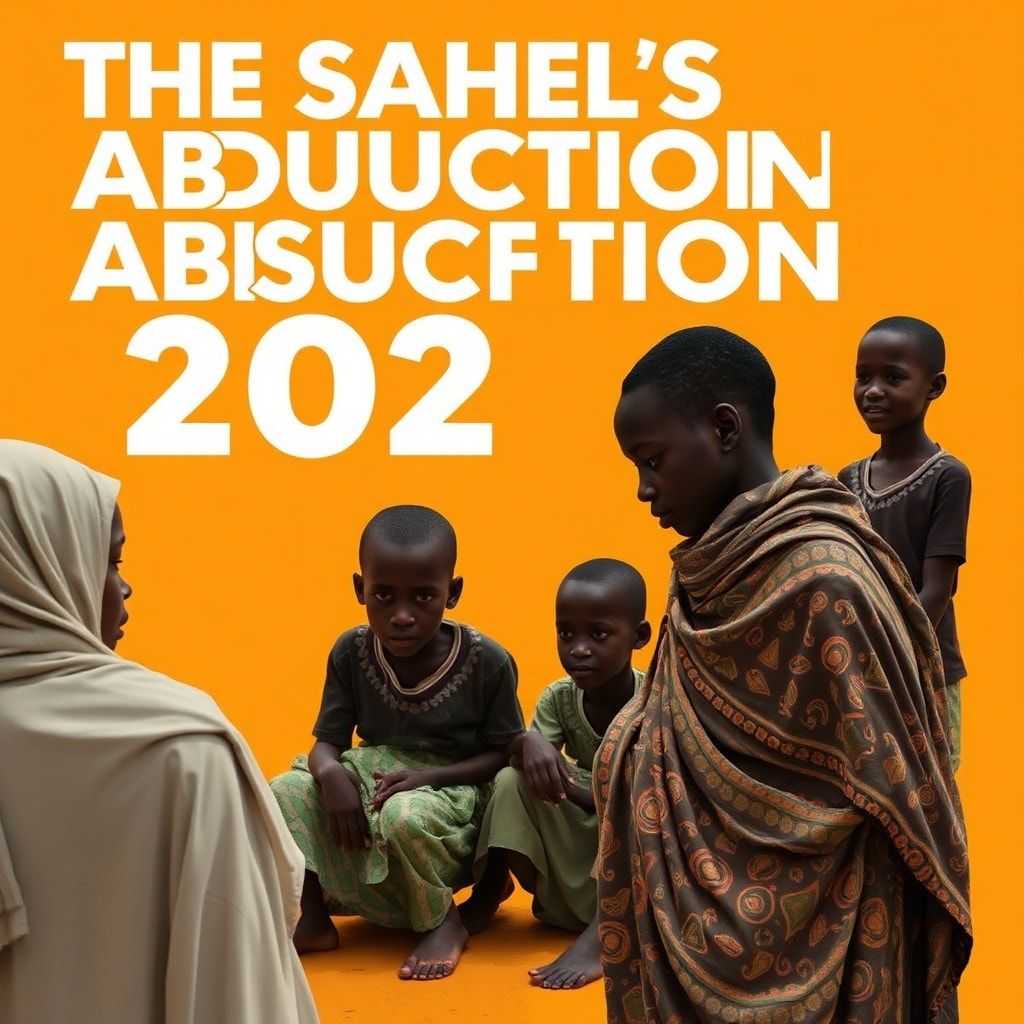
The Sahel’s Abduction Crisis of 2025: A Deep Dive into Unprecedented Insecurity
The year 2025 marked a grim milestone in Africa’s security history, particularly within the vast and volatile Sahel region. A devastating combination of escalating conflicts, pervasive political instability, and the relentless expansion of extremist groups transformed the Sahel into a critical risk zone. This made it one of the worst years on record for the abduction of foreign nationals across the continent. This period was characterized not just by a surge in kidnappings but by a disturbing evolution in tactics and target profiles, compelling international bodies, governments, and aid organizations to confront a crisis of unprecedented scale. Understanding the profound dynamics behind this harrowing trend necessitates a deep investigation into geopolitical failures, socio-economic desperation, and the ruthless calculus of those who exploit chaos for profit and power.
Unpacking the Sahel: A Region Under Siege
The Sahel, a semi-arid belt stretching across Africa from the Atlantic to the Red Sea, faces myriad challenges. Encompassing nations like Mali, Burkina Faso, Niger, Chad, and parts of Nigeria, Mauritania, and Sudan, each grapples with unique yet interconnected struggles. For decades, the region has endured complex environmental degradation, including desertification and water scarcity, intensifying competition over dwindling resources. This environmental stress exacerbates deep-seated socio-economic grievances: widespread poverty, rampant youth unemployment, and inadequate access to essential services like education and healthcare. Such vulnerabilities create fertile ground for disaffection and recruitment by armed groups, a bleak picture intensely magnified in 2025.
Political instability and weak governance have further crippled states’ ability to provide security and justice. Successive coups, contested elections, and institutional corruption have eroded public trust and created power vacuums, allowing non-state actors to flourish. Ethnic tensions, frequently manipulated by political and extremist figures, often erupt into localized conflicts that spiral into broader regional crises. This systemic failure of governance is a critical enabler of the insecurity that manifested so dramatically in the kidnapping surge of 2025, leaving vast territories ungoverned and highly vulnerable.
The Proliferation of Extremist and Criminal Networks
Central to the 2025 abduction crisis was the unchecked expansion and increasing sophistication of various extremist and criminal organizations. Groups such as Jama’at Nusrat al-Islam wal Muslimeen (JNIM), an al-Qaeda affiliate, and the Islamic State in the Greater Sahara (ISIS-GS) have consolidated their presence, exploiting porous borders and weak state control to establish de facto zones of influence. These groups are not merely ideological insurgents; they also function as highly adaptable criminal enterprises. Kidnapping for ransom has become a primary revenue stream, funding their operations, recruitment drives, and arms acquisitions. The substantial sums demanded for foreign nationals provide a powerful economic incentive, transforming human lives into lucrative commodities.
Beyond the major jihadi groups, numerous smaller armed bands and purely criminal syndicates operate with impunity, often collaborating with or emulating the tactics of larger extremist organizations. The blurring lines between terrorism, banditry, and organized crime makes a concerted response even more challenging. These networks thrive on fear and coercion, using abductions not only for financial gain but also as a means of political leverage, to destabilize governments, and to project power locally. The events of 2025 underscored their effectiveness in exploiting regional vulnerabilities, positioning them as formidable and adaptable threats.
Why Foreigners? Targets and Calculated Tactics
The targeting of foreign nationals in the Sahel is a calculated strategy driven by multiple objectives. Firstly, foreign hostages, particularly from Western nations, command significantly higher ransoms than local citizens, offering a more substantial financial windfall. This economic incentive is paramount. Secondly, abducting foreigners generates international headlines, providing a platform for extremist groups to broadcast propaganda, demonstrate their reach, and exert political pressure on global powers. It allows them to challenge the authority of local governments and embarrass international development efforts.
Victims frequently include aid workers, journalists, business people, missionaries, and increasingly, tourists or individuals perceived to have international connections. These individuals, engaged in vital humanitarian work, economic development, or or exploring the region, become pawns in a larger conflict. Tactics range from roadside ambushes and raids on remote compounds to targeted kidnappings based on intelligence on individuals’ movements and affiliations. The psychological impact on the international community—leading to the withdrawal of personnel and suspension of crucial aid projects—serves the kidnappers’ broader agenda of isolating the region and hindering state-building efforts. The precision and frequency of these operations in 2025 highlighted a concerning level of operational intelligence and logistical capability among these groups.
Devastating Ripple Effects: The Humanitarian and Economic Toll
The surge in abductions and general insecurity in 2025 cast a long shadow over the Sahel, exacerbating an already dire humanitarian situation. The withdrawal or scaling back of international aid agencies due to security concerns directly impacts millions of vulnerable people who rely on humanitarian assistance for food, water, shelter, and medical care. Displaced populations, already numbering in the millions, face even greater hardship as essential lifelines are severed. Access to education and healthcare, critical for long-term development, deteriorates further, trapping generations in cycles of poverty and instability.
Economically, the crisis deters foreign direct investment and stalls crucial development projects. Tourism, a nascent but vital sector in some areas, collapses entirely. Businesses, both foreign and local, struggle to operate in an environment riddled with uncertainty and risk. The cumulative effect is a downward spiral, where insecurity fosters economic stagnation, which in turn fuels further resentment and vulnerability, creating a self-perpetuating cycle of crisis. The long-term damage to the region’s human capital and economic potential, intensified by the events of 2025, will take decades to repair.
International Response: A Patchwork of Efforts and Persistent Gaps
The international community has not been entirely passive, yet its response to the Sahelian crisis has often been characterized by fragmentation, insufficient resources, and strategic missteps. Military interventions, such as those led by France and regional forces like the G5 Sahel Joint Force, have attempted to counter extremist groups. However, these efforts have struggled with logistical challenges, insufficient funding, and a lack of local legitimacy, often failing to fully dislodge deeply entrenched adversaries. Development aid initiatives, aimed at addressing root causes of poverty and governance deficits, have also been ongoing, but their impact is frequently undermined by pervasive insecurity and corruption.
A persistent gap lies in the coordination and comprehensiveness of the international approach. A purely military solution proves inadequate without parallel investments in governance, justice, and socio-economic development. Conversely, development aid struggles to take root in conflict zones. Focus often shifts after high-profile incidents like the 2025 abduction surge, but without sustained, integrated strategies addressing both security and human development, progress remains elusive. Furthermore, the complexities of negotiating with non-state actors for hostage release, often involving contentious ransom payments, present ethical dilemmas and strategic challenges that further complicate the international response.
Towards a Comprehensive Strategy: Beyond Reactive Measures
The lessons from 2025 unequivocally demand a radically reimagined approach to security and stability in the Sahel. A comprehensive strategy must transcend reactive measures and fragmented initiatives, embracing a holistic framework that integrates security, governance, development, and humanitarian action. This includes strengthening local security forces through rigorous training, equipment, and ethical oversight, ensuring they are capable and trusted by the communities they serve. Crucially, addressing the root causes of radicalization and recruitment—poverty, lack of opportunity, and injustice—must be prioritized through robust investments in education, job creation, and equitable resource distribution.
International partners must enhance coordination, sharing intelligence and resources more effectively, while empowering regional organizations to take a leading role. Community engagement and dialogue are vital to build trust, foster local resilience against extremism, and gather critical intelligence. Furthermore, strategies for preventing and responding to abductions must be refined, including robust risk assessment for foreign nationals, improved intelligence gathering on captor networks, and coordinated diplomatic efforts for hostage negotiation that minimize unintended consequences. The year 2025 was a stark reminder that the Sahel’s crisis is not merely a regional problem but a global challenge demanding a sustained, intelligent, and compassionate response.