
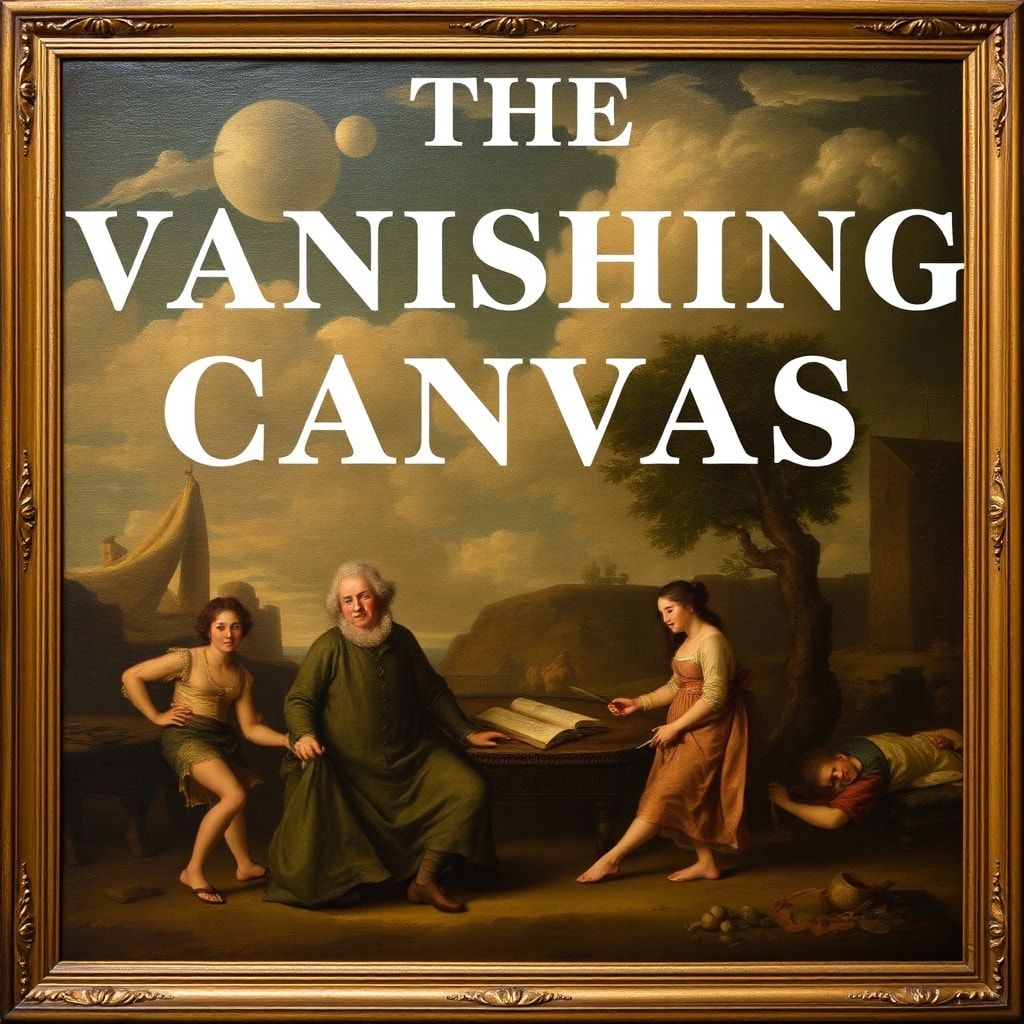
Introduction: A Shadow Over Art History
In the annals of art history, few narratives captivate and confound quite like that of a vanished masterpiece. The year 1633, a pivotal moment in the Dutch Golden Age, saw an unnamed master commit brush to canvas, creating a work that would, centuries later, become an enigma. This painting, a testament to the artistic zenith of its era, was last officially recorded in 1961, when it exchanged hands in a sale that inadvertently ushered it into decades of obscurity. This is not merely a tale of a lost object; it is a profound investigative journey into the cultural vacuum left by its absence, a meticulous dissection of the circumstances surrounding its disappearance, and a reflection on the enduring allure and fragility of our shared artistic heritage. Its vanishing act has not only deprived scholars and enthusiasts of a critical piece of the Dutch artistic puzzle but also underscored the inherent vulnerabilities within the global art market, leaving behind a phantom limb in the body of art history that aches for its return.
The Golden Age Canvas: A Master’s Legacy in 1633
The Flourishing Artistic Landscape of the Dutch Golden Age
The year 1633 falls squarely within the shimmering embrace of the Dutch Golden Age, a period of unprecedented economic prosperity, scientific innovation, and an explosion of artistic creativity. This was an era where art was not solely the domain of the church or aristocracy but flourished through the patronage of a burgeoning merchant class. Masters like Rembrandt, Vermeer, and Frans Hals redefined artistic expression, embracing realism, intricate detail, and a profound understanding of light and shadow. A painting from 1633 by a “Dutch master” would have been a product of this vibrant milieu, reflecting prevailing aesthetic and philosophical currents, embodying the meticulous craftsmanship and innovative spirit that defined the period. It was a cultural artifact, a window into the soul of a nation at its peak, a tangible connection to a society that profoundly influenced Western civilization.
Significance of the Lost Work
While the precise subject and scale of the lost painting remain unknown, its attribution to a “Dutch master” from 1633 immediately imbues it with immense art historical significance. Such a work could have been a groundbreaking portrait, revealing psychological depth, or a genre scene capturing a fleeting moment of 17th-century Dutch society. It might have been a richly symbolic still life or a dynamic historical painting. Each brushstroke would have carried the unique stylistic signature of its creator, potentially filling a crucial gap in our understanding of a specific artist’s oeuvre or contributing to the broader narrative of artistic development during the Golden Age. Its disappearance means a vital piece of this complex tapestry is missing, leaving scholars to speculate and art lovers to mourn a void that can only be truly filled by its rediscovery. The painting, in its prime, would have served as a primary source for historical, sociological, and artistic analysis; its absence now a constant reminder of knowledge lost and beauty unshared.
The Ill-Fated Sale of 1961: A Transaction into Oblivion
The Post-War Art Market Boom
The year 1961 marked a significant point in the global art market, a period of burgeoning affluence in the post-World War II era. With economic recovery and increasing discretionary wealth, interest in Old Masters, particularly those from the Dutch Golden Age, experienced a resurgence. International collectors, both private individuals and nascent institutions, actively sought works of historical importance. Auction houses became prominent platforms for high-value transactions, while private dealers facilitated discreet sales. The market was robust, driven by a combination of investment potential, prestige, and genuine aesthetic appreciation. A Dutch masterpiece from 1633 would have been a highly desirable commodity, attracting considerable attention and commanding a substantial price, signaling its perceived value and historical gravitas. This environment of heightened activity, however, also presented fertile ground for transactions that, intentionally or unintentionally, could lead to artworks slipping from public view.
The Transaction and Its Aftermath
The exact nature of the 1961 sale – whether a public auction or a quiet private transaction – remains shrouded in mystery, contributing to the painting’s subsequent disappearance. Regardless, the sale represented a critical juncture. The painting, having been visible and accounted for until this point, entered new ownership, and from that moment, its public trajectory ceased. Initially, the lack of immediate concern might be attributed to the normal course of private ownership, where works of art are often held in personal collections away from public display. However, as decades passed without any reappearance in exhibitions, scholarly publications, or further sales records, the silence surrounding the painting began to morph from privacy into an ominous absence. The art world, slowly but surely, recognized that a significant piece of history had not merely changed hands but had effectively vanished, leaving behind only the cold record of its last known transaction date.
Vanished Without a Trace: Theories and Investigations
The Enigma of Disappearance
The disappearance of a valuable artwork post-sale opens a Pandora’s Box of possibilities. Was the 1961 sale a precursor to a deliberate act of concealment? Perhaps the new owner, for reasons ranging from tax evasion to an extreme desire for anonymity, chose to keep the painting entirely out of the public eye. This scenario, while depriving the world of the artwork, suggests it still exists, a “sleeper” waiting to re-emerge. Alternatively, the painting might have been the victim of a calculated theft. Art theft, a multi-billion-dollar illicit trade, often targets high-value pieces for ransom or to be traded on a clandestine market where provenance is secondary to desire. Given the painting’s age and significance, it would have been an ideal target. A less dramatic but equally tragic possibility is accidental loss or destruction. While unthinkable for a masterpiece, errors in storage, shipping, or unforeseen disasters, however rare, cannot be entirely discounted, particularly in an era before advanced tracking and conservation protocols were universally established. Each theory presents its own set of challenges for investigators, compounded by the passage of over six decades.
The Role of Law Enforcement and Art Recovery
The investigation into a missing artwork like the 1633 Dutch masterpiece is a monumental task, often hampered by the very nature of its disappearance. In cases of theft, law enforcement agencies like Interpol, alongside specialized art crime units, would ideally be involved, but their efficacy diminishes significantly with the passage of time. Initial leads cool, witnesses pass away, and records become fragmented or lost. For a painting that vanished in 1961, any formal investigation would have faced immense hurdles from the outset, operating with less sophisticated databases and international cooperation mechanisms than exist today. However, the modern era has seen the rise of dedicated art recovery specialists and organizations who meticulously track lost works, maintain extensive databases, and leverage forensic art analysis to identify pieces that resurface. The hope is that through their tireless efforts, and increasing transparency in the global art market, clues might yet emerge, connecting the dots from its 1961 sale to its current whereabouts. The challenge lies in piecing together a narrative from silence and shadows, a testament to the perseverance required in the quest for cultural restitution.
The Cultural and Commercial Ramifications of a Lost Masterpiece
A Gap in Art History
The absence of the 1633 Dutch masterpiece leaves an undeniable void in the collective consciousness of art history. Every artwork contributes to a larger narrative, serving as a data point in understanding an artist’s development, the stylistic evolution of an era, or the socio-cultural dynamics of its time. When a work of such calibre disappears, it’s akin to losing a chapter from a crucial historical text. Scholars are left to reconstruct fragmented narratives, relying on secondary sources or mere conjecture where primary visual evidence once existed. The painting’s loss means that its unique contribution to our understanding of the Dutch Golden Age, its specific master, and the broader context of 17th-century European art remains unexamined and unappreciated. It represents a missing link, frustrating attempts to build a complete and nuanced picture of artistic output during a period renowned for its profound impact on Western art.
The Art Market’s Lingering Shadow
Commercially, the vanishing act of a significant artwork casts a long, cautionary shadow over the art market. While the intrinsic value of such a piece is incalculable, its tangible market value would have appreciated exponentially over the decades. Its status as “lost” only heightens its mystique and, paradoxically, its potential future value should it ever reappear. However, its disappearance also highlights the inherent risks in art acquisition and the imperative for meticulous due diligence in provenance research. Buyers and sellers alike are now far more aware of the importance of clear, verifiable records of ownership. The lost masterpiece serves as a stark reminder of the ethical responsibilities of stewardship, not just to the artwork itself, but to the cultural legacy it represents. Its enduring absence fuels both a morbid fascination and a persistent hope, making it a legendary ‘ghost’ piece that would undoubtedly trigger an unprecedented market frenzy upon its rediscovery.
The Quest for Rediscovery
Despite the passage of over six decades, the quest for the 1633 Dutch masterpiece continues, fueled by unwavering optimism among art enthusiasts, historians, and recovery specialists. The digital age has revolutionized the potential for rediscovery; sophisticated databases of lost and stolen art, advanced imaging techniques, and global communication networks now facilitate a level of vigilance previously unimaginable. Art institutions, private foundations, and even public campaigns play a vital role in raising awareness and creating a global “watch list” for such significant works. The possibility that the painting exists in a private collection, perhaps even unknowingly, or that it might surface in an unexpected location, sustains the hope. The moment of its potential rediscovery would not merely be an art historical event but a global cultural sensation, a triumphant return that would validate the tireless efforts of those dedicated to preserving and reuniting humanity with its artistic treasures. It would be a story not just of loss, but of ultimate reclamation and restoration.
Conclusion: A Silent Witness Awaiting its Return
The 1633 Dutch masterpiece, spirited away after its 1961 sale, remains one of the art world’s most enduring and poignant mysteries. Its story is a microcosm of the challenges faced in safeguarding our global artistic heritage against the ravages of time, the vagaries of commerce, and the shadows of secrecy. It stands as a silent witness to centuries of history, its beauty and narrative contribution currently locked away from the public eye. Yet, its absence fuels a collective determination, a belief that art, by its very nature, demands to be seen, studied, and celebrated. The investigative spirit continues, leveraging every available tool and every lingering hope. Until then, the ghost of this Dutch master’s canvas continues to wander through the galleries of our imagination, an exquisite void that compels us to seek, to understand, and ultimately, to hope for its triumphant return to the light, where it rightfully belongs as a cornerstone of human creativity.
That was some serious shit.