
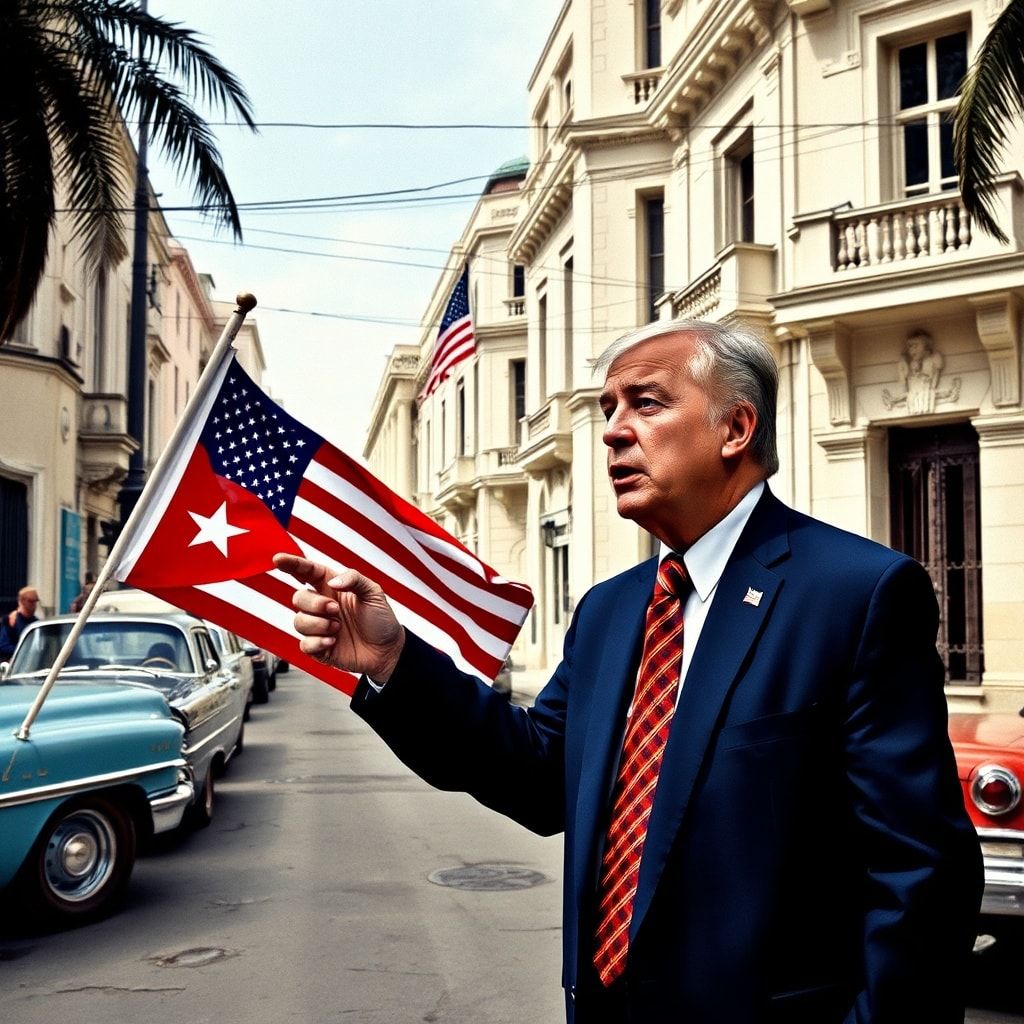
US President Claims Cuba “Wants to Make a Deal So Bad”: A Deep Dive into US-Cuba Relations
The President’s Provocative Claim: Signaling a Shift in US Cuba Deal Dynamics?
The US President recently made a striking assertion, claiming that Cuban authorities are desperate “to make a deal so bad.” This declaration, delivered without specific details, immediately ignited speculation about the future trajectory of the long-strained relationship between Washington and Havana. Is this a genuine signal of an impending US Cuba deal, or merely a rhetorical maneuver in a complex geopolitical dance?
The statement, echoing past rhetoric but carrying new weight in the current global climate, suggests a potential inflection point. For decades, the US-Cuba relationship has been characterized by mistrust, sanctions, and ideological clashes, making any hint of a “deal” significant.
A Legacy of Animosity: Understanding the US-Cuba Divide
To fully grasp the implications of the President’s words, one must recall the tumultuous history between the two nations. From the 1961 Bay of Pigs invasion to the Cuban Missile Crisis, and the subsequent imposition of a comprehensive economic embargo, the narrative has largely been one of open hostility and strategic confrontation.
The embargo, now over six decades old, has profoundly impacted Cuba’s economy and daily life. Despite international condemnation and numerous UN resolutions calling for its end, successive US administrations have maintained varying degrees of pressure, often linking any potential rapprochement to demands for democratic reforms on the island.
The Obama Rapprochement and Its Reversal
A brief period of thaw occurred under the Obama administration, which initiated a historic re-establishment of diplomatic ties in 2014. Embassies were reopened, travel restrictions eased, and commercial flights resumed, fostering hope for a new era of engagement. This era saw some advancements towards a potential US Cuba deal on various fronts.
However, much of this progress was reversed by subsequent administrations, citing concerns over human rights, Cuba’s support for Venezuela, and alleged malign activities. Sanctions were reimposed, and Cuba was again designated a state sponsor of terrorism, tightening the economic squeeze and halting momentum towards any comprehensive US Cuba deal.
Cuba’s Economic Woes: Driving a Desire for a US Cuba Deal?
The President’s claim raises a critical question: what might compel Havana to “want a deal so bad”? The answer likely lies in Cuba’s increasingly dire economic situation. The island nation has been grappling with multiple crises, exacerbated by tightened US sanctions, the global pandemic’s impact on tourism, and a significant reduction in aid from its traditional ally, Venezuela.
Shortages of basic goods, fuel, and medicine have become chronic, leading to widespread public discontent and a significant exodus of Cubans. The state-run economy, already fragile, has struggled to attract sufficient foreign investment under the weight of US restrictions and its own structural inefficiencies.
Impact of Sanctions and Global Shifts
The designation of Cuba as a state sponsor of terrorism, for instance, significantly complicates its access to international financial markets and foreign direct investment. This severely limits its ability to secure loans, conduct international trade, and import essential goods, creating immense pressure on the government.
Furthermore, geopolitical shifts, including Russia’s ongoing conflict and its economic repercussions, might further isolate Cuba from traditional benefactors. Such pressures could indeed push the Cuban leadership towards seeking an easing of tensions and an economic lifeline from its powerful northern neighbor, suggesting a genuine interest in a pragmatic US Cuba deal.
Potential Pathways and Hurdles for a US Cuba Deal
While the President’s statement hints at a desire for negotiation, the specific contours of any potential US Cuba deal remain highly ambiguous. Historically, any major shift has involved complex discussions spanning economic, political, and human rights issues.
One primary area for negotiation would undoubtedly be the economic embargo. Cuba has consistently called for its unconditional lifting, while the US has linked its removal to significant democratic reforms, including multi-party elections and greater respect for civil liberties. Bridging this fundamental gap presents an enormous challenge.
Navigating Political Minefields
Any move towards a US Cuba deal would also face significant domestic political hurdles in both countries. In the US, the powerful Cuban-American lobby, particularly in swing states like Florida, often advocates for a hardline stance against the Cuban government. Their influence can make any administration hesitant to pursue broad engagement.
Conversely, the Cuban government faces its own internal dynamics. While economic necessity may drive a desire for a deal, the Communist Party leadership must balance this with maintaining ideological control and avoiding any perceived capitulation that could undermine its authority. This delicate balance makes the prospect of a swift US Cuba deal challenging.
The Role of Diplomacy and Regional Implications
If the President’s claim signals a genuine willingness to engage, the path forward would require discreet, high-level diplomatic channels. Past negotiations have shown that quiet diplomacy, away from the glare of public scrutiny, is often more effective in breaking impasses between Havana and Washington.
The international community, particularly nations in Latin America and Europe, would likely welcome any constructive dialogue aimed at de-escalating tensions. Many countries have long advocated for the normalization of US-Cuba relations, viewing the ongoing standoff as an impediment to regional stability and economic development. A successful US Cuba deal could have broad regional implications.
Looking Ahead: Is a Breakthrough Imminent?
Ultimately, whether the President’s assertion leads to tangible progress towards a US Cuba deal remains to be seen. The historical baggage, deep ideological divisions, and complex domestic politics on both sides present formidable obstacles. However, the economic pressures on Cuba, combined with a potential desire from Washington to resolve long-standing foreign policy challenges, could create a unique window of opportunity.
Journalists and analysts will be watching closely for any subsequent actions or statements from either capital that might lend credence to the President’s provocative claim. The rhetoric has set the stage; now, the question is whether diplomacy can follow to forge a new chapter in the enduring saga of US-Cuba relations.